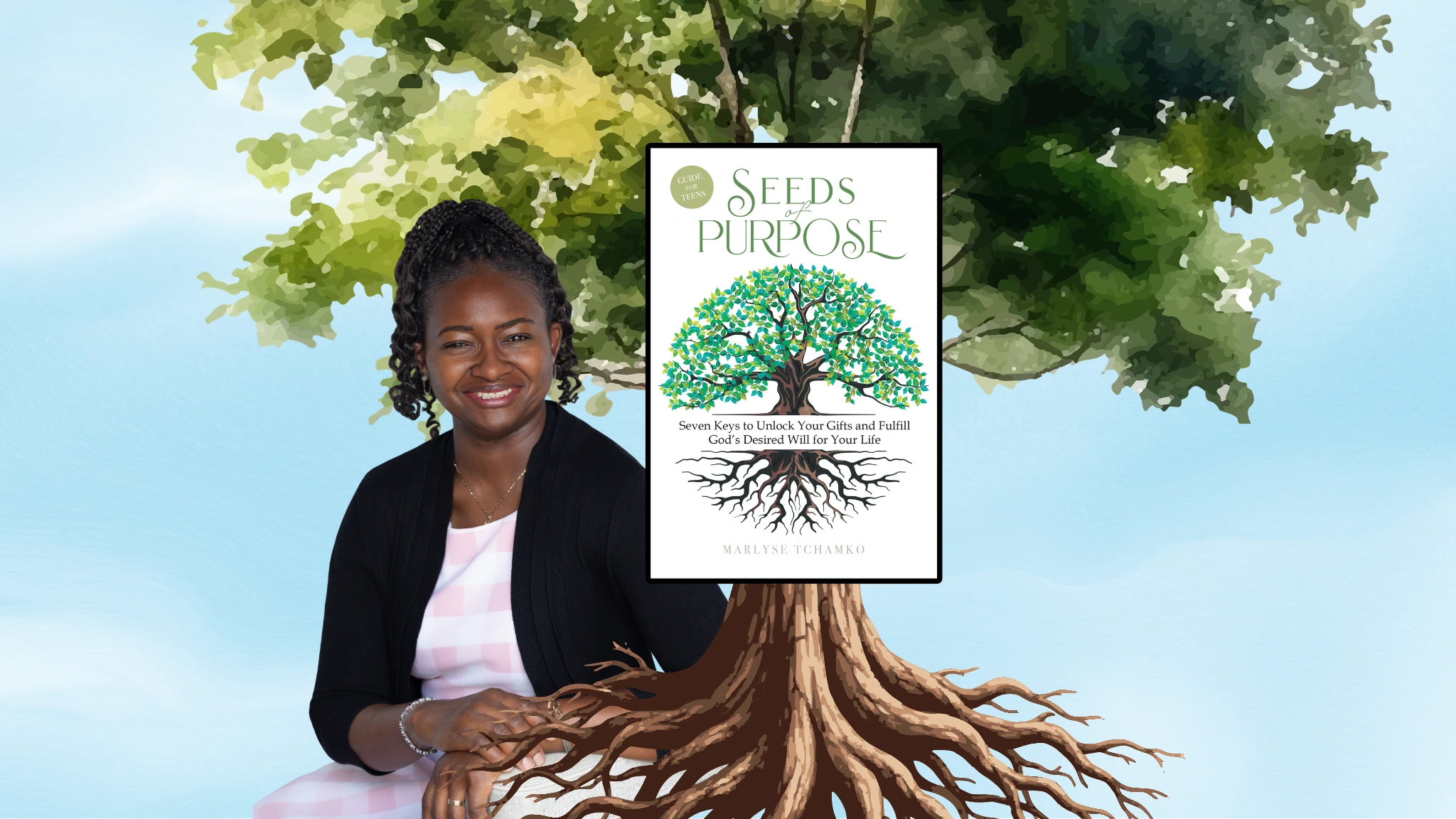
In Seeds of Purpose, author Marlyse Tchamko encourages teens to stop waiting for adulthood to begin living with intention, faith and purpose. Blending biblical wisdom with practical guidance, the book explores identity, integrity, relationships, leadership and vocational calling through relatable reflections and Scripture-based lessons. In this conversation, Tchamko shares how her own journey shaped the message behind the book, why daily intimacy with God matters for discovering purpose and how young people can navigate today’s digital culture while staying grounded in their faith.
Your book urges teens to start living purposefully now. What one practical step would you recommend a teen take this week to begin living their purpose today?
One practical step I would recommend is to start renewing your mind with God’s Word, even if it’s just 5 minutes a day. The Bible says in Romans 12:2 that when our mind is transformed, we are able to understand God’s good, pleasing and perfect will. So, purpose doesn’t start with doing something big; it starts with changing how you think. Another powerful step is to do life daily with Jesus. Talk to Him like your best friend; thank Him, ask for guidance and invite Him into your decisions, big or small. When you combine renewing your mind, walking with Jesus daily and applying small actions consistently, you begin to live your purpose right where you are one step at a time.
Key VII focuses on vocational purpose and reminds readers that “God gives you talents and passions” to “fulfill His purpose and serve others.” How did your own sense of vocational calling develop, and what mistakes helped shape that journey?
My sense of vocational calling didn’t come all at once. It developed through a journey of confusion, mistakes, and eventually, deeper intimacy with God. As a teen, I struggled with not knowing who I was in Christ or what I was meant to do. I tried to figure out my purpose by looking at others or relying on my own understanding, which only led to more frustration and emptiness.
One of my biggest mistakes was thinking purpose was something I had to find on my own instead of something God reveals as we walk with Him. I also ignored the small gifts and passions God had already placed in me, thinking they weren’t important enough.
Everything began to change when I reconnected with Jesus and started spending time with Him daily. Through that relationship, He began to reveal my gifts, especially my passion for helping teens, and showed me that purpose is not just about what you do, but how you serve others with what He’s given you.
The book emphasizes living consistently “online and offline” (e.g., being the same person in public and private). What practical boundaries or habits do you practice to keep your digital life aligned with your faith?
For me, it starts with remembering that God sees everything, not just what’s public, but also what’s private. So, I try to live with integrity, whether I’m online or offline. One practical habit I practice is filtering what I consume. I ask myself, “Does this content draw me closer to God or pull me away from Him?” If it doesn’t align with my values, I don’t keep it in my space.
I also try to pause before I post or respond. Instead of reacting emotionally, I ask, “Does this reflect Christ? Does it build up? Is it kind, true, and helpful?” Finally, I stay grounded by spending daily time in God’s Word and prayer, because when my heart is aligned with Him, it naturally shapes how I show up everywhere, including online.
You include Bible stories like Abigail, the Good Samaritan and the Parable of the Talents to teach relational and vocational truths. Which biblical character’s story impacted you most while writing, and why?
The biblical character who impacted me the most while writing this book is Abigail. What stood out to me is her wisdom, humility and courage in a very difficult situation. She didn’t react emotionally or make things worse; instead, she chose to act with discernment and peace, even when others around her were acting foolishly.
Her story reminded me that purpose is not just about big moments but about how we respond in everyday situations. Abigail used her wisdom to bring peace, protect her household and honor God at the same time.
It challenged me personally to ask, “Am I responding with wisdom and humility, especially when it’s hard?” I believe teens can learn from her that their choices, attitude and character can make a powerful difference even in situations they didn’t create.
One theme is submission to authority as “direction” rather than perfection. How do you help teens distinguish healthy submission (to parents, church, school, government) from unhealthy control?
I help teens understand that healthy submission is about direction, not control or perfection. God places authority in our lives to guide, protect and help us grow, not to harm us or take away our identity. One key principle I teach is that healthy authority will always align with God’s Word and character. It leads with love, wisdom and respect. But if something goes against God’s truth or leads them into harm or sin, that’s not healthy submission.
I also encourage teens to stay connected to God personally. When they know His voice through Scripture and prayer, they can better discern what is right. Finally, I remind them that it’s okay to ask questions, seek wise counsel and speak up respectfully. Submission doesn’t mean silence; it means walking in wisdom while honoring God’s order.
The book offers quizzes and reflection prompts (e.g., “What do you do that honors God when no one is watching?”). How should a reader use these exercises for long-term growth rather than one-time reflection? Any tips for leaders running small groups using the book?
I encourage readers to see these exercises not as a one-time activity but as tools for daily and weekly growth. The real transformation happens when they revisit the questions, reflect honestly, and apply what they learn in real life. For example, a question like “What do you do when no one is watching?” can become a daily check-in: Am I living with integrity today?
I also recommend journaling their answers over time, so they can see how they’re growing spiritually, emotionally and in their decision-making. Growth becomes visible when they track it.
For leaders using this in small groups, I suggest creating a safe and honest space where teens can share without fear of judgment. Don’t rush through the questions; let discussions go deeper. Encourage accountability, follow-up during the week and practical challenges. When reflection turns into action and community support, that’s when lasting transformation really happens.
You write that every individual is uniquely created by God with gifts and a calling. For teens who feel ordinary or insecure, what scriptural truth or short affirmation from the book would you want them to memorize and repeat?
For teens who feel ordinary or insecure, I would want them to hold on to this truth: you are not random; you are created on purpose, for a purpose. One powerful Scripture I encourage them to memorize is from Jeremiah 1:5: “Before I made you in your mother’s body, I chose you. Before you were born, I set you apart for a special work.”
Another key verse is Ephesians 2:10, which reminds us that we are God’s creation, designed for good works He prepared in advance. And a simple affirmation from the book is “I am chosen, I am gifted, and I am created for a purpose.” When they repeat this daily, it begins to reshape how they see themselves. Over time, insecurity loses its voice, and they start to walk in confidence not because of who they are alone but because of who God says they are.