
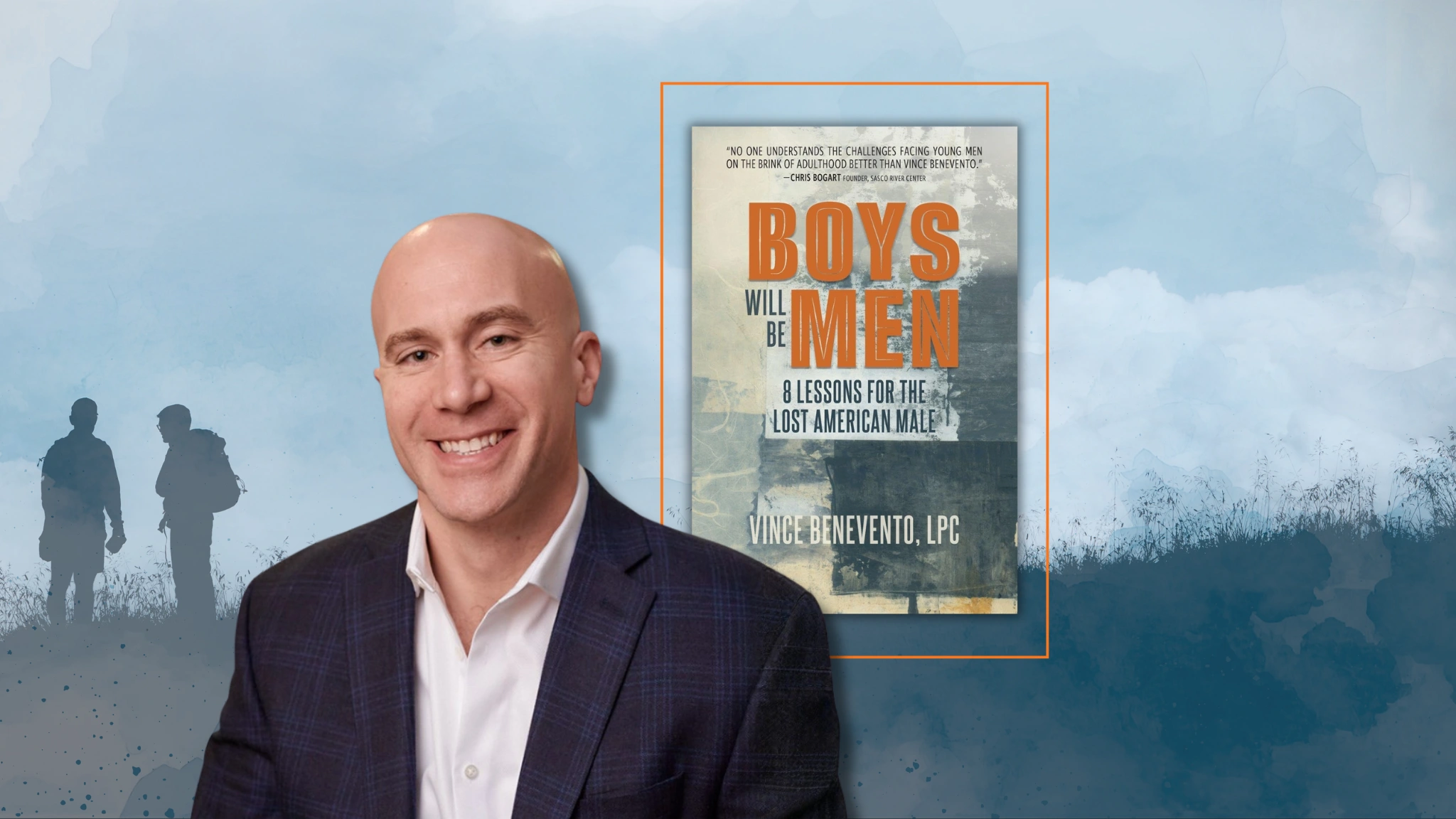
What inspired you to write Boys Will Be Men, and what do you hope young men will take away from your book?
I was a lost and stuck young man in my late teens and early twenties. I resisted traditional therapy, was immature in my ability to express myself emotionally, desperately needed help and didn’t know where to find it. As I began to make decisions to get my life back on track, I knew I wanted to do this work. I became fascinated with ways to connect with guys who were resistant to help. In doing so, I started puzzling around what would be the most effective ways to draw men into receiving support. Those efforts resulted in a different approach to working with men, and the stories that are contained in this book and the corresponding lessons learned.
I hope young men learn from these stories that they are not alone in the struggles that they face. I hope men realize that there are things they can do to take control of their life, build a better future and better relationships with others. I know that men can grow, and change, and become better versions of themselves if they find their tribe—people who share common interests and goals—and find their thing.
In your experience, what are some of the unique challenges faced by young men today compared to earlier generations?
Tech and tech addition — Preoccupation with social media and gaming has led to decreased interpersonal interactions, skill erosion and lack of attentiveness, as content as decreased in duration.
Isolationism — Young men sequester themselves in their homes and in their rooms with increasing frequency. Romantic relationships and friendship have decreased in number over the past few decades. Men and young men have a hard time initiating, developing and maintaining contact with other men and across the sexes.
Job and school performance — Men have experienced higher levels of unemployment, school failure and job dissatisfaction than in previous generations. In fact, more men are opting out of both work and school than ever before.
Porn usage —Porn use is rampant amongst men and young men, throughout all classes and ethnic groups. This is problematic in that it robs men of their ability to form meaningful relationships and to know how to engage with physical companions in the form of true intimate relationships.
Passive Parenting — As parents have increased their knowledge and understanding of the mental health landscape, in some instances, they have made matters worse. Frequently, by being overly caring themselves, parenting for comfort and not holding their kids accountable they are apologists for their son’s conduct believe their kids aren’t at fault
Can you elaborate on the innovative therapeutic approaches you discussed in your book, such as experiential therapy and family coaching? How do these methods differ from traditional therapy?
Experiential therapy — We call it Therapeutic Mentorship- It’s our version of action focused therapy, which we render in the real world. It’s focused upon health and wellness, life skills acquisition and social skills development for young men, with the common denominator being action. We want men and young men to come to session to come to Causeway and accomplish something that they, and learn over time how to execute that skill on their own.
Family coaching —Family coaching is meant to be directive. We provide solutions and answers to parents in ways that traditional therapy do not. Family therapy is longer term, focuses upon personal inquiry and processing and a highly complex interworking of factors that drive behavior, family coaching looks for tangible steps to take and an agenda to implement those steps immediately upon the conclusion of session.
How different — Experiential: action-focused, in the community, doing a tangible task.
Family coaching: Far more directive, providing solutions on behalf of the family, usually a topic-specific emphasis, resulting in shorter term involvement.
You mention several personal stories and testimonials in your book. How do these real-life experiences enhance the lessons you aim to teach?
My personal experience allows me to identify the issues I see with my clients far faster, having worked through them myself. The trials I’ve faced deepen the empathy that I experience on behalf of my clients, having wrestled with these circumstances in difficult and messy ways. I also have the ability to share in small sample sizes and when appropriate my own personal difficult to instill hope and reinforce the necessity of not giving up.
These experiences also reinforce that these circumstances are not isolated to specifically stuck, struggling teens. The 8 lessons covered in my book are issues that men face across the life span. I share stories that exist across my 44 years on this planet.
What role do you believe a father or male mentor plays in the development of young men, and how do you suggest fostering those relationships?
A father or a male mentor plays arguably the most significant role in the developmental trajectory of a young man. Houses with strong and consistent fathers demonstrate greater consistency and higher levels of functioning. 85% of youth in prison come from fatherless homes. 90% of all homeless and runaway children come from single parent households. 60% of youth suicides occur in households where a father is not present. These facts show just how much of an impact a father makes on the entire system.
One of your lessons is titled “Find Your Thing.” Can you provide some advice on how young men can go about discovering their passions and interests?
Try new things and build their range of experiences. Continue to seek out activities until a young man finds one that resonates with him.
Keep seeking your tribe. Find people who you connect with. Men enjoy activities that they share with common friends.
Ask for help. Be willing to accept the help of your parents. Be willing to allow them to contribute time and resources to your quest to find your thing. Even ask for the help of friends who do an activity as you onboard or try something for the first time.
Find a mentor. If and when you find the thing that you’re interested in and care deeply about, seek out an older male role model who can educate you on a path ahead.
How can families best support young men as they navigate the complexities of modern masculinity? What practical steps would you recommend?
Develop strong relationship with young men as they navigate the challenges of life
Create sacred time that is dedicated real estate for the family and for your relationships with all of your children and spouse.
Have firm boundaries around time devoted to the community of the family. Set rules like no phones and that people sit around the table for dinner that foster a sense of cohesion and prioritize the group experience.
Spend time with your son one on one. Learn about them, ask them questions, give them space to share and or just be still.
Be good to your word. When you say you are going to do something, do it. Consistently show up for your kids, regardless of the obstacles that pop up and get in the way.