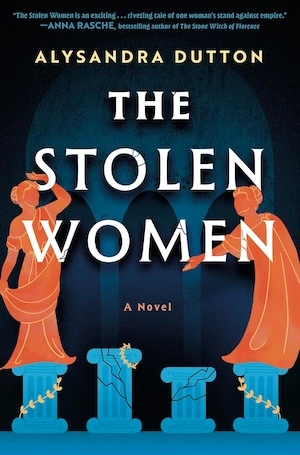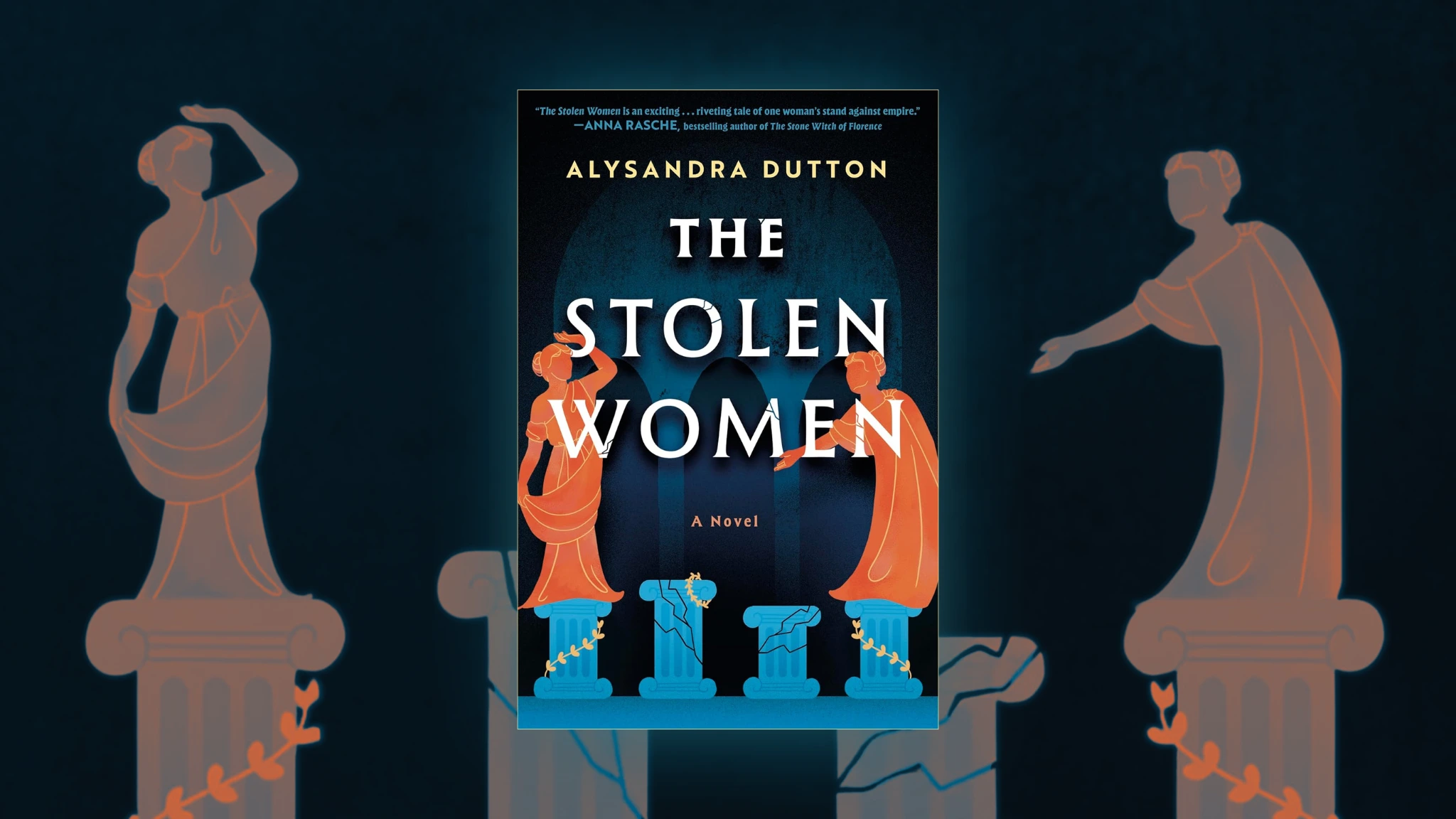
The Stolen Women by Alysandra Dutton
History isn’t always the one written down.
Rome’s premier historian, Livy, knows that very well. His emperor, Augustus, wants to know everything about where he’s been and what he’s seen, but Livy knows there are secrets that are meant to be kept, especially when it comes to the missing women of Cures Sabini in 753 BCE.
He is the only one who knows the truth — he and the woman named Safinia. The truth about the Rape of the Sabine Women.
Historical fiction comes in all shapes and sizes, from solemn to adventurous to sparklingly irreverent. Alysandra Dutton’s The Stolen Women manages to encompass them all.
Warriors’ Daughter
Both of Safinia’s parents, her mother and father, were warriors and leaders of men. But after their deaths, she lives outside the walls of the city as a plebian; an outcast. Then her aristocratic girlfriend Hersilia suddenly vanishes, and Safinia knows she has to do something, especially when Hersilia’s bastard sister insists she was abducted: “Sometime in the winter, three girls I know disappeared. All marrying age, all from good families … No one’s seen them since the weather turned. They aren’t out drinking, or watching the wrestlers, or listening to poets in the forum — they’re nowhere.”
And so Safinia sets out to find the truth, one woman against a nascent empire. By turns, she is attacked, coddled, ignored, interrogated, lied to, proposed to, betrayed, and bloodied. She will discover that she is very much her parents’ daughter, and something else altogether. She will learn that “truth” is a very slippery thing, and depends greatly on who is telling it, and that everything she thought she knew could easily be its opposite. And that is only the beginning of the surprises in store for her. And for us.
Two Gods
Intricate, powerful, audacious, and exhilarating, The Stolen Women is a history of the founding of Rome as you have never seen it, with characters that burst through the centuries, and perhaps make us question if what we know is true.
“Rome has two gods,” Augustus tells Livy. “Two gods only. Me, because I decide her future. You, because you decide the past.”
No one gets to know it all. Unless, as Dutton says in her Author’s Note, you decide “to haul Livy out of the grave and punch him in the face.”