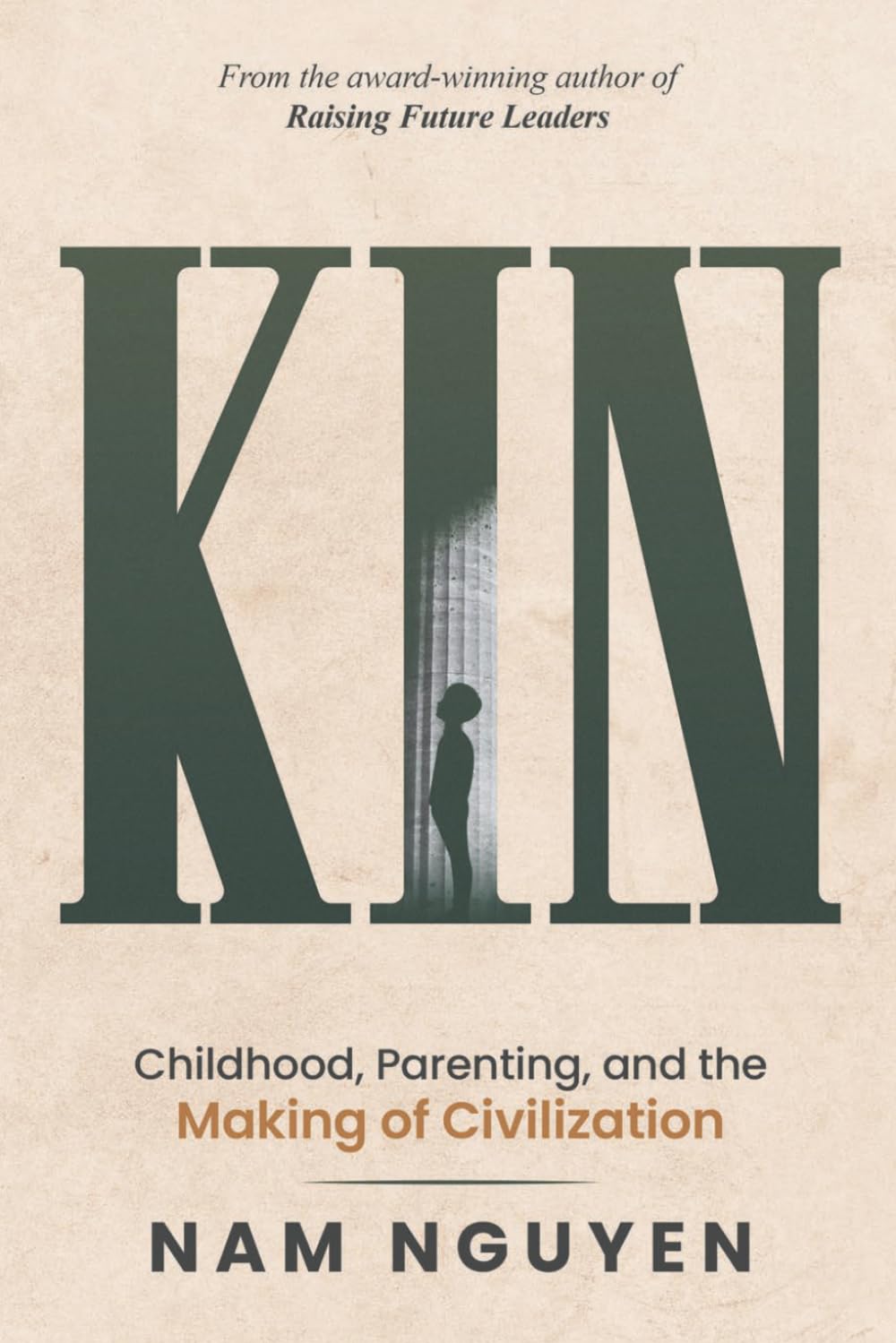
Kin: Childhood, Parenting, and the Making of Civilization by Nam Nguyen
Histories of civilization tend to focus on rulers, governments, laws, wars, religions and other major institutions. Nam Nguyen draws our attention to the people who care for children. In Kin: Childhood, Parenting, and the Making of Civilization, he argues that the way one generation raises the next is not a domestic artifact running alongside history. It is one of the means by which history happens.
Nguyen covers changing family structures, labor and educational practices and attitudes toward children over time, as a conventional history might. His larger interest, though, lies in what those practices produced. What kind of adults emerged from a particular form of childhood? What sort of society did they preserve — or decide they could no longer bear?
It Takes a Village
A civilization determines much about how its children will be fed, taught, disciplined and protected. It also determines the level of responsibility children are expected to shoulder. Those children grow into adults who carry its assumptions forward. Some resist them. Parenting is powerful in Nguyen’s account, though never an all-purpose explanation for historical change, but part of a larger system of influence.
Parents have also never done this work alone. Nguyen’s discussion of shared caregiving among the Efe, Aka and Hadza peoples shows how much early human survival depended on adults beyond the biological parents. As societies became larger and more stratified, religious authorities, schools and governments assumed greater influence. Industrialization put children under the authority of the factory. More recently, corporations and digital platforms have gained access to childhood through advertising, entertainment and devices designed to hold attention.
Agriculture did more than change how people obtained food; it reorganized households around labor, inheritance and property. Public education expanded literacy and taught children to identify themselves as citizens of a nation. Child labor laws removed many young people from brutal industrial settings, and compulsory schooling placed much of their development in institutional hands. Developments commonly understood as progress could therefore also involve a transfer of authority, always with accompanying benefits and tradeoffs.
The Tension Between Care and Control
One of these tradeoffs is the uncertain boundary between care and control. The people and institutions that protect children usually want to shape them, too. Schools open up intellectual possibilities and enforce standards of acceptable behavior. Scientific research has helped reduce infant mortality and improve childhood health. The accompanying industry of parental advice has also left many caregivers feeling judged and inadequate. Nguyen allows those complications to remain complications.
They become harder to ignore, though, as the book approaches the present. Children now grow up alongside platforms capable of influencing identity, relationships, beliefs and behavior. Climate change weakens the familiar parental promise of leaving the next generation a better world. The probability that the future will hold AI tutors, reproductive technologies and possible human enhancement raises questions that earlier generations never had to confront: not simply how children should be raised, but what their parents may one day choose for them before birth.
Drawing on disciplines including anthropology, history, psychology, religion and political thought, Nguyen keeps the main text accessible to a general reader. Chapter-based endnotes and a further-reading section provide routes into the underlying scholarship without interrupting the argument. The book moves quickly. A project stretching from the dawn of human civilization to a possible posthuman future has little room to linger; readers looking for a detailed history of one era will need to continue into Nguyen’s sources. Kin offers something else, though, something arguably more valuable: a framework for recognizing parenting as a form of social power, exercised by far more people and institutions than most of us acknowledge.
By the end, the old assurance that it takes a village to raise a child sounds less comforting than it once did. Nguyen has shown just how crowded that village is — and why it matters who gets a say.
About Nam Nguyen
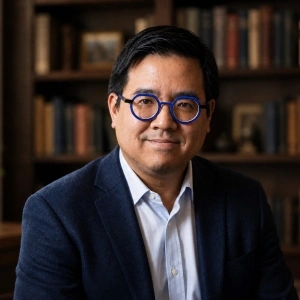 Nam Nguyen is a Canadian author and strategist whose work explores childhood, human development, and the forces that shape societies. With a background in psychology, neuroscience, business strategy, and governance, he brings an interdisciplinary perspective to questions of parenting, culture, institutions, and civilization.He is the award-winning author of Raising Future Leaders and the author of Raising Genius. In KIN: Childhood, Parenting, and the Making of Civilization, Nguyen examines how families, institutions, cultures, and technologies shape the next generation-and, through them, the future of civilization.