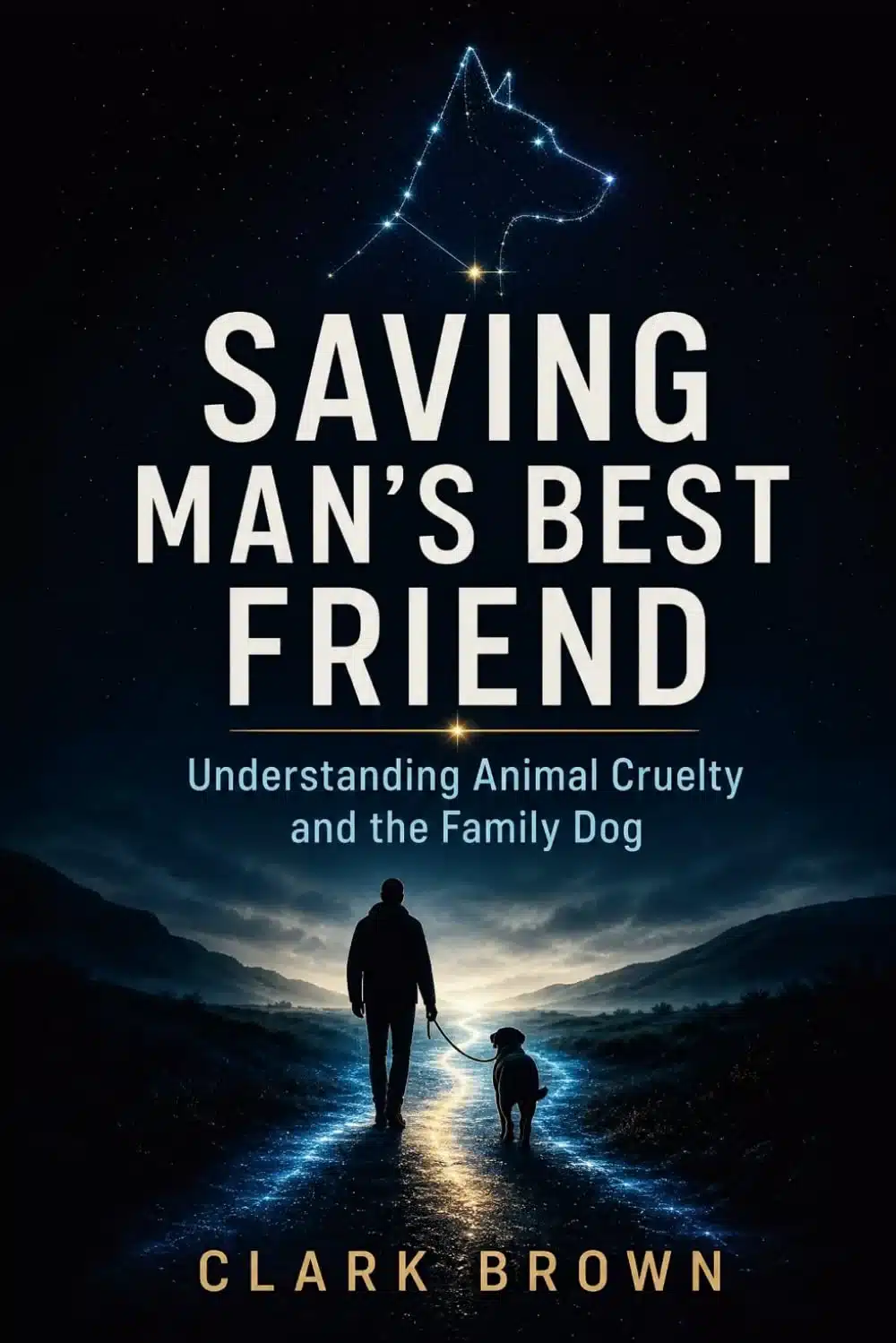
Saving Man’s Best Friend: Understanding Animal Cruelty and the Family Dog by Clark Brown
Seeing a dog suffer, most of us would want to do something immediately. Remove the animal, get it somewhere safe, figure out the rest later. But what if intervening means violating an owner’s rights? What if acting too quickly undermines the very case that could protect the dog longer term?
These are painful questions to contemplate, even from a comfortable distance. For animal control officers, they are part of the job.
Clark Brown has faced these questions as both a professional dog trainer and an animal control officer. In Saving Man’s Best Friend: Understanding Animal Cruelty and the Family Dog, he explains how to recognize cruelty and help authorities respond effectively. He also examines what happens after a dog is removed from danger, when questions of ownership and long-term care remain unresolved.
What a Trainer Sees, What an Officer Can Do
As a trainer, Brown recognizes the damage punitive handling can do to a dog’s confidence and behavior. As an officer, he needs evidence of harm that the law recognizes. A dog’s suffering may be apparent to someone who understands canine behavior, but it may not provide enough grounds for arrest or removal.
That reality is hard to sit with. So is the requirement to respect due process when an animal appears to need help now. Brown explains why the strength of a case depends on careful evidence and lawful procedure, even when following that procedure feels painfully slow amid urgent need. It takes considerable restraint to work within those limits when a dog’s welfare is at stake.
His discussion of neglect introduces another challenge: the circumstances behind inadequate care. An inexperienced owner may need grooming instruction; a financially struggling family may need access to affordable veterinary services. Animal hoarding can require a coordinated response that addresses the owner’s mental health as well as the animals’ living conditions. Brown makes room for assistance and education alongside prosecution. Understanding why care has failed helps determine what might improve it. The solution isn’t always removal or surrender.
Turning Concern Into Useful Action
The book’s four parts move from recognizing cruelty to reporting concerns and understanding the legal process to practical tools for study. Brown uses illustrative scenarios to connect broad categories to recognizable conditions. An empty water bowl becomes more meaningful when observations establish how long it has remained empty, what the weather has been and how the dog is behaving. These are details an investigator can use.
The reporting guidance emphasizes safe observation and factual records. Brown repeatedly cautions against trespassing or confronting a suspected abuser. A comparison of California and New York shows why readers also need to understand their local requirements: similar circumstances can involve different enforcement procedures or rescue authority.
Some material can be very distressing to the layperson, particularly the extended chapter on severe abuse, yet these cases are important to understand and recognize the signs of. The discussions of veterinary forensics and courtroom testimony provide significant depth for students pursuing a professional animal welfare role. Fortunately, the book is structured such that readers can consult the specific information they are seeking; repeated explanations, for example, make individual sections easier to use.
Rescue Is Just the Beginning
Removal from danger does not settle a dog’s future. Ownership may remain unresolved while care costs mount and proceedings continue. A non-abusive co-owner’s wish to reclaim a dog raises further questions if the person accused of cruelty still has access to the home.
Rehabilitation requires its own patience. Through the explicitly fictional case of Buster, Brown traces how a referral leads to an investigation and, eventually, a supported adoption. The case gives readers a view of recovery that extends well beyond the moment of rescue.
The writing is straightforward and accessible. Brown favors brief explanations followed by scenarios. Checklists and quizzes make the book useful for study, while a glossary helps readers navigate unfamiliar terms.
Concerned neighbors, rescue volunteers and animal welfare workers will all find practical guidance here, along with a better understanding of how an apparently straightforward intervention can become complicated. Saving Man’s Best Friend gives compassion a practical education — and all of us a deeper appreciation of the people charged with protecting the dogs we love.
About Clark Brown
 Clark Brown is an animal law enforcement officer, professional dog trainer and educator with more than 35 years of experience. Since 1999, he has served the community where he grew up, investigating dangerous animal incidents, enforcing animal welfare laws and educating residents about dog safety.
Brown has trained dogs for competition, sentry work, television, film, commercials, stage productions and family companionship. His clients have included celebrities, NFL and NBA athletes, royalty and families. He has also mentored professional trainers, appeared on The Dog Whisperer and developed the award-winning e-learning program Living with a Dog in a Shared Community.
Drawing on his experience in enforcement and canine behavior, Brown advocates for responsible ownership, humane training and behavior-based, breed-neutral laws. His work focuses on preventing dog bites and creating safer communities for people and their dogs.