We are certainly living in dark times these days… Who’s to say we aren’t loving in them, as well?
Back at the tail end of 2024, I was offered a wild opportunity to pitch a horror romance to an imprint at Harlequin Books. I leapt at the opportunity because, baked into this prospective shot, there was a gleeful demon on my shoulder, whispering into my ear:
Are you really going to be able to get away with this? Writing a Harlequin romance?
As a writer hoping to carve out a claim on the bookshelf, the lane I’ve primarily clung to is horror. I’ve been able to tell stories about ghosts and ghoulies, spilling a fair amount of blood across the page… but I had never been offered a chance to tell a straight-up love story. I couldn’t help but balk (just a bit) at the audacity of my potential editor.
Me? Write a love story?
For Harlequin?
My editor-to-be said this: Readers are hungry for a little horror in their romance. They want something dark, she suggested. Looking into the tea leaves of 2026, horrormance as a subgenre is ready to break into the mainstream, flooding the bookshelves with blood.
And she was right.
Horrormance itself as a core literary concept isn’t new, but the mounting desire for more horror of the heart appears to be growing. Publishers are taking note. This year alone, we have new novels from Johanna Van Veen, Ava Reid and Taylor Grothe, just to name a few.
There seems to be a lot of love, and blood, to go around.
So — why is this? Where’s this desire for darkness in our love stories?
Are we afraid of love?
The Dating Recession
Perhaps it might have a little to do with the times we’re living in… I’m curious if our current “dating recession” might have something to do with it. Fewer young people find themselves in long-term relationships now than, say, a decade ago, citing everything from social media isolation and dating app fatigue.
Horror has always held up a mirror to modern society, reflecting our societal woes under the guise of whatever monstrous metaphor our authors choose. Maybe the moment we find ourselves in now—full of financial stress, political polarization, and a decline in human connectivity—has tinged the very notion of romance with a darkness that continues to ripple across genres.
The dating scene is a total horror show right now… so our romance stories have the opportunity to reflect that terror as well, while offering catharsis. That release is key. Horror has always been here for readers and viewers to articulate their own personal fears, explore them within confined environments, whether that’s in the pages of a book or the duration of a film. In theory, we come out the other end with a better understanding of our fear impulse, and perhaps even with a better sense of how to survive. Not to mention the thrill, the physiological response to tapping the death nerve, riding that roller coaster.
So… what does it say about modern readers looking for a little darkness in their romance? Does the sudden interest in horrormance, the blending of two genres normally kept separate, suggest audiences are interested in exploring the horrors found within romance?
When did our love stories become so… scary? And what does that say about us?
Look back to Lloyd Dobler. Cameron Crowe’s Say Anything used to be the benchmark of heartfelt angst. That was 1989. If Lloyd showed up outside your house in the middle of the night today, holding his boombox over his head and blasting Peter Gabriel… well, I think it’s safe to say you’d call the police and get his ass dragged off your front lawn.
One person’s romantic gesture is another person’s restraining order.
Who’s our modern Dobler?
Bear, apparently. Look to the multiplex, where one of the biggest breakout hits of 2026 is Obsession — a film that explores the horrors of a woman losing her sense of autonomy when a socially inept dude wishes for her to fall in love with him.
I can’t think of anything scarier, to be honest, than the notion of losing control over one’s own body and never getting it back, all in the name of “love.”
The Shadow of Morally Grey Characters
Readers appear to be eager to explore the shadows found within morally grey characters. The questionable actions of our protagonists provide a platform to… be bad.
If there is a devil on our shoulder, it sure seems to be horrormance. These stories offer a contained space — a safe space — to test the waters of our own naughtiness.
In books, we can be as bad as we want to be.
Novels have allowed readers — and writers — to channel those complex emotions that linger in the deeper recesses of our hearts: rage, lust, sadness. We feel them, so our characters should as well — and through them, these stories offer a certain catharsis.
So now I’d like to introduce you to your new book boyfriend…
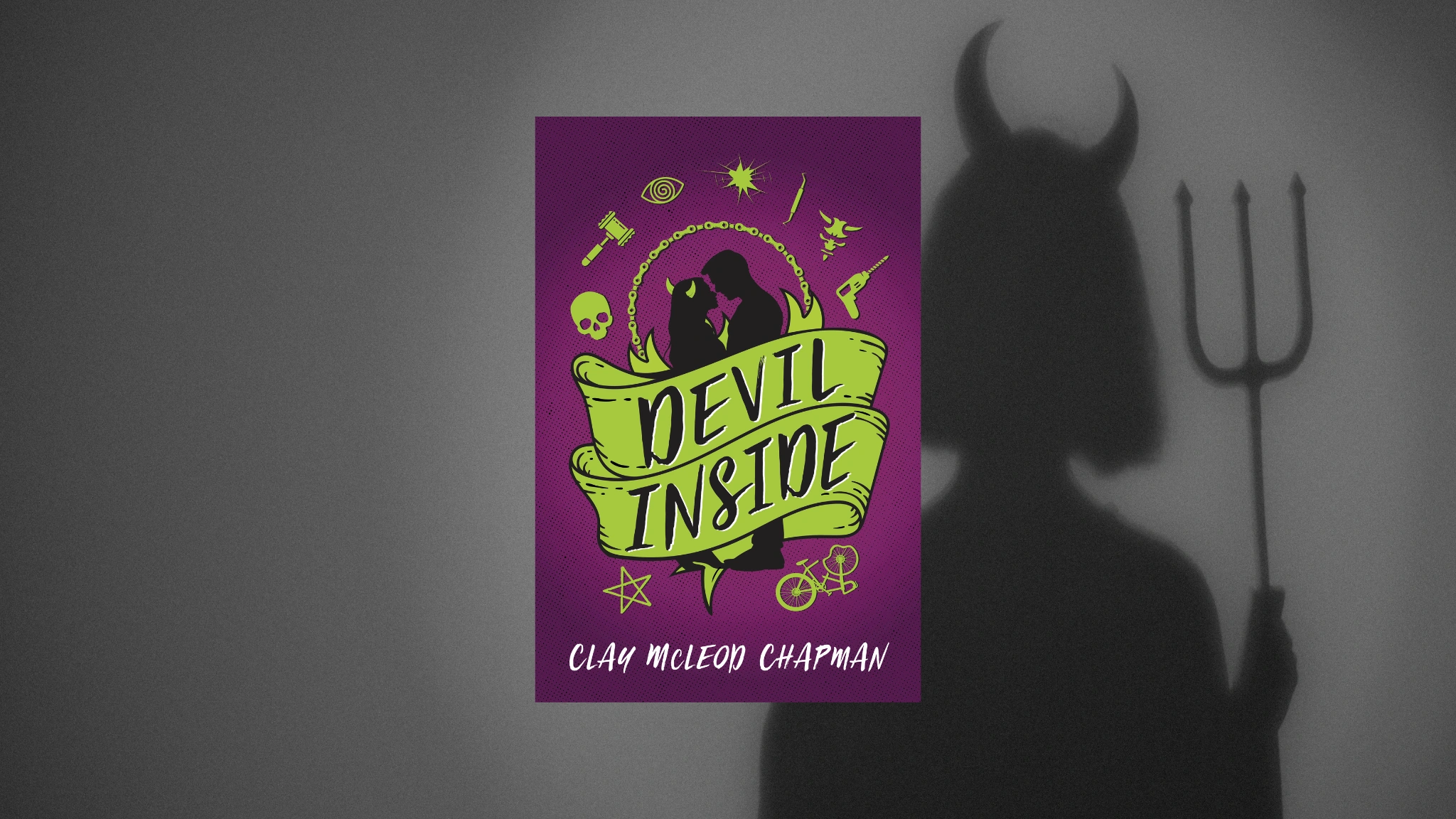
While I started charting out the narrative course for Devil Inside, I knew this would be presented as a horrormance novel — and as such, there were certain rules that needed to be followed. Primarily this meant there needed to be an “HEA” — or Happily Ever After.
I could bend the rules of romance, but I was told under no uncertain terms the one that I needed to adhere to most of all, was the HEA.
I’ve always been a personal fan of purposeful obstructions within writing. If one draws a line, and you can’t cross it, how does the story evolve?
I knew I had to have a HEA… and in fact, I always knew where the Happily Ever After was heading. But then there was a bonus-HEA, a double-Happily Ever After, perhaps, where because of this unholy union of lovers, their newfound relationship lets them be as bad as they absolutely want to be, with some seriously messy (and messed up) results.
Happy for our two lovers, perhaps unhappy for the rest of the world.
That’s just it: I learned I could have an HEA, but nobody ever said who had to be happy.
Whose happy ending was this?
Mine, it turns out.
Let’s just see how happy readers are…