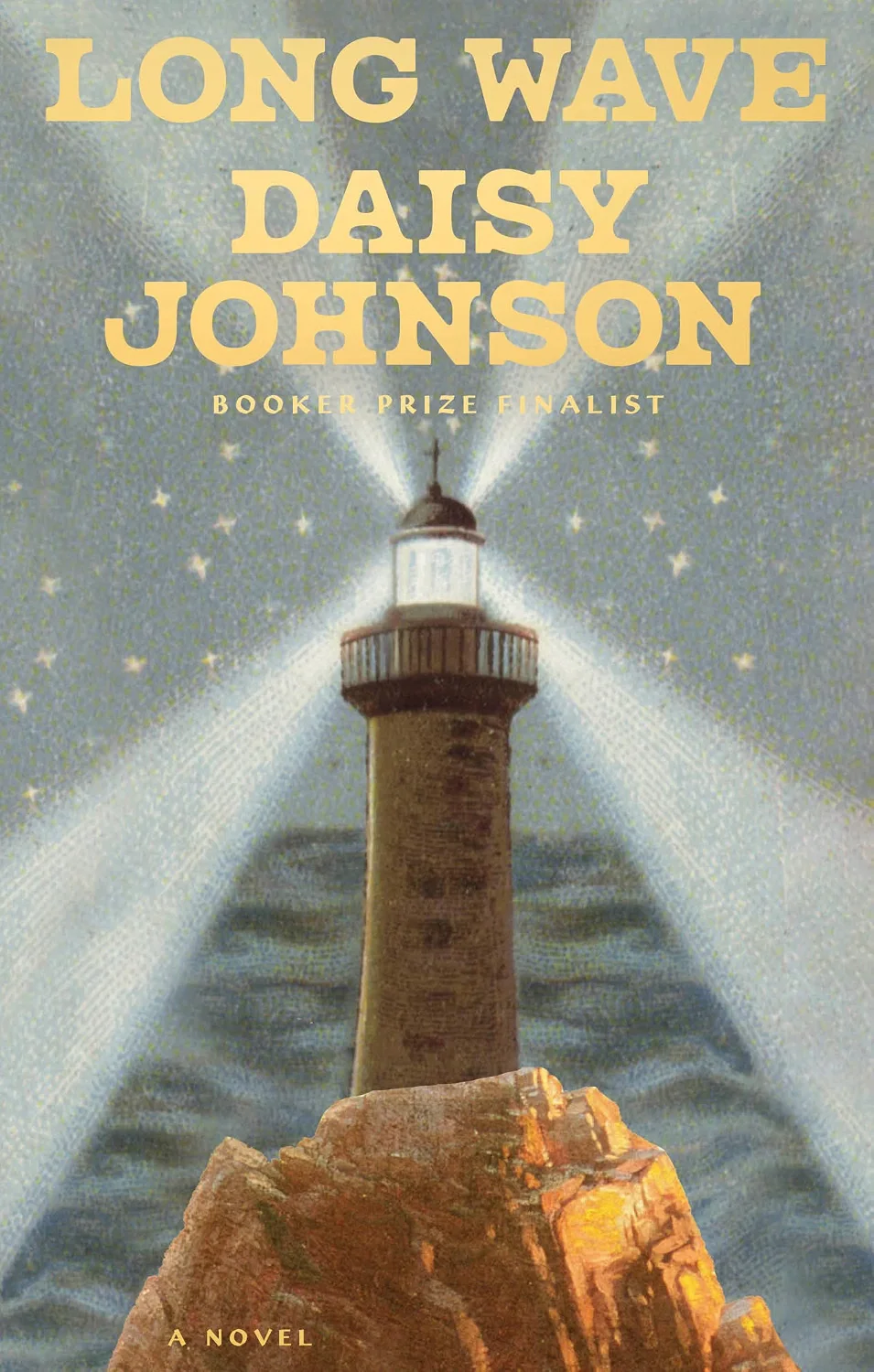
Long Wave by Daisy Johnson
Set against the haunting backdrop of coastal England, Daisy Jonhson’s third novel, titled Long Wave, draws the reader into a world where the landscape itself seems to breathe with the weight of the story. Edith, Ruth, and Ori are three generations of women that we get to meet in this novel. But there is another character playing in the background of the tale, an island with a lighthouse that connects the characters in more ways than they realize or are willing to admit.
Their beliefs, the way they act, and, may I say, their circumstances, are reflective of the period of times in which they live. Even if not spelled out in the course of the novel, the reader can still be able to identify each woman with a specific generation.
Three Generations, One Family’s Complicated Past
We first met Edith, who is strict, righteous, and married to a man of the Faith; she doesn’t accept relationships out of wedlock. Ruth, her daughter, is a free spirit, believes in free love and takes risks, and thus the generational clash is understandable. Further on, we get to meet Ori, who is a sensitive woman with a modern understanding of relationships and on the verge of having her firstborn.
During the early chapters of the book, we learn about the relation between Ruth and her mother, their distancing and the circumstances that led to the birth of Ruth’s daughter. Later we experience Ori as a grown-up, her relationship with her partner and how her pregnancy and giving birth affect her well-being, which in turn reminds Ori of her own recollection of her past. She didn’t grow up with Ruth but was found as a toddler by her adoptive father.
The Lasting Influence of Memory and Maternal Bonds
The postpartum difficulties trigger something special; Ori finds herself connecting, or reconnecting, with her mother in the way of forgotten memories that leads to the true nature of their relationship. Interestingly enough, this passage from the maternal line reminds me of Judaism. In traditional Rabbinic Judaism, Jewish identity is determined through the maternal line, a principle referred to as matrilineal descent. According to Jewish law, anyone born to a Jewish mother is recognized as Jewish from birth, irrespective of the father’s religious or ethnic background. None of the main characters are Jewish, though.
Daisy Johnson is the author of short stories as well as novels and has won awards in both forms of her writing. The structure of Long Wave is different from a typical novel, as the author splits the narrative into small parts, she ditches the use of chapters, and the reader feels the story coming in waves, conjuring thoughts of the title.
Through evocative prose, raw emotion and imagery that lingers long after the page is turned, Daisy Johnson weaves a compelling tale that challenges conventional notions of family and belonging. At its heart, Long Wave is a novel about the invisible forces that bind us, the roots we inherit, the ties we forge, but at the same time, the unsettling ways in which blood, memory, and circumstance shape who we are.
About Daisy Johnson:
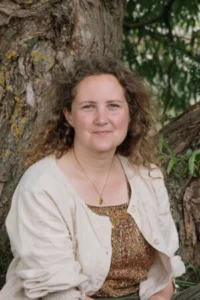 Daisy Johnson is the author of the novels Everything Under, a finalist for the 2018 Booker Prize, and Sisters, a New York Times Notable Book of 2020, as well as the short story collection Fen. She lives in Oxford, England.