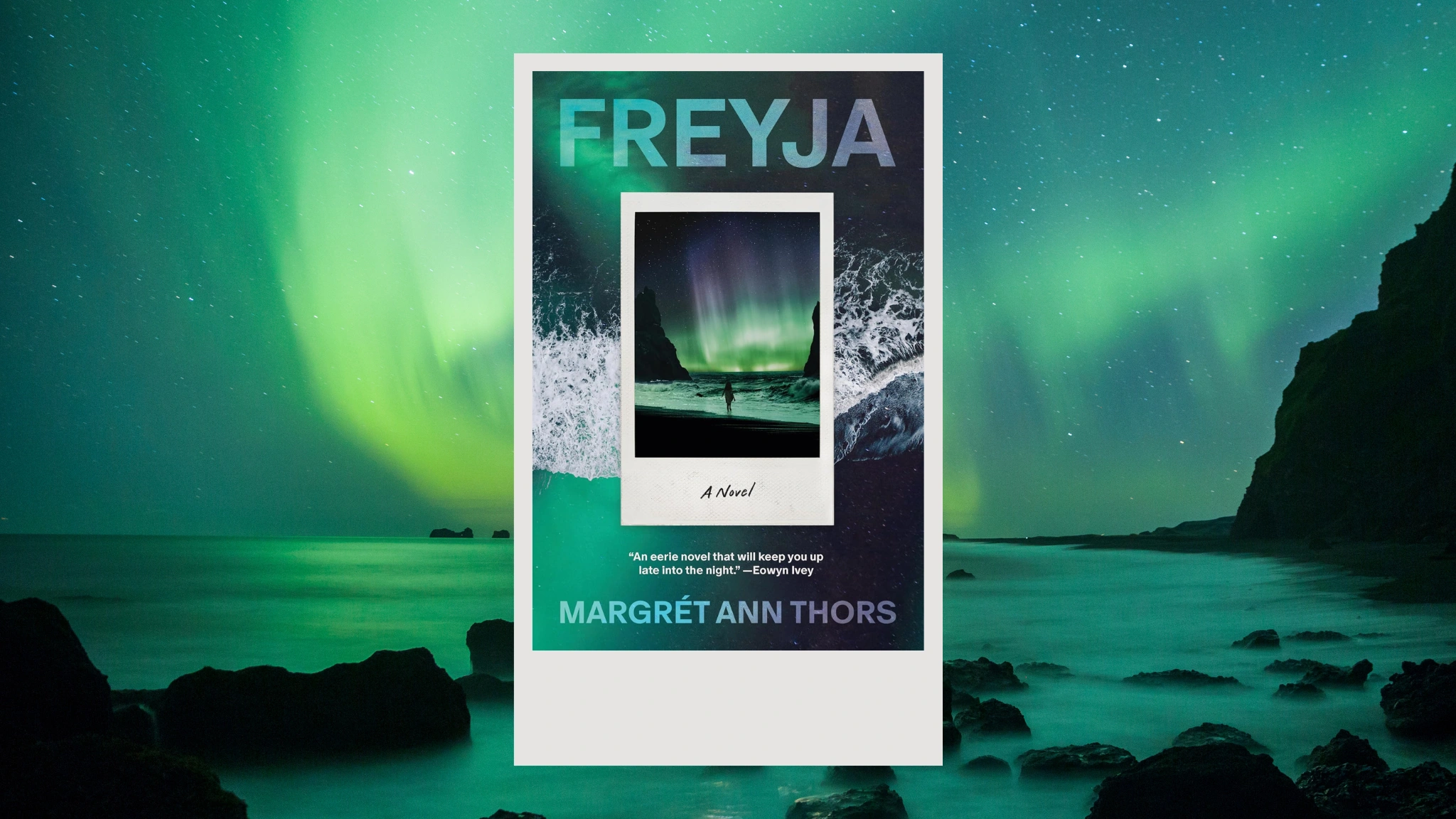
Freyja by Margrét Ann Thors
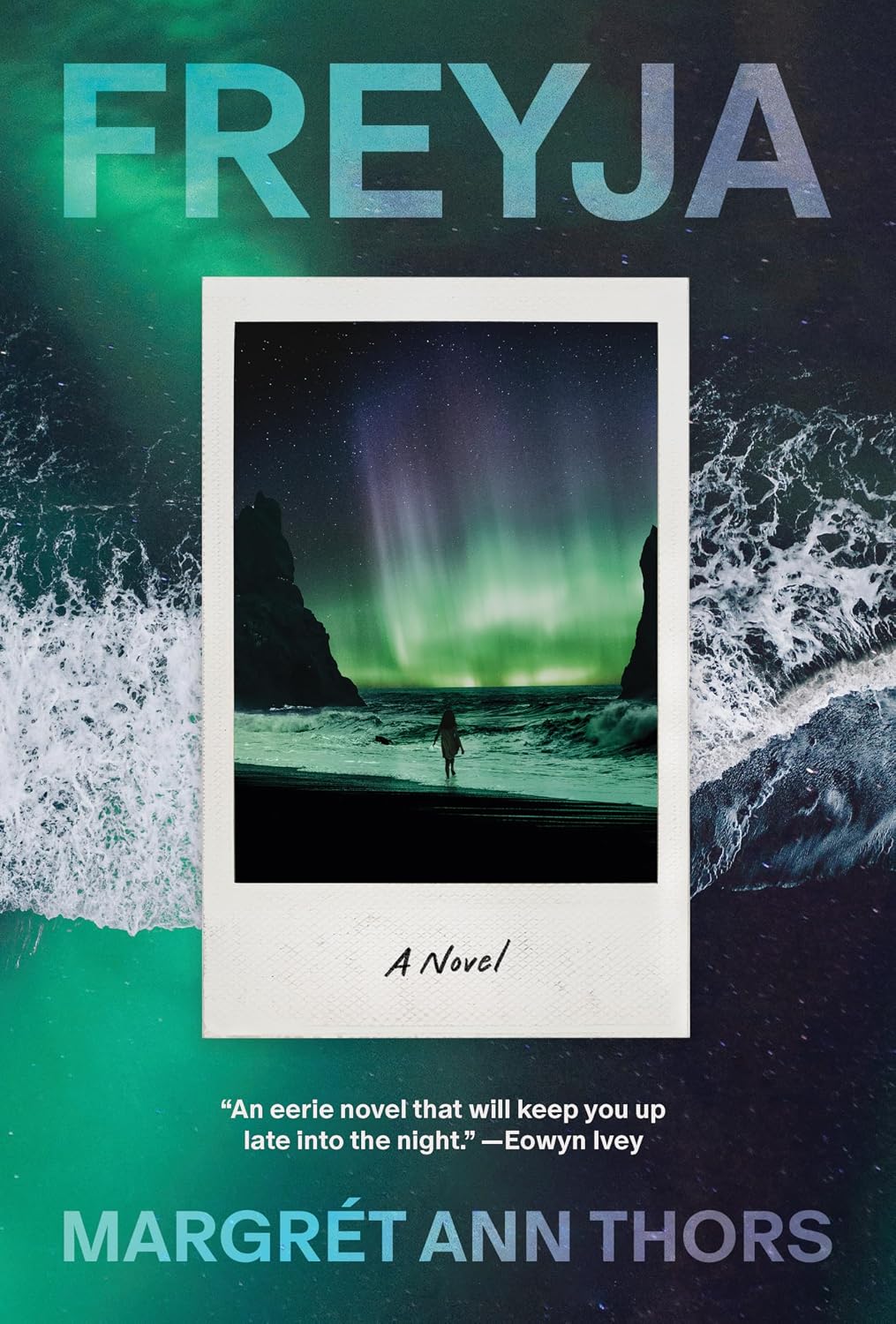
Her memories of that night are never the same. They are both little girls, Unnur and her friend Freyja, alone on a black-sand Icelandic beach, the waves clutching at them. In one memory, Freyja ignores her pleas and walks into the sea. In another, Unnur yanks Freyja’s head underwater until the bubbles stop. Which is true? She’s never known. She can’t remember.
All that is about to change.
In Margrét Ann Thors’ Freyja, it is now 27 years later. After that night, Unnur was sent to distant relatives in America. She grew up, met an Icelandic man and returned home, but the marriage didn’t last. Now, divorced, with a young daughter of her own named Lilja, Unnur receives a series of shocks.
- An envelope appears in her mailbox, unstamped, unaddressed. In it is a note calling her by a nickname only Freyja used, and the words Remember Me?
- Her boss lends her a novel he’s reading — “Hot off the press!” — called The Girl Who Spoke to the Sea, based on a true story. The story is Freyja’s disappearance. The author is anonymous.
- Unnur’s ex-husband arrives in town for a long-scheduled custody hearing. With him is a new girlfriend. She is a detective, come to open a new cold case project in Reykjavík centered around … missing girls and women. With her is her own daughter, named Freyja.
“You’re doing that thing,” Lilja tells Unnur. “That look you get, like you’re watching a scary movie no one else can see.”
The girl has no idea how scary.
In desperation, Unnur must battle to find the truth, digging deep into the past she has always tried to shut out, while her present disintegrates around her into chaos. Freyja had always been obsessed with Icelandic folklore — “magic, miracles, monsters” — but Unnur had never believed in any of it. Now she is beginning to wonder if the monsters are real, after all.
Freyja is a spellbinding novel, a deep portrayal of families, myths and memory; of the lengths to which a mother must go to protect those she loves — a story at once otherworldly and very much rooted in flesh and blood. Reading it, you might start getting “that look” yourself.
A Story That Began With a Place
“When I began writing the novel,” the author says, “I wanted to give life to some of the stories my dad had told me about his childhood years in Iceland, especially being sent as a young boy to work summers on the farm of a distant relative. He did not speak fondly of those years! I also wanted to explore the landscape that’s home to my family history — the South Coast. This is, for me, where the line between natural and supernatural wobbles, the starkness of the sky, the extreme weather, the quiet, the moss-covered lava rocks, the mist.
“The book evolved immensely in the years that followed. While I had a clear vision for the strange, hazy childhood chapters in the countryside, I didn’t yet know the present-day storyline, not even who the protagonist would be. That only began to take shape after I became a mother.
“I think the inspiration for one of the book’s central mysteries, Freyja’s disappearance in the Dark Valley, can be traced to a tour of a glacier I took during college. We were in a super-jeep with enormous tires, and there was so much snow and wind that all we saw was white. I need to pee. The tour guide told me I could get out, but that I needed to keep one hand on the jeep the whole time; otherwise, I might lose sight of it, they might lose sight of me, and we wouldn’t hear each other over the wind. I could simply vanish.
“That idea — of vanishing in a blink — stuck with me. It became one of the book’s animating questions: what would a child’s disappearance mean for the people who love her? And especially, what would such a loss mean for a woman like Unnur, who harbors a secret that could jeopardize her place in her daughter’s life?”
Thors herself is Icelandic American, raised in the U.S., but her family often traveled to Iceland to visit relatives: “I always felt a strong pull to Iceland, that it was my heart-home.” When she was fourteen, her parents gave her a plane ticket there — “my first time flying by myself, and my first time crying tears of joy” — and after many more visits, she moved to Reykjavík and has lived there ever since.
An Author With Feet in Two Worlds
Needless to say, “I certainly see parts of myself in Unnur. While our stories are quite different, I relate to the anxiety and occasional inadequacy she feels, not least because she is in the uncanny position of feeling out of place in a country that is kind of home and kind of not.
“I joke that in America, I feel very Icelandic, and in Iceland, I feel very American. When I pick my daughter up from school, she often fields a flurry of high-pitched questions from classmates about why her mom is in Iceland. This is a small island with a strong shared sense of language and culture, and so it doesn’t take much to feel like an outsider, or at least to feel not quite like an insider.
“That said, what I identify with most strongly — what feels like the least filtered or fabricated part of the story — is the depth of Unnur’s love and devotion to her daughter.”
In the book, she notes Iceland’s “ravenous thirst for crime fiction,” and it’s certainly true that it’s home to many distinguished crime writers. Why does she think that is?
“The darkness! Winters here are so strange. More difficult than the wind and snow and sleet and cold is the darkness. From late October to mid-January, there is very little daylight here – and so just as a nightmare can steal your breath in the middle of the night but seems a bit ridiculous in the light of day, the darkness alters your thinking and perception. The irony is, of course, that Iceland is often proclaimed the safest and most peaceful country in the world. And so perhaps readers and writers alike are drawn to the tension between the extremeness of Iceland — the weather, the landscape, the seasons, the isolation — and the docility of real, daily life. That tension, along with the closed setting of an island, lends itself to many “what if…?” scenarios.
Such as the possibility that she could become one of those authors herself?
Transitioning from Nonfiction to Fiction
“When I started writing what would eventually become this book, I had never written fiction before. I’d been a keen reader all my life, and that helped me internalize much about the inner workings of novels. But I was clueless when it came to plot and structure. I thought that if I just kept writing, a shape would magically appear. It didn’t – or if it did, it was a sloppy shape. I knew how to write nice sentences, but I didn’t yet know how to tell a story.
“So, I embarked on my own self-study of story structure, reading every craft book I could find and X-raying novels I love in order to see their underlying architecture. This enabled me to start turning my ideas into something that resembled a book.
“I signed with an agent very shortly after querying. She and I had met briefly at a Columbia MFA event a few years prior, and I knew our literary interests dovetailed. The novel still needed a lot of work — as in ripping-the-book-apart-at-the-seams work. I think the bar for thrillers and mysteries is particularly high, because these novels are such intricate puzzles, and all the pieces must fit together in a surprising yet inevitable way. I had a few dark nights of the soul where I considered abandoning the project altogether, but somehow, I always mustered the gumption to go back into the manuscript one more time. I’ve lost count of how many versions of this book — or of books that thought they were this book — I wrote over the course of several years, but I take solace in knowing that nothing is ever wasted.
“After my agent took the novel on submission, I had a meeting with my would-be editor and publisher, and I knew almost immediately that they got the book. They understood it and could help me make it stronger. Now that I have the honor of living this dream — of my book becoming a real book, of people reading it — I can attest to the importance of patience and endurance, maybe even above talent.”
But talent is something Thors has in abundance. Asked if she has any final words, she adds, “I hope readers of Freyja are both propelled by its mystery and moved by its humanness.” It’s a hope fulfilled.
About Margrét Ann Thors
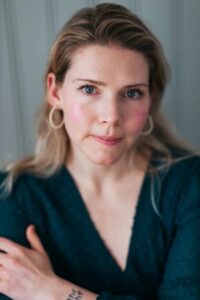 Margrét Ann Thors is a writer based in Reykjavík, Iceland. Originally from Fairfield County, Connecticut, she holds a BA, MA and MFA from Columbia University and teaches at the University of Iceland. In 2025, she earned her PhD with an emphasis on literature after 9/11. Her creative writing has been published in Glamour, Creative Nonfiction, Ós Pressan, Storychord and other outlets. Freyja is her first novel.