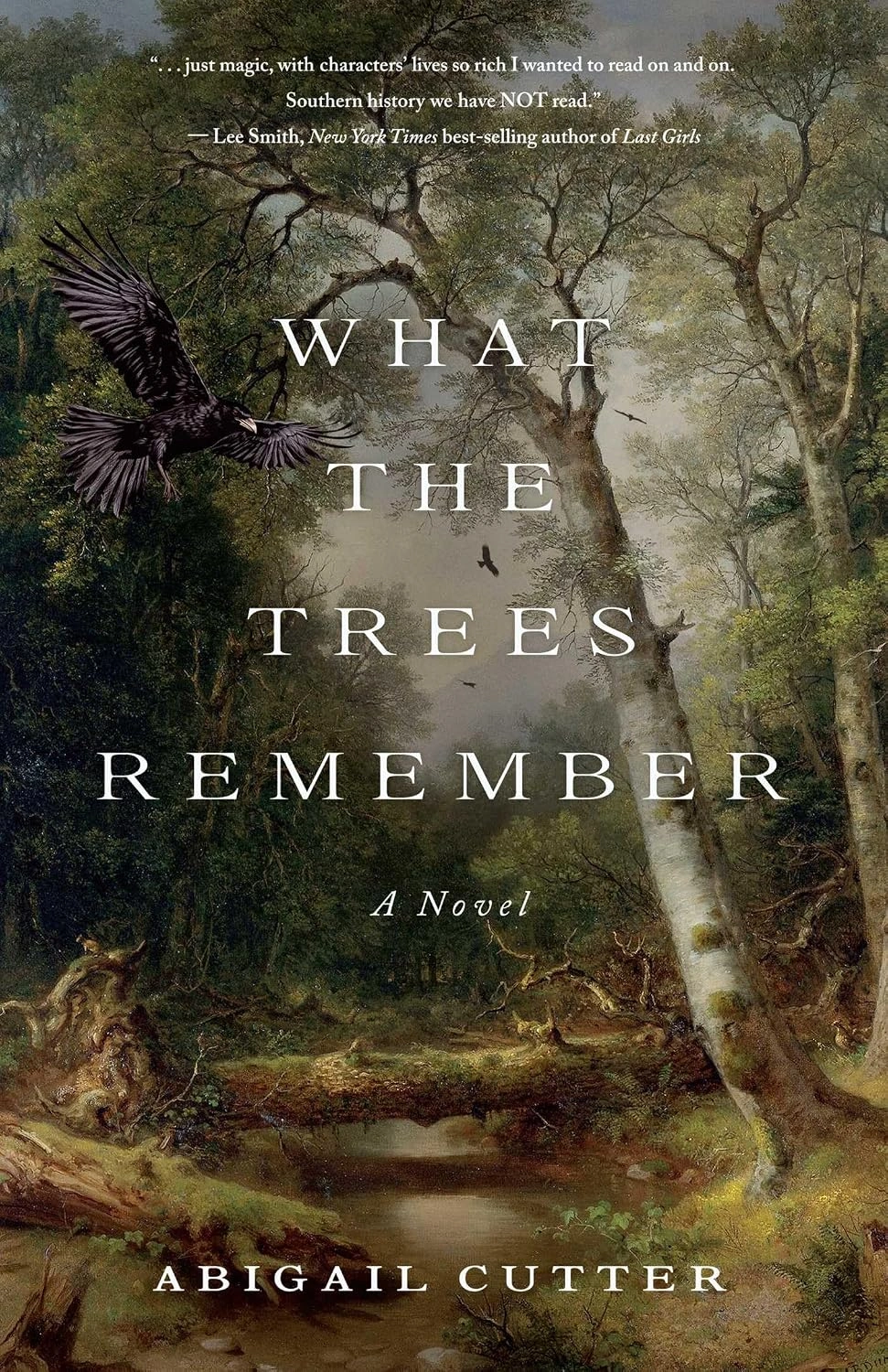
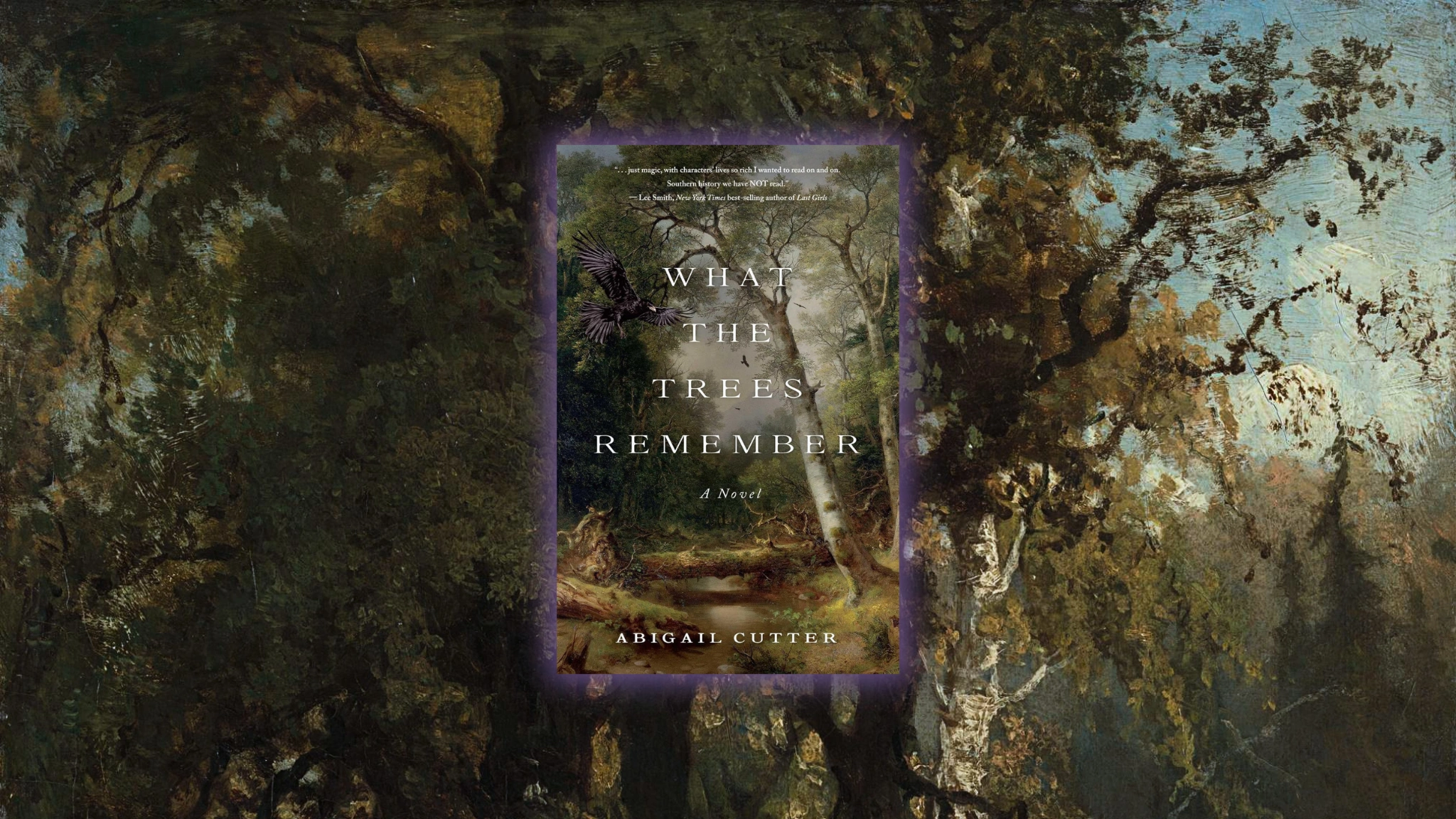
What the Trees Remember by Abigail Cutter
What the Trees Remember by Abigail Cutter is a powerful piece of historical fiction. The novel centers on Dora Minor, a ninety-three-year-old woman riding out the catastrophic 1969 flood caused by Hurricane Camille alone in her mountain home in Nelson County, Virginia, with only her two dogs for company. As the storm tears the mountainside apart around her, Cutter interweaves this terrifying night with Dora’s life story stretching back to 1877, and the effect is impressive: two timelines, decades apart, that gradually reveal how the sins and secrets of the past shaped the woman huddled in that farmhouse waiting to see if she’ll survive until dawn.
History’s Buried Wounds
The historical thread doesn’t shy away from the brutal realities of Reconstruction-era and Jim Crow Virginia — interracial friendship criminalized as “miscegenation,” a Quaker family’s uneasy relationship with its own principles, and, at the story’s dark center, the lynching of a Black child that Dora witnessed and never spoke of. Cutter based this on an actual 1904 lynching of a nine-year-old boy in Nelson County, and her author’s note explains the research behind it. I appreciate the commitment to historical accuracy. Dora’s decades of self-imposed isolation on the mountain make devastating sense once you understand what she’s been carrying, and what she failed to do when it mattered.
Cutter writes the mountain, the creek, the oak trees and the animals with the eye of someone who clearly knows this land intimately (she lives on an eighteenth-century Virginia farm herself, which shows). The flood sequences are full of detail — lightning skipping horizontally across the ground, trees tumbling downstream “enmeshed like lovers” — while the quieter 1877-1895 chapters have an entirely different, unhurried rhythm, full of front-porch conversations, canning tomatoes and small-town gossip that makes the eventual violence land harder.
A Life Shaped by Memory and Survival
Dora is a wonderful creation: prickly, self-reliant, funny in a dry way, deeply flawed and moving. Watching her sing hymns to a wandering cow one chapter and confront the worst thing she’s ever done a few chapters later is an achievement of characterization.
Cutter paces the reveals expertly, letting the 1969 flood night and the decades-old backstory illuminate each other right up to the final pages. Thematically, the novel’s meditation on geological time versus human time gives the book an unexpected philosophical depth beneath its human drama.
This is a novel for readers who love Southern historical fiction. It doesn’t flinch from ugly history, but there’s warmth, humor and a hopefulness running through it.
About Abigail Cutter: