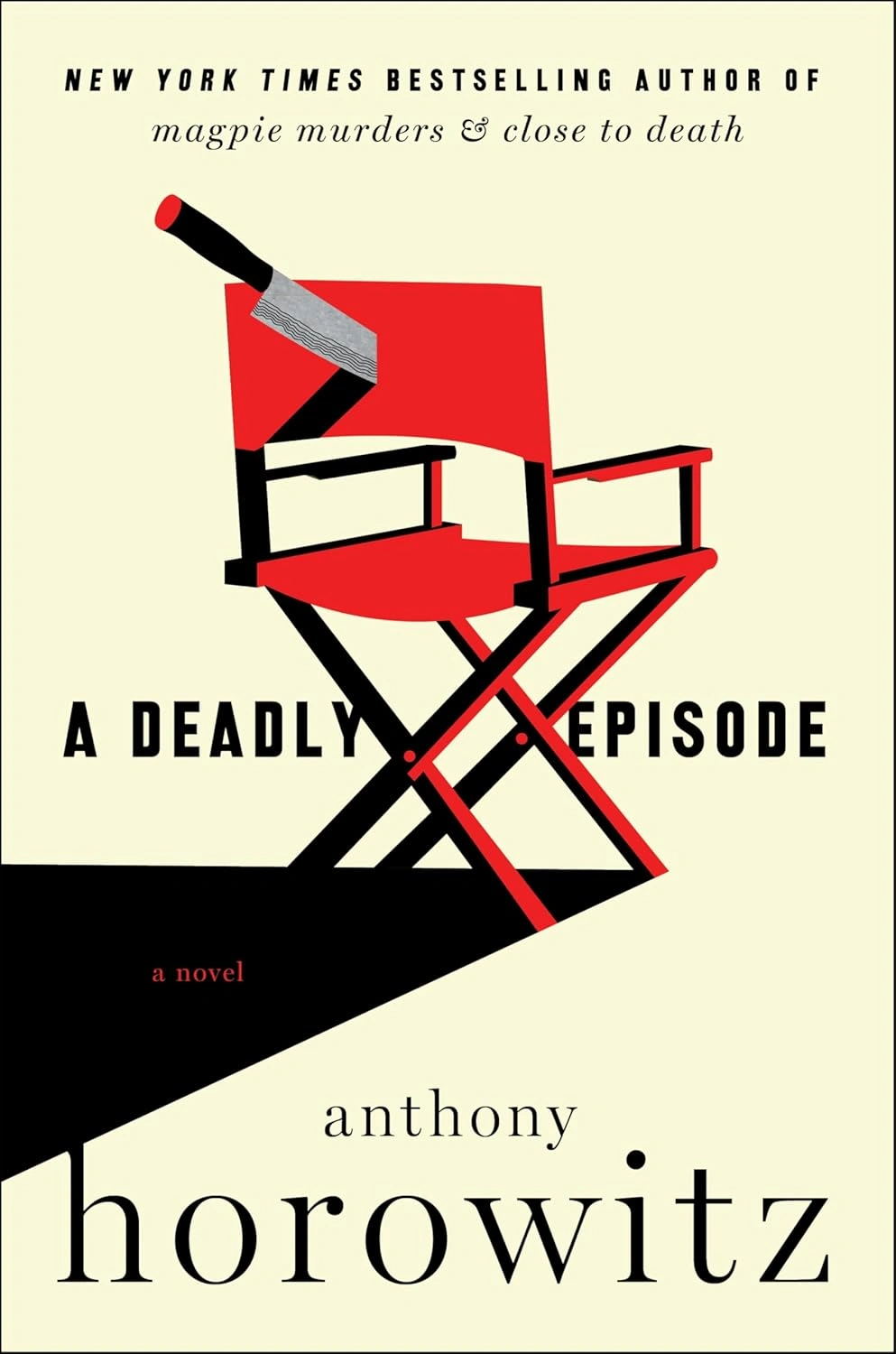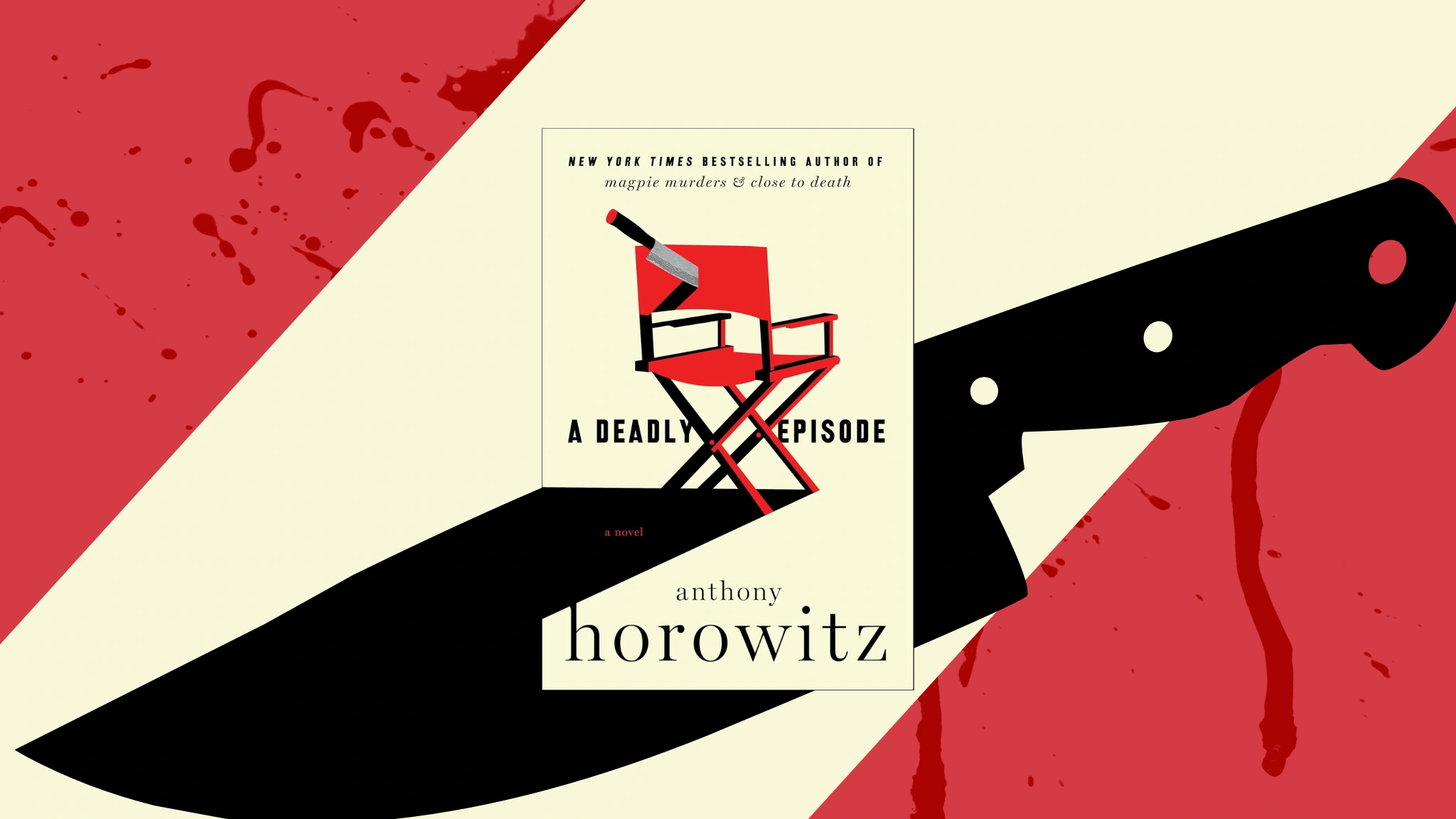
A Deadly Episode by Anthony Horowitz
A Deadly Episode is the sixth installment in the clever and endlessly engrossing metafictional universe Hawthorne and Horowitz series. It places the richly imagined, unconventional, disgraced former detective inspector turned private investigator Daniel Hawthorne and the real-life author Anthony Horowitz in an uneasy partnership. This deft and intriguing blending of real and imaginary makes it easy to forget Hawthorne is a vivified figment of a fantastically fertile mind, and particularly so in A Deadly Episode, where Hawthorne is accorded celebrity status and enjoys near adulation on a movie set. As in the previous entries, the author serves in the more passive role as narrator and biographer.
A More Revealing Portrait of Hawthorne
Although each mystery can be read as a stand-alone novel, additional fascinating details continue to reveal more of Hawthorne’s character. Readers learn, much to Horowitz’s surprise, that Daniel is a book club participant and knowledgeable aficionado of classic British and foreign ‘art house’ films, which he enjoys at his Southbank local cinema, the British Film Institute (BFI). In this novel, this customarily taciturn individual suddenly becomes charming and loquacious with a film cast and crew.
Here the focus is on lampooning movie making rather than satirizing the publishing industry as in the previous whodunits. In it, the first documented collaboration between our protagonists, The Word is Murder, has been optioned, and filming has been underway for three weeks in Hastings on the south coast of England. This location is familiar territory for Anthony Horowitz, as the majority of his television series, Foyle’s War, was shot there. However, neither he nor his executive producer wife Jill Green had been directly involved in this troubled production. When he arrives on the set, it is suffering from a rather dreadfully woke screenplay that differs significantly from the book, is rife with discord and personality clashes, and is already well over budget. Rumor has it that bills have gone unpaid and promised funding dried up when the producer’s financier father died and his widow was reluctant to honor his verbal commitment with his daughter Teresa.
Lights, Camera, Murder
Hawthorne has been on site as a hired consultant and honored observer housed in a luxury suite with a car and meals provided. On the other hand, Horowitz has been ignored, left to pay for his own transportation and accommodations and to schlepp his own luggage from the train to the hotel with none to welcome or assist him. David Caine, the obnoxiously demanding, difficult star who is playing Hawthorne, fired his agent and personal assistant, alienated fellow cast and crew, and is eager to depart for a lucrative contract for three action films. Too bad he was found stabbed to death in his trailer. With a trail of broken relationships and bad behavior, he was almost universally disliked thus effectively giving nearly everyone a motive for murder. Suspicion falls immediately on co-star Ralph Seymour, who is playing Horowitz, when it is revealed Caine had deliberately caused him to be humiliated three years earlier at a BAFTA Awards Ceremony.
Horowitz speculates Daniel Hawthorne may have been the intended victim instead of the actor impersonating him and begins investigating in earnest. Instinctively, he suspects a decade ago the canny detective may have inadvertently aided in the conviction of an innocent man who later committed suicide in prison. It was his first case after leaving the police force and one he has refused to discuss. Solving this murder may compel the brusque, enigmatic Hawthorne to share deeply held personal secrets. The story now shifts to Reeth, a tiny village in Yorkshire, where the orphaned Hawthorne grew up. Wealthy landowners Edward and Anne Ratcliffe are not pleased the case involving their former farm manager is under scrutiny, but the truth will out.
An Entertaining Mystery with Emotional Depth
A Deadly Episode is great fun with its puzzling conundrum linked inextricably with a previous, devilishly challenging mystery. Pleasure is enhanced by Anthony Horowitz’s fine plotting, brilliant exposition, and convincing role as narrator/protagonist within his own creation. The engaging conversational style effectively draws the reader in as a willing participant more than eager for the next installment. With the Magpie Murders trilogy now complete, perhaps Hawthorne and Horowitz will be accorded the same opportunity to become a television series?
About Anthony Horowitz:
 Anthony Horowitz is one of the UK’s most prolific and successful writers, unique in being active in both adult and YA fiction, TV, theatre and journalism. Several of his novels have been instant New York Times bestsellers. His Alex Rider spy series for young adults has sold more than twenty million copies worldwide and has become a hugely successful show on Amazon Prime Video. Marble Hall Murders, the third part of his Susan Ryeland series, has just been filmed for PBS. He lives in London and was recently awarded the CBE for services to literature.