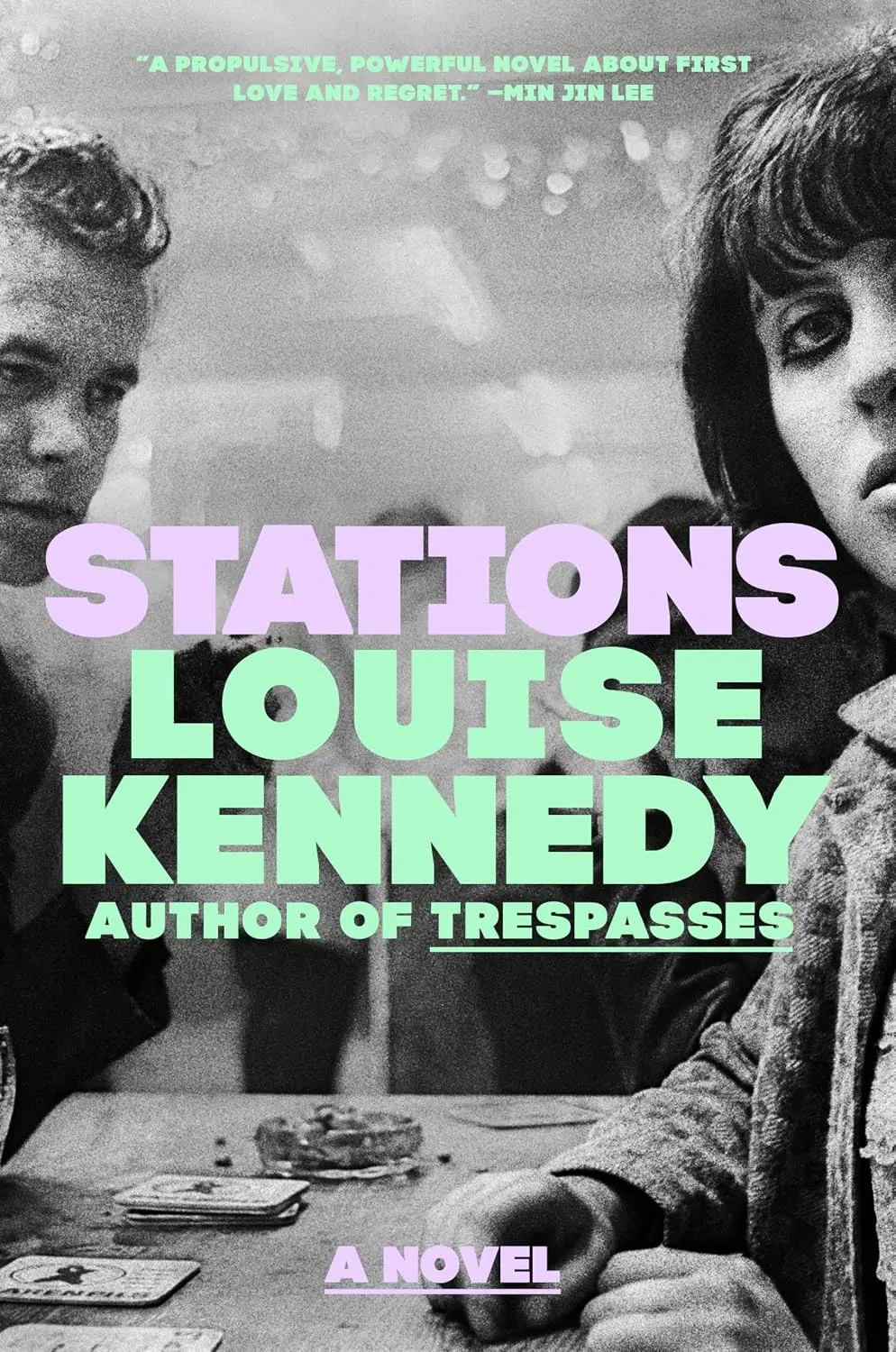
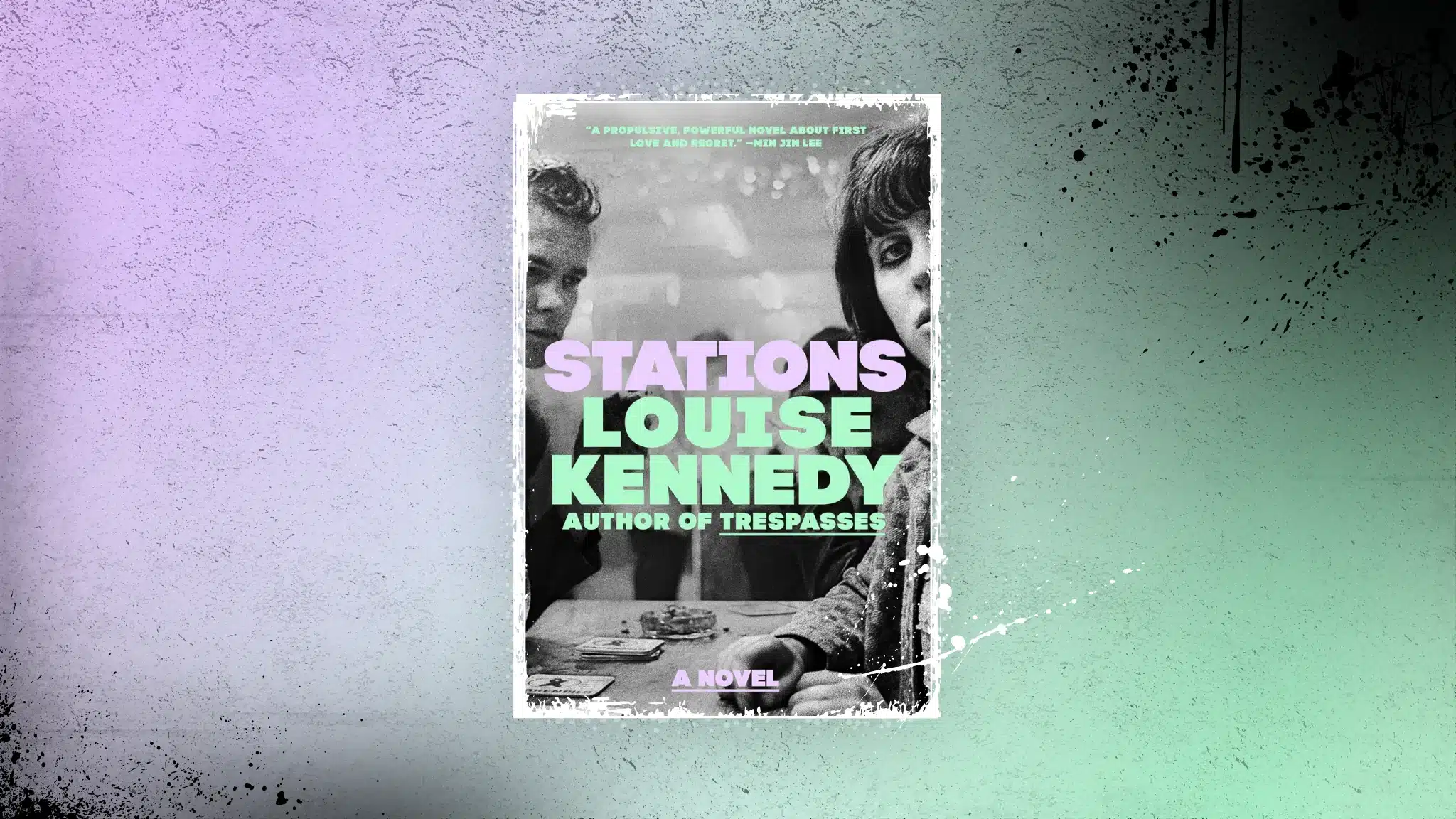
Stations by Louise Kennedy
Louise Kennedy’s Stations is a gritty, raw story about adolescent insecurity, the vulnerabilities that stick, and the people we carry with us into adulthood.
Stations opens in Ireland in 1982, when a friendless Róisín is first pulled in by the magnetic rebel Red Camelin. They quickly become inseparable, Róisín fascinated by Red’s intelligent, opinionated, and strong-willed nature. Red is veiled in mystery in a way that is irresistible for a girl like Róisín, who has been cast aside as an outsider.
Almost immediately, there is a tension surrounding the unspoken question of what they are to each other. What their love for one another could mean. But to Róisín, in the clutches of adolescence, that seems like the most dangerous question of all.
As the years go by, they become more distant. Róisín finds Red in London after visiting her alcoholic father and his new family for Christmas. She gets swept up in his grimy life in London, living in squats and just barely scraping by. Drugs, alcohol and sex on dirty mattresses. Róisín must decide if she wants to stay loyal to her Red or pull herself away from his self-destructive life before she drowns.
From 1982 to 2007, from Ireland to London and back again, Stations follows Róisín through an unstable youth into adulthood as she is haunted by all the things she couldn’t be for her friend Red.
The Scars of Youth
Stations made me feel on a whole new level how hard it is to be young. The scars that get left behind when you are dealt a rocky adolescence without the support and stability you crave while your identity is in a sort of soul-crushing, turbulent state.
Róisín’s mind is a brutal place. As a young girl, she is self-absorbed and self-deprecating, but her compassion and loyalty towards Red shines through. With stark, dated time jumps throughout the story, we see Róisín grow into a woman and watch as all of the things that are forgivable in girlhood — self-absorption, desperation, pessimism — become ugly in adulthood as Róisín continues to put herself down and drag others down with her. The uncomfortable vulnerabilities of being young turn into the uncomfortable vulnerabilities of being human.
Kennedy’s characters are all as complicated and deeply flawed as can be. In their own way, they are all witty and lovable at times, desperate, harsh, and hateable at others. It is with a painfully raw realness that we are able to empathize with the flaws of each of them.
Abuse & Ambiguity
Stations is a prime example of how abuse breeds abuse. Each character is a victim of these cycles in one way or another. Kennedy provides a touchstone for the collective Irish experience, what it was and how the effects still linger now.
This story hits close to home for anyone who has ever watched a friend or someone they care about struggle with substance abuse. When figuring out where they are or how they are doing becomes a full-time job and then becomes altogether unmanageable. That all-consuming wish that you could pull them out of it. That you could grab them by the collar and shake some sense into them. The shame and guilt you feel as you watch them slowly slip away. Róisín grapples with this all her life. Even long after Red has been lost to her, he is the one she addresses her thoughts to. He is her other half. But how is one meant to find contentment in life when your other half is all but a ghost?
Kennedy approaches the story with a subtle ambiguity. So much is understood and yet left unsaid. Stations socks us with hard themes and topics that land quietly but, in the end, hit just as hard.
About Louise Kennedy:
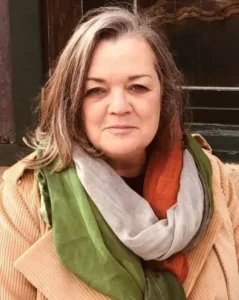 Louise Kennedy grew up a few miles from Belfast. She is the author of the acclaimed short-story collection The End of the World Is a Cul de Sac, which won the John McGahern Prize.
Her debut novel Trespasses, published in 2022, has been translated into over twenty languages. It won Eason Novel of the Year at the An Post Irish Book Awards, Book of the Year: Debut Fiction at the British Book Awards, and the McKitterick Prize, and was also shortlisted for several awards including the Women’s Prize for Fiction, the Waterstones Debut Fiction Prize, and the Barnes & Noble Discover Prize.
In 2025, Trespasses was adapted into a BAFTA award-winning limited TV series by Channel 4, starring Lola Petticrew, Tom Cullen, and Gillian Anderson. Her second novel, Stations, publishes in September 2026.
Before starting her writing career, Kennedy spent nearly thirty years working as a chef. She lives in Sligo.