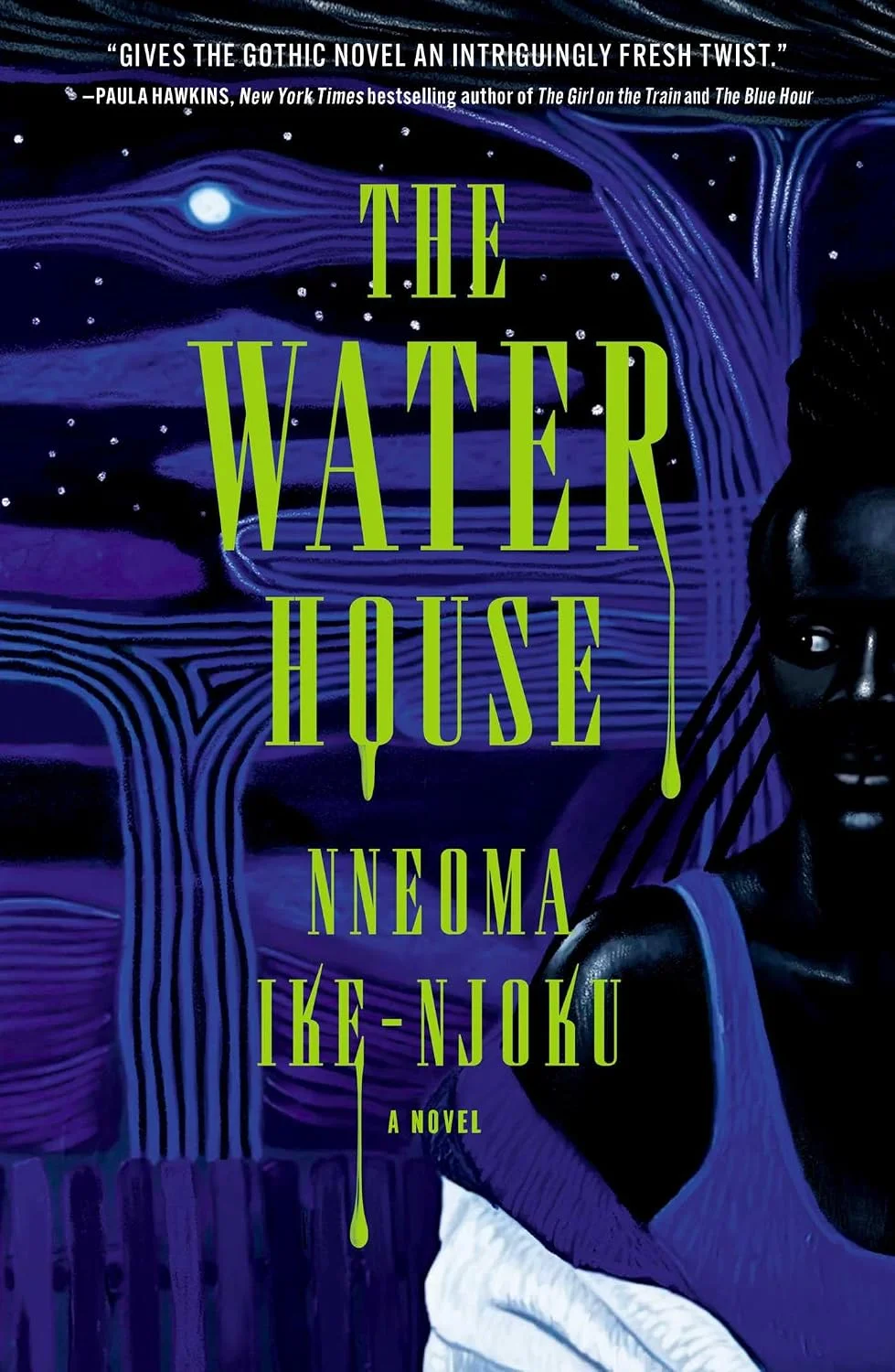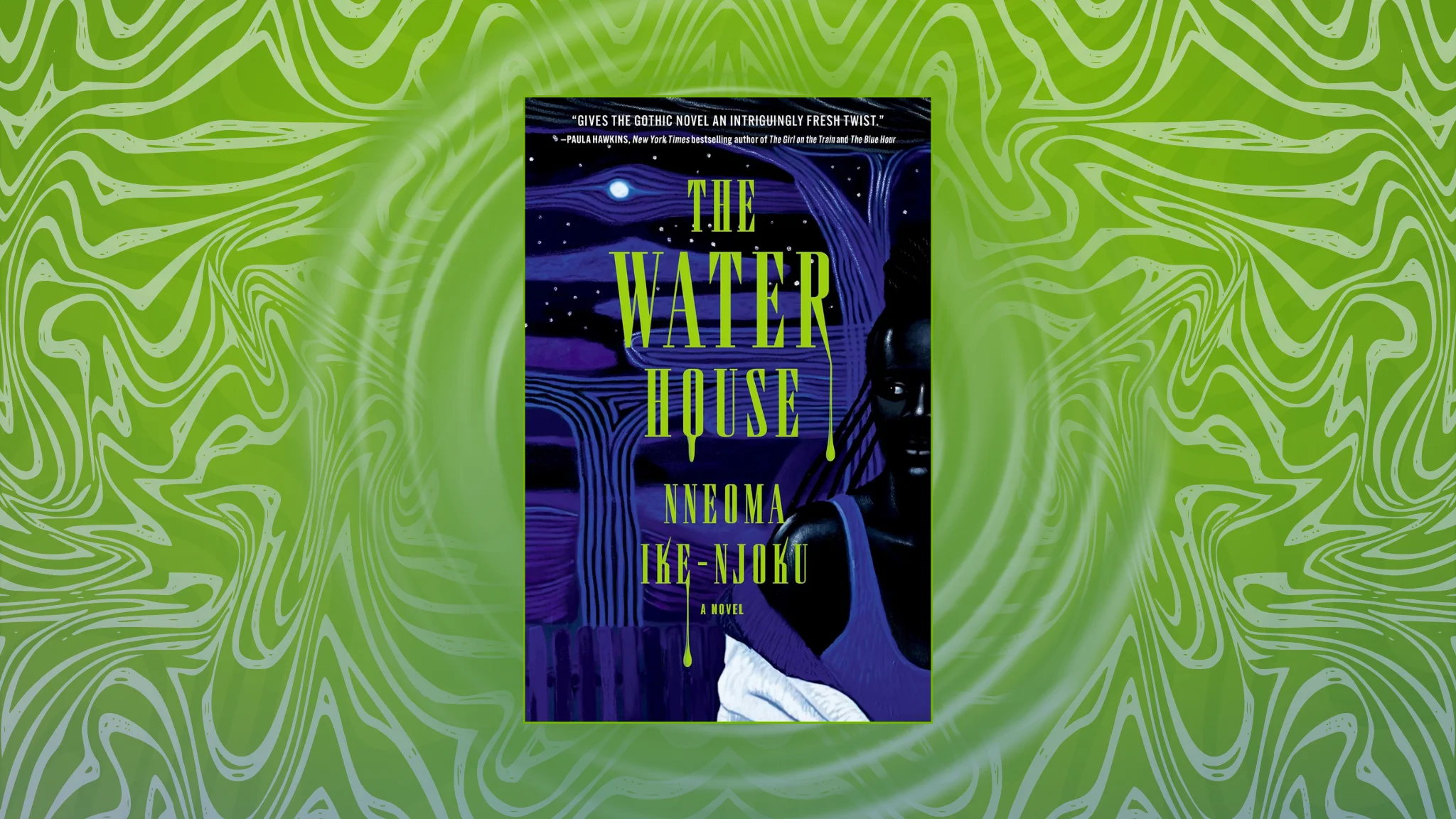
The Water House by Nneoma Ike-Njoku
“One child doesn’t make it out of this story alive. Perhaps it’s the wrong one. I think everyone else might have wondered the same thing at some point.”
A destitute young woman with a deeply troubled past. A brooding, enigmatic stranger who offers to marry her. A large house on a remote island, filled with secrets and haunted by a near-spectral inhabitant.
You think you know what this is all about, but this is no nineteenth-century estate on the British moors. In Nneoma Ike-Njoku’s The Water House, it is 1967 Nigeria, on the eve of bloody civil war, and the house the woman returns to is her own. She thinks she knows all its mysteries. She is dead wrong.
At the age of 12, Celia da Silva was sent to a school for delinquent girls. The reason: her suspected fratricide by drowning of her younger brother, Ruben. Did she do it? Even Celia does not know for sure.
Fourteen years later, the school closes, and she is cast out onto the street. She lands a job as a typist in town, though she is not very good at it, and doesn’t fit in with the other girls. She does, however, catch the eye of an aspiring local politician who happens to be in need of a wife, “just until the election.” He proposes a sum; she accepts. It feels like a way to start a new life.
Until it doesn’t. With everything falling apart, she flees to the only possible place she has left: the house on the island from which she’d been banished. But the ghosts are still there, both real and imagined, and there are more of them. As the world around her explodes into violence, she must fight her own desperate battle – or she may become a ghost herself.
A unique shivery take on a classic form set in a wholly new environment, The Water House has many tricks up its sleeve. Celia has no idea what she’s in for. Neither do you.
Things That Are Revealed, Things That Are Kept Hidden
Where did this book even come from? “The novel started out as my thesis during my MFA at Cornell,” the author explains. “I had this idea of a girl and her brother, this sibling relationship, which is at the heart of the novel. The dynamics of this family and the relationship between the siblings, and the roots of all of that, was also something I was interested in very early on. I read Jane Eyre for the first time in graduate school (late, I know!) and soon after that I read Rebecca by Daphne du Maurier, and I was mind-blown. The Gothic as a vehicle for the story of this family started to appeal to me early on, this picture of a house that’s no longer able to hold its secrets, and the novel grew from there.
“Jane Eyre and Rebecca both play with things that are revealed and the things that are kept hidden, both from the characters and from the reader. I was also very fascinated by black Gothic, with books like Toni Morrison’s Beloved and Octavia Butler’s Kindred, and a lot of Buchi Emecheta’s work, like Second Class Citizen, which plays with the idea of not just physical confinement but psychological confinement within systems. Add to that the burden of innocence on a character when human beings and circumstances conspire to paint you guilty or deprive you of a voice.”
Other elements went into the book as well. In the dedication, she thanks her grandmothers and great-grandmothers for their “priceless gifts of stories and of language”: “My name was given me in honor of my paternal grandmother and great-grandmother, neither of whom I met. My parents told me how both their mothers would literally sit them down to tell them folklore, which they passed down to me. It amazes me that in the midst of all that was going on in their lives, they found time to pass on the stories that shaped my mother and father into the supportive parents they’ve been to me.”
And research, too, played a part. It obviously took work to get the details right about Nigeria in 1967, with war clouds forming. One detail in particular, though, may surprise you: “I had to do a lot of research into how to use a typewriter, and what it’s like to work as a typist.” Were it not for a typing manual one professor gave the author, Celia might have floundered even more.
None of which is to say that Ike-Njoku isn’t old-school herself. She wrote the entire first draft of the novel by hand, which helped her think through the story, and she read the words out loud, “to get a feel for how they sounded together.”
All of that resulted in a book … which she put aside for two years. Then she entered it into a contest; one of the judges shared it with her own agent, who reached out to Ike-Njoku, and now we all have a chance to read about Celia da Silva and the many secrets of the Water House. By the time you’re done, Celia may not be the only one feeling haunted. …
About Nneoma Ike-Njoku
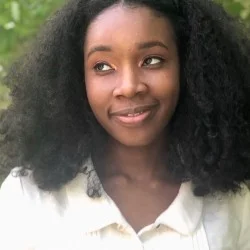 Nneoma Ike-Njoku, PhD, was born in Lagos, Nigeria. A MacDowell Fellow, she was commissioned in 2022 to create an original short story for the Newman Wetlands Center, and is the recipient of a Betty Trask Award, as well as grants and residencies from Kimbilio, the Miles Morland Foundation and Millay Arts, among others. She received her BA in Liberal Arts from St. John’s College, where she studied literature, mathematics and music; her MFA in Creative Writing from Cornell University; and her PhD in English Literature from the University of Georgia. The Water House is her first novel.