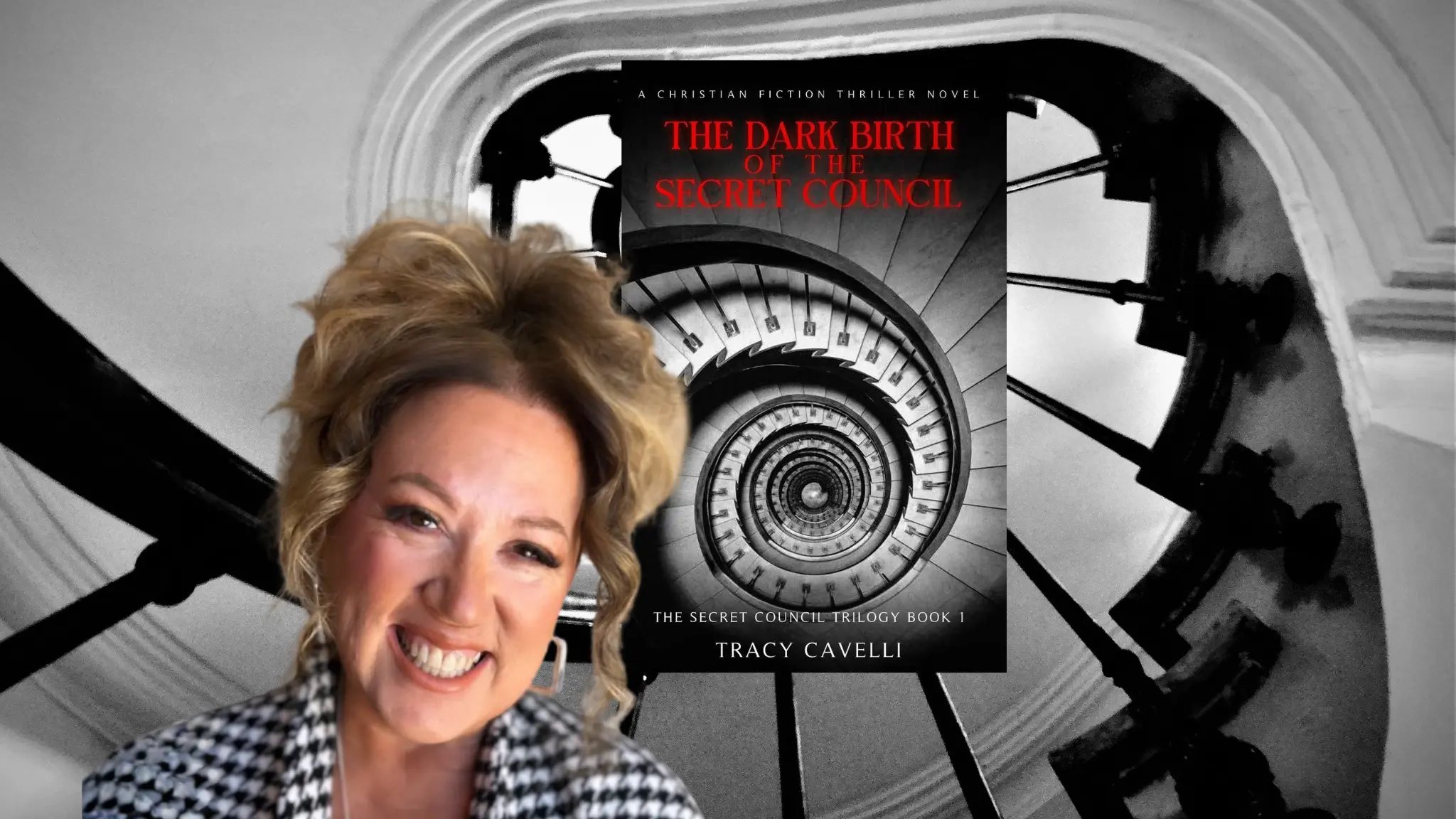
- What inspired you to blend elements of suspense and fantasy within a Christian framework in The Dark Birth of the Secret Council?
I was inspired to blend suspense and fantasy within a Christian framework of The Dark Birth of the Secret Council because I wanted to explore spiritual truth through a vivid, imaginative lens. Fantasy allows me to portray unseen battles, supernatural forces and deeper moral conflicts in a way that feels both gripping and symbolic. The suspense element helps keep readers emotionally invested while highlighting the urgency of the spiritual struggles we all face.
By weaving these genres together, my goal was to create a story that entertains while also pointing readers toward hope, purpose and the reality of God’s presence in the midst of darkness. The Christian framework anchors the story in truth, reminding us that even when the unseen world feels overwhelming, light is always stronger than the shadows.
2. Can you share more about Trisha Maitland’s character development throughout the trilogy? What challenges does she face that strengthen her faith?
Trisha Maitland begins the trilogy as someone carrying quiet wounds—uncertainties about her identity, a complicated past she rarely speaks of and a nagging sense that she’s meant for something more than the ordinary life she’s living. She’s intelligent and observant, but her confidence is fragile at times. Her faith exists, but it’s untested, more inherited than deeply rooted.
In The Dark Birth of the Secret Council, Trisha’s world is shaken open. She’s thrust into a conflict she never asked for—one involving ancient spiritual forces, hidden councils and a darkness that has quietly shaped the lives of the people around her. Her early challenge is simply believing what she sees. The supernatural encounters push her to confront the limits of her understanding. At first, fear threatens to consume her, but it becomes the doorway to a more honest dependance upon God.
Some key challenges that strengthen her faith is that she must accept that the spiritual realm is real, active and closer than she ever imagined. What once felt like abstract belief becomes personal. Seeing this reality forces her to shrink back or step forward with courage.
Throughout the trilogy, moments from Trisha’s past resurface—choices she regrets, relationships that wounded her and secrets she worked hard to bury. Instead of being crushed by them, she learns to surrender them, allowing God to turn weakness into strength.
Trish has always relied on her own reasoning and control. But the mysteries surrounding The Dark Birth of the Secret Council demand faith that goes beyond what she can explain. She slowly discovers that trust isn’t blind—but obedient.
By the end of the trilogy, Trisha is no longer the hesitant, uncertain woman she was at the beginning. She becomes a fierce, faith-grounded leader. She becomes someone who understands her purpose and refuses to let darkness dictate her story. Her journey is one of awakening, surrender, courage and redemption, and it mirrors spiritual growth many believers experience when faced with trials that draw them closer to God.
3. The novel references a sinister dragon emblem. Can you explain the significance within the story and what it represents in the battle between good and evil?
The significance of the dragon emblem in The Dark Birth of the Secret Council is more than a symbol—it is a spiritual marker of the ancient evil operating behind the scenes of the trilogy. From the moment it appears, it signals that the darkness that Trisha and the others face is not random, but deeply rooted, intentional, and centuries old.
The dragon represents the unseen force manipulating the Secret Council from the shadows. While the council presents itself as enlightened and progressive, the emblem reveals its true allegiance. The dragon’s presence throughout the trilogy is on documents, relics and secret chambers of its origins are linked to a darker spiritual pact—one that seeks influence over human leadership, morality and truth. The dragon also mirrors the way darkness coils into people’s lives, distorting truth and tempting them with false promises.
4. Your book touches on spiritual themes and the power of prayer. How do you incorporate your own faith into your writing process?
In writing The Dark Birth of the Secret Council trilogy, my faith isn’t something I add at the end—it’s woven through every stage of the process. For me, storytelling becomes a kind of communion with God, a conversation between imagination and inspiration. Before I write, I take a moment to pray—sometimes a simple whisper, sometimes a deeper plea for clarity and direction. I ask God to guide the story, to protect my mind from distraction and to let my words serve a purpose beyond entertainment.
When I’m building characters, or developing themes, I seek God’s direction. I ask: What truth is hiding beneath this moment? What does God want the reader to feel or understand? Even in moments of suspense or spiritual darkness, I’m looking for the thread of hope and redemption that reflects God’s Heart. Although not every scene contains a Bible verse, but Scripture shapes the moral and spiritual architecture of the story.
I write with purpose, not preaching. My goal isn’t to lecture; it’s to illuminate. I want the spiritual themes to emerge naturally through the characters’ choices, the symbolism, the tension and the supernatural elements. Faith becomes the foundation, not the spotlight. Ultimately my writing is an act of faith and I believe that God works through creativity, imagination, and story. So I invite Him into the process, trusting that the words will reach the right hearts at the right time. Even when I’m crafting scenes filled with darkness or suspense, I’m always writing toward the Light.
5. The concept of “Elsewhere” is intriguing. What is the purpose in the narrative, and how does it contribute to the overall journey of the characters?
“Elsewhere” offers depth, mystery and spiritual weight within the trilogy. “Elsewhere” is more than just a location—it’s a threshold between the physical world and the spiritual world and the spiritual forces shaping it. It stands as a crossroads of revelation, danger and transformation. Its presence in the narrative helps the characters confront truths they would never face within the safety of their normal world. “Elsewhere” exposes the veil between realities. It allow the characters to witness a spiritual landscape influencing their lives, both the darkness pursuing them and the light protecting them. It strips away the illusion that the battle is merely human.
For Trish, “Elsewhere” becomes the place where faith becomes sight, where abstract belief becomes an undeniable experience. Characters cannot hide from themselves there, and what is unresolved in them surfaces. Things such as insecurity, trauma, temptation and calling. In this way, “Elsewhere” become a crucable for spiritual refinement. It also shows that the Secret Council’s power is rooted in something older and more malevolent than human ambition. It is a place where darkness reveals itself fully… and where Light proves it will not back down.
6. As an author exploring the realms of fiction, thriller and fantasy, what do you hope readers take away from the series?
As an author blending fiction, thriller and fantasy within a Christian worldview, my deepest hope is that readers walk away from my trilogy with more than just the memory of a gripping story—I want them to feel something awaken within themselves. I hope that readers sense that there is far more happening behind the scenes of life than we often realize. The story’s supernatural elements aren’t just for thrills—they serve as reminders that we are part of a larger spiritual narrative, one where Light and darkness are consistently at work. Many of my characters wrestle with brokenness, regret, or confusion about who they are.
Through them, I hope my readers see that: God can heal what feels fractured, identity rooted in Him, not of past mistakes, and every person has purpose, even when they feel overlooked or uncertain. My heartfelt prayer for this book is that I pray the readers finish this book with a renewed sense of faith, a strengthened spirit and the belief that even in the darkest moments, God is present, powerful and writing a greater story of their life than we can see.
7. Can you give us a sneak peak of the themes and challenges that will be explored in the upcoming second and third books of the trilogy?
They will both be out very soon … so everyone needs to get the first book read and be ready for the next two! In book two, “The Evil Unveiling” darkness tightens it’s grip—and the consequences of the Council’s awakening spill violently into the physical world. In book three “Light Breaks Forth” is when the final confrontation erupts, every lesson, every loss and every prayer from the journey converges into a battle where courage, identity and faith determine the fate of both realms. Ancient prophecies ignite. Betrayals come to light. The dragon’s origins is revealed in a way that shakes the foundation of everything. Every character must decide who they truly serve when the illusions fall away.