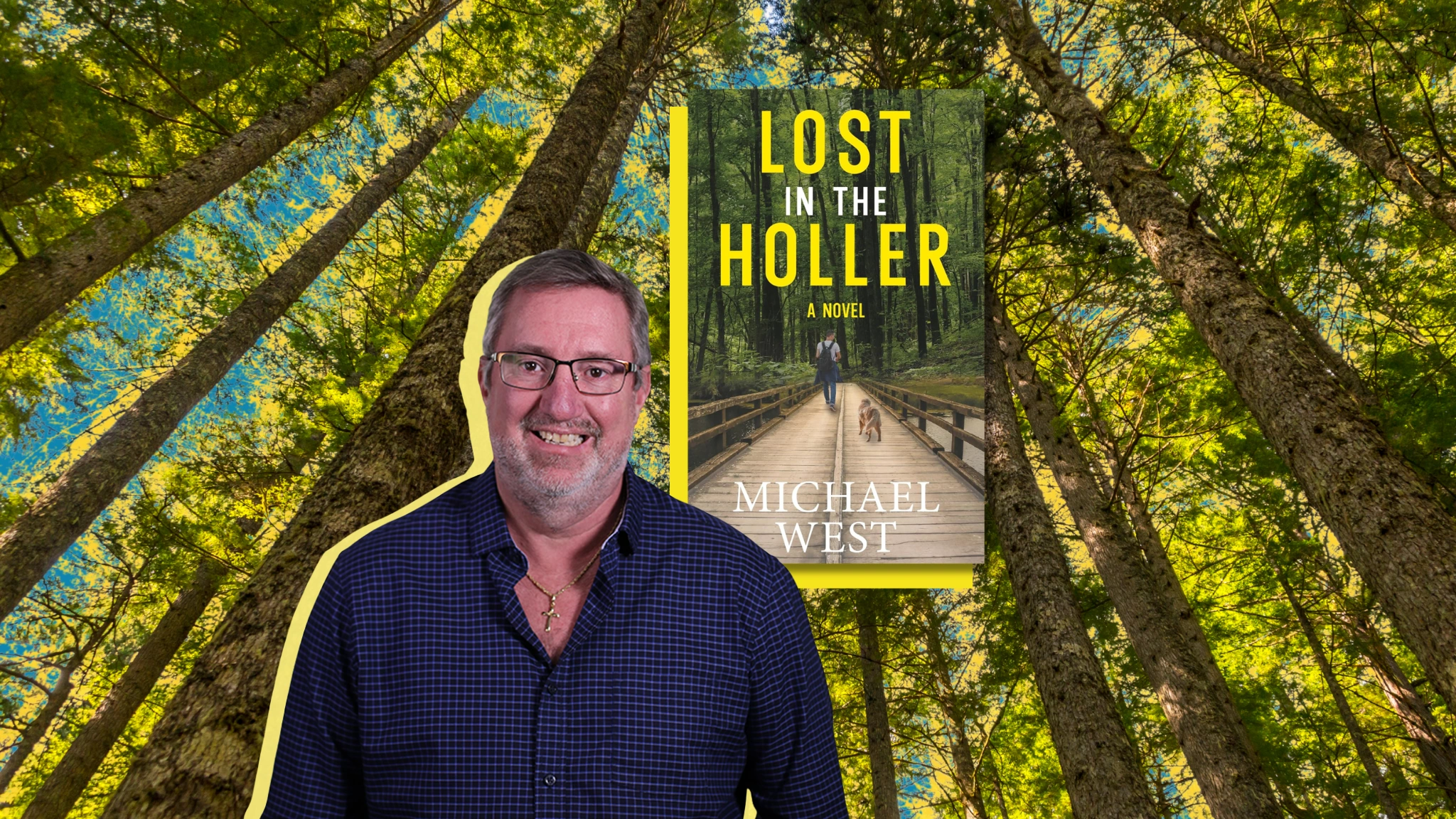
What inspired you to write Lost in the Holler, and how does it reflect your own experiences growing up in Appalachia?
My life continually reminds me of my childhood living among people whose geography defined their personality. When I reflect on my relatives, I see simple people with ingrained customs and an ever-present stubborn streak; with firm principles guiding them, they were reticent to alter. Their lives and history are fascinating. Mountain people are uniquely unique. Despite the proliferation of information, they consistently maintain their view of right and wrong. I was excited to see if I could capture that perspective in a contemporary world without suggesting a backward mindset.
Can you discuss the significance of the setting, Gizzard’s Holler, and how it shapes RJ Burnette’s journey of self-discovery?
RL’s fictional home in Gizzard’s Holler was critical to his journey. A holler is a small valley with mountains on both sides. There is only one way into a holler and one way out; you leave a holler on the same road you took to get there. His return home followed the path he had taken when he left. The question was going to be: could he stay sheltered in the holler or was he ultimately going to retrace his steps and leave his family behind using the same path as before?
In the book, RJ revisits his family’s history and emotional struggles. What message do you hope readers take away about the importance of understanding one’s heritage?
I have heard it said that we are all born into someone else’s story. What RJ explored was if you leave that story, can you go back? RJ’s struggles represent the challenge individuals face when they seek to find their own path independent of their heritage. For RJ, even a clean departure after college left him unsure of what he was doing. He learned, and I think it is true for all of us, that understanding your heritage is part of knowing who you are. A historical void can leave a hole in your spirit.
RJ’s journey involves leaving a high-pressure career in New York. How does his experience reflect broader themes of personal fulfillment and finding one’s true self?
I think it captures what many people experience: an attempt to lean into a demanding career while wondering if you can accomplish the task without losing yourself. RJ’s evolution was extreme; he left an isolated community for the center of business. It was natural he would have moments of doubt. Better yet, he was bound to wonder how to square the disparity between RJ from the holler and RJ the New Yorker. It is an age-old question: can you have professional success without compromising your core identity?
Can you elaborate on the role of familial bonds in the book and how they influence RJ’s perspective on life?
RJ had a unique situation: he was from a large family and part of a close-knit community, but the circumstances of the timing of his birth made him an outlier. He grew up like an only child, unaware of the family history that preceded him. It disconnected him from the traditional family bonds he would have experienced. It wasn’t until he returned home as an adult, and not a child, that he felt the need/urge to define and strengthen family bonds. Life and experience taught him something everyone else in the holler already knew: being a part of the family group was special.
The book touches on themes of identity and honesty. How do you see these themes playing a role in the current societal context?
It is easy to struggle with personal identity. The world is moving fast, and the opportunities to slow down and remind yourself who you are seem uncommon. I have experienced this myself. I have wondered: am I a business executive, a family man, a storyteller or a kid from the hills of East Tennessee. It is hard to project you are all those things, as others expect you to be who they need, but I am all those things. As to societal honesty, society seems to debate how to define honesty. More so now than at any other time before, people are using their own rules to embrace honesty. In Gizzard’s Holler, honesty didn’t follow a path that many would suggest reflects honesty and truth. And yet, the people who lived in that tiny mountain enclave were comfortable with the rules that governed what they would say and what they would hide.
What challenges did you face while writing this novel, and how did you overcome them to convey RJ’s complex experiences and emotions?
I particularly focused on the story’s pace. RJ’s New York experience was fast-paced, with a sense of urgency in everything he did. His return home would naturally conflict with what he had become accustomed to. I needed to allow him to assimilate into the flow of the community. To do that, it was important that RJ experienced emotions as he faced the challenge of slowing down. He wanted answers fast. His hometown would not give him that.