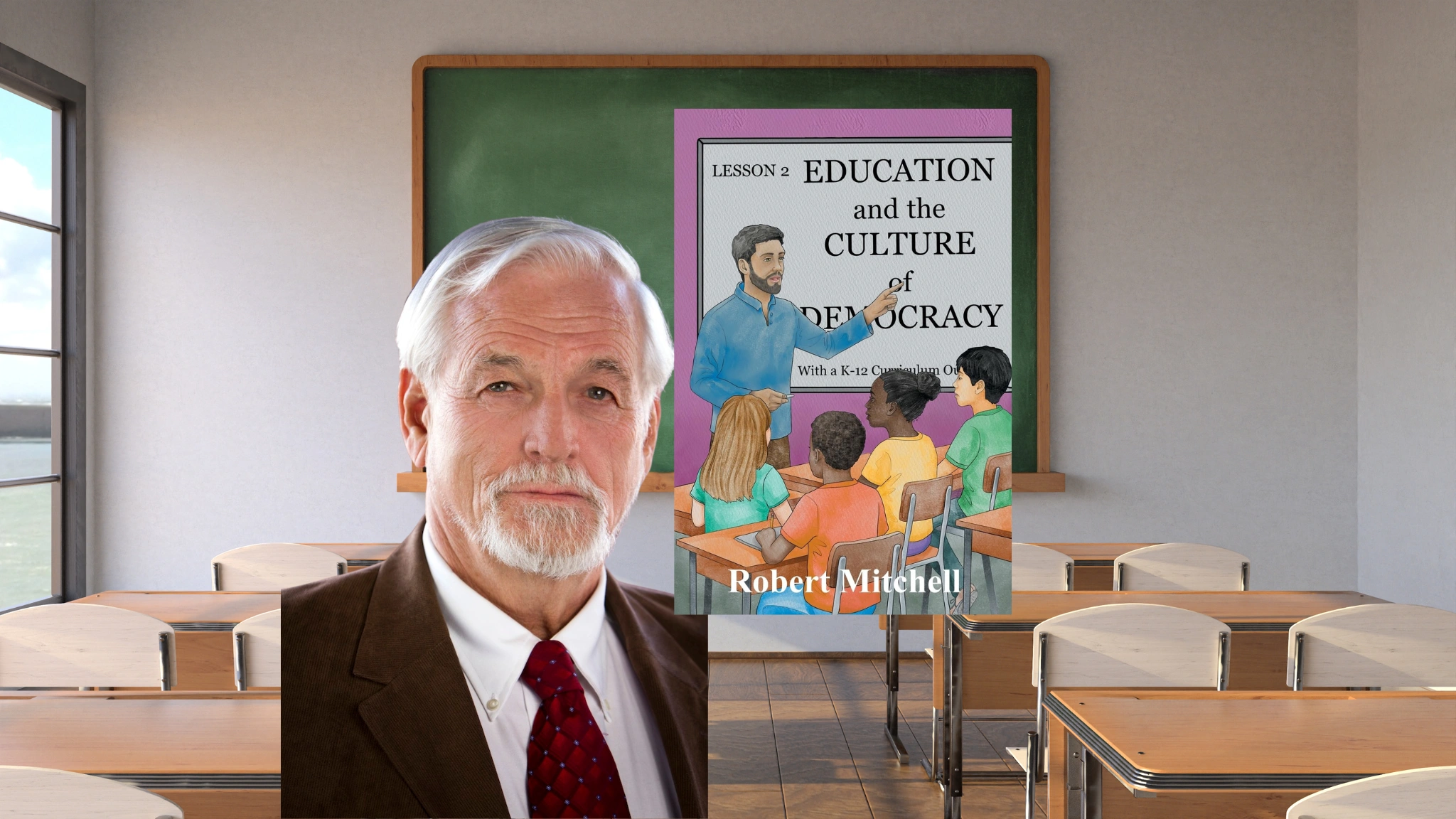
The “gossamer thread” metaphor runs throughout the book. You describe democracy as a kind of invisible connective tissue holding America’s diverse factions together. Where did that image come from, and do you think that thread is closer to snapping today than when you first published an earlier version of this work in 2005?
I believe the gossamer thread metaphor is a common one. The unity of the American population cannot be described by race, ethnicity or religion. It is often described as a set of intangible values centered on the idea of democratic freedoms that give value and importance to each individual. In the twenty years since I first published some of these ideas the intangible values have not been directly assaulted. But the value and importance of each individual has shifted from this intangible – one could say spiritual – quality of individual identity toward defining individual identity in terms of secular, socio-political groups. Unable to express itself in the social and political venues, the spiritual dimension of one’s identity is diminished. One has what Jimmy Carter called a “crisis of confidence.” This diminishes the value and importance of each individual, and, today, the gossamer thread of our democracy is closer to snapping.
You draw heavily on Jungian psychology — archetypes, the soul, the ego-soul balance. Many educators might find that framework unfamiliar or unconventional. How do you make the case to a skeptical school board or curriculum director that depth psychology belongs in K-12 education?
Every good teacher is a soul nurturer. They nurture the souls of their students in the classroom through their personality expressed in their methodology. They recognize the problems that some students have due to pressures outside of school and their loving, caring attitude does what it can to comfort those students. This nurturing quality comes from each teacher’s religious value system. Looking at the spiritual quality of the personality and character of each individual from the perspective of depth psychology mitigates the religious differences among teachers and students, alike. It uncovers the archetypal qualities that are consistent across all religions and cultures. These manifest as the spiritual quality in individual personality and the character of both the individual and the nation.
You argue that both secular techno-modernism and conservative Christian nationalism fail to address the real crisis in American education. What does each side get wrong, and what, if anything, do they each get right?
The dignity and worth of each individual is not a political opinion but a spiritual commitment that democracy protects. Secular techno-modernism de-spiritualizes the personality to prepare the individual for merger with the machines in a trans-humanistic future. Chistian nationalism is an authoritarian ideology that does not convey a spiritual commitment to democracy. In some instances, looking at things from a secular perspective helps to guard us from acquiring a state religion. Yet, the rise of Christian nationalism shows us that a cultural education must be restored in the schools to teach cultural identity and character.
You write about the concept of the “sacred trust” in the classroom. Can you talk about what that means practically — what it looks like on a Monday morning in a sixth-grade classroom, and what gets in the way of teachers living up to it?
There has been concern in the past about schools taking over some of the “child raising” duties that belong in the home and family environment. The sacred trust brings parents and teachers together to compare notes and guide the child’s intellectual and personality development as a coordinated effort. This “trust” gives the teacher more autonomy in the classroom, which might be regarded suspiciously by the administration. The sacred trust between teachers and students in the autonomy of the classroom is not calculated but happens spontaneously, without forethought, as a magical connection that teachers make with a particular class of student. Monday morning is a transitional period. One might begin with having students tell the story of their weekend “adventure” and guiding them in creating a well-structured oral presentation that can also turn into a writing assignment.
The book grapples with a deep tension: affirming a shared American cultural identity without erasing minority and indigenous voices. How do you distinguish your vision of cultural cohesion from the “patriotic curriculum” mandates coming from Project 2025?
The primary objective of Project 2025 is to define a vision of the American national identity and to insure that that vision defines future generations by teaching it in our K-12 schools. The patriotic curriculum is an ideology that requires each individual to conform to collective standards established by the ideology, thus diminishing individual value and importance and erasing minority and indigenous voices. My vision of national-cultural cohesion does not seek to define an ideology to which the ego conforms, but to draw out the archetypal qualities that exist in all cultures and religions, and manifest in the character and personality of individuals. The real difference is between ideological conformity and spiritual commitment to the value and importance – the sanctity – of each individual.
You end the book with a vision of education laying the foundation for a democratic consciousness in future generations. Given everything happening politically right now, are you hopeful? And what would you say to a young teacher who feels like the forces working against this vision are simply too large to overcome?
History always happens for a reason. Our current flirtation with an authoritarian regime taking over the American experiment in democracy is still less a dangerous threat than a wake-up call. The “democracy” of liberals has gone too far off track and must be corrected before it’s too late. It still could become too late before we know what hit us, but I remain optimistic. To young teachers I would say, “if you are called to do this job, then the archetype of the teacher is within you. Seek out that spiritual guidance and you will be able to face the challenges that threaten both you and your students.”