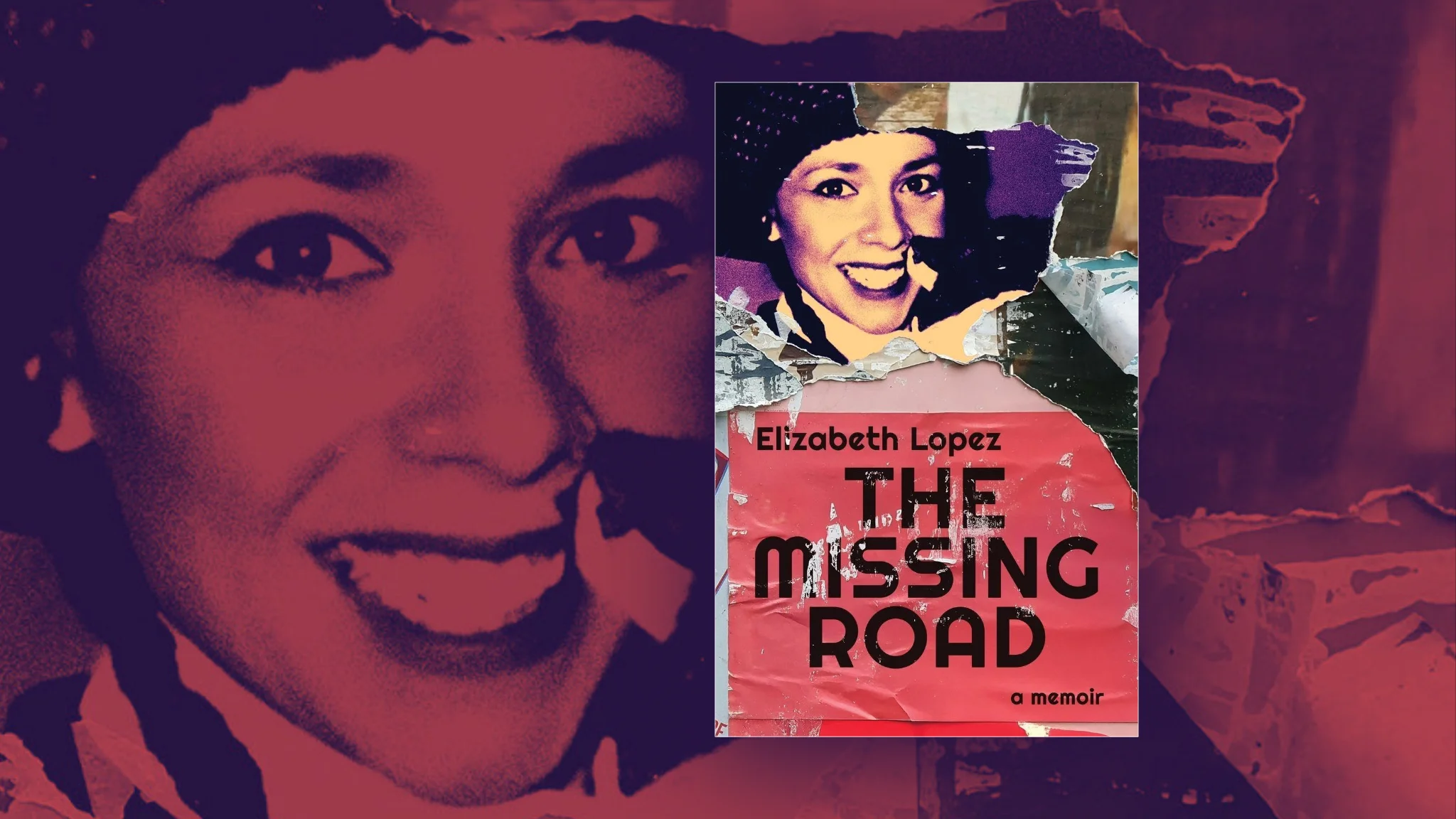
In her memoir The Missing Road, Elizabeth Lopez shares her journey of survival, resilience and self-discovery following a devastating drunk-driving accident that forever changed her life at just sixteen years old. From navigating the physical and emotional challenges of a traumatic brain injury to finding strength through music, family and meaningful connections, Lopez explores the complicated and unpredictable path toward healing. In this Q&A, she reflects on reclaiming her identity, the transformative power of storytelling and her hope that others facing life-altering trauma will find comfort and inspiration in her story.
The Missing Road recounts your journey of survival after a devastating drunk-driving accident at just sixteen years old. What inspired you to share your story, and why did you feel now was the right time to tell it?
When I began graduate school at 28, I wrote the first draft of my memoir. Writing became a hobby as I developed my career identity, friendships, and family. I discovered memoir writing was a powerful pathway toward healing, self-understanding, and connection. I loved all of the writing groups I joined to learn the art of memoir writing. The process of revisiting certain experiences and putting them into words allowed me to explore the emotions, losses, and transformations that shaped my life. Through storytelling, I made meaning of what happened, was able to reclaim aspects of my identity, and recognized my experiences — however painful — did not have to isolate me and define my entire future.
In writing The Missing Road, I have sought to explore not only the aftermath of trauma but also the long, uneven process of learning to live with it. My hope is that sharing my story will help others, particularly young adults navigating difficult emotions and life-altering experiences, feel less alone. I want readers to understand that healing does not mean forgetting the past or returning to the person they once were. It can mean developing a new relationship with their experiences, discovering compassion for themselves, and imagining possibilities beyond what they have endured.
Ultimately, I hope my writing demonstrates that even when life takes an unexpected and painful turn, there remains room for growth, connection, and hope.
Your memoir explores not only the physical challenges of recovering from a traumatic brain injury but also the emotional and psychological struggles that followed. What was the most difficult part of rebuilding your identity after the accident?
I found myself on a journey I never chose—a seemingly endless and unpredictable road toward a life I could not yet imagine.
One of the most difficult parts of rebuilding my identity was learning to believe that I could be whole again. Recovery was not simply about healing physically; it was about learning to trust myself, other people, and the world around me. How could I feel safe going out at night with friends again when I could never have absolute proof that nothing bad would happen? I had to learn to live with uncertainty and slowly reclaim parts of my independence that I had lost.
I also had to grieve the life I had imagined for myself. I missed the friendships, the freedom, the music, and the punk-rock identity that had given me a sense of belonging on Long Island. I was not just recovering from an accident; I was trying to understand who I was now that so much of what had defined me had changed. There was a profound sense of loss in realizing that I could not simply return to the person I had been before or the community where I had felt at home.
When I started over in Boston, I was incredibly lonely. I felt like an outsider, disconnected from the life I had known and struggling to find a new sense of belonging. I was trying to rebuild my life while carrying the emotional weight of everything I had lost. In many ways, I was starting over in a world that felt unfamiliar, trying to figure out where I fit in and who I was becoming.
Perhaps the hardest part was accepting that rebuilding my identity did not mean returning to my old self. It meant learning to live with what had happened, making room for the parts of me that had changed, and discovering who I could become. That process was neither straightforward nor predictable. It required me to confront fear, grieve what I had lost, and slowly develop a different relationship with myself and the world.
I am still learning that feeling whole does not mean being untouched by what happened. It means recognizing that the accident is part of my story, but it is not the entirety of who I am.
Music, particularly the punk rock band New Found Glory, plays a significant role throughout your story. How did your connection to the band and the punk rock community provide a sense of belonging, hope and strength during your recovery?
The first time I saw New Found Glory was in 1998, when they played at a tiny dive in Nassau County on Long Island, New York. It didn’t take long for me to realize how talented they were. Their music was a completely new experience for me. For the first time, I found a sound that combined fast-paced, energetic rhythms with beautiful melodies and emotionally gripping lyrics. Their music spoke to me in a way I hadn’t experienced before, and I’ve loved them ever since.
Punk rock was more than music to me. It was a community, an identity, and a place where I felt I belonged. It connected me to friendships, experiences, and a version of myself that I cherished. After the accident, when so much of my life felt unfamiliar and uncertain, that connection became even more meaningful.
I will never forget how New Found Glory showed up for my family. While my parents were terrified and struggling to comprehend what had happened to their daughter, the band came to the hospital to comfort them. I remember the late Chad Gilbert, one of the band’s founding members and guitarist, telling me that he held my dad while my dad sobbed into his shoulder. Chad shared how meaningful it had been for him to comfort my dad during a time when everyone felt desperate to do something to help.
My mom and I have spoken about the band and how deeply their music, lyrics, and compassion have touched so many people. Their connection with fans extends beyond the stage; they genuinely care about the people who connect with their music. For me, that connection became deeply personal on the night of my accident. At a time when my family was facing unimaginable fear and uncertainty, the band reminded us that we were not alone. I will always carry that memory with me, just as I carry the meaning their music has held throughout my life.
That memory has stayed with me. In the midst of so much fear, uncertainty, and helplessness, Chad offered my parents something profoundly human: comfort when there were no answers and nothing anyone could do to make the situation better. It is difficult to put into words what that kind of compassion means to a family experiencing something so devastating.
The band also left me a bunch of T-shirts and CDs and wrote a special thank-you message to me in the first release of their self-titled album. Those gestures meant so much, but what has stayed with me most is the humanity behind them. They were not simply musicians whose music I loved; they were people who showed up for my family when we needed kindness the most.
For me, New Found Glory represents the powerful connection between music, community, and healing. Their music reminds me of the person I was before the accident and the sense of belonging I found in the punk-rock scene. Their compassion reminds me that even when life feels impossibly frightening, people can make a difference simply by showing up for one another. I may not have been able to return to the life I had before the accident, but the music and the kindness surrounding it became lasting connections to a part of myself I never wanted to lose.
You structure the memoir around three stages of trauma recovery: safety and stabilization, remembrance and mourning, and reconnection and integration. Why did you choose this framework, and how does it reflect your personal healing journey?
Dr. Judith Herman’s three-stage model of trauma recovery, introduced in her seminal 1992 book Trauma and Recovery, was a significant turning point in how trauma and healing were understood. Although originally developed primarily in the context of prolonged and interpersonal trauma, including childhood abuse, domestic violence, and captivity, her framework offers a valuable lens through which to understand many survivors’ recovery journeys.
I first read Trauma and Recovery when I was nineteen, as an assigned reading in an undergraduate psychology course. For the first time, I learned about post-traumatic stress disorder (PTSD), and something finally began to make sense. The cognitive and physiological symptoms I had experienced since being discharged from the hospital at seventeen were no longer entirely inexplicable. I had been searching for a name for the terror that haunted me, and Herman’s work helped me understand that my experiences had more meaning than I initially understood. It also gave me hope that there might be a path toward healing.
At the same time, I was a young adult living away from my family for the first time. The physical distance gave me room to reflect on my upbringing and the dysfunction I had experienced at home. I began to consider how those experiences, alongside the trauma of the accident, might have shaped my mental health. For the first time, I could look at my life with a different perspective and recognize that I needed to make sense of what had happened to me, both before and after the accident.
I wanted to believe that there was a name for what I was experiencing and, perhaps, a way through it. Herman’s framework offered a language for understanding recovery and helped me recognize that healing was possible, even if I could not yet imagine what it would look like for me.
Although trauma recovery is not linear and people do not necessarily move neatly from one stage to the next, I wanted to use Herman’s framework to loosely guide the structure of my memoir. I hoped to trace my own journey from the uncertainty and vulnerability of lying in a hospital bed to becoming the adult I am today. The framework provided a way to organize my experiences without suggesting that recovery follows a predictable path.
My first step toward healing began one evening when I came across a list of providers my health insurance company had mailed to me. This was before online directories made finding a therapist as simple as a search. I started making phone calls, and that was how I found Dr. P, a psychologist who specialized in treating trauma. As I began establishing a sense of safety, I was also beginning to remember, mourn, and integrate my experiences. These processes did not unfold in isolation or in a predictable sequence; they overlapped as I slowly began to make sense of my life before and after the accident.
Looking back, moving away from home and from the place where my accident had occurred, alongside beginning therapy, marked the beginning of establishing a sense of safety. For the first time, I was creating distance from some of the environments and experiences that had shaped my life and seeking support from someone who could help me understand what I had been through. I did not know then how long the journey would be, but I had taken an important first step: I was no longer trying to make sense of everything alone.
Your relationship with your mother is an emotional thread throughout the book, particularly as she helped you reconstruct your memories and became your first editor. How did writing this memoir change your understanding of your mother and the complexities of your relationship?
Writing this memoir with my mom as my first editor was an incredibly meaningful experience. In many ways, the process itself became healing because it created a safe path for me to share my experiences with her. Because I have amnesia related to the traumatic brain injury I sustained in the accident, my mom also helped me piece together memories and reconstruct what happened. As we worked through the manuscript together, I began to see not only how deeply the accident had affected me but also how much pain she had carried.
I believe the editing process was healing for her, too. For me, it opened the door to a deeper sense of empathy. The anger and disappointment I had carried toward my mom throughout adolescence began to soften as I learned more about her childhood and the tremendous effort she had made to rebuild her life at eighteen, much as I was trying to rebuild mine after the accident. But there was an important difference: she had done much of that rebuilding without the support of a therapist or the kind of safe refuge I eventually found in Boston.
Through this process, I began to see my mom as a multifaceted person rather than defining her by the parts of our relationship that had hurt me. I could recognize the mother and teacher who worked hard to be present, loving, and supportive, while also acknowledging her struggles with alcoholism, sobriety, and overwhelming emotional triggers she didn’t know how to manage. I began to understand that the frightened, traumatized parts of her sometimes took over, affecting her behavior and our relationship in destructive ways. This understanding did not erase the hurt, but it helped me recognize that those struggles did not tell the whole story of who she was. I could begin to see the vulnerable younger person within my mom, someone who had endured her own pain and had never been given the support she needed to heal.
For the first time, I also began expressing my gratitude to her and recognizing the remarkable things she had done for me. I could hold both truths at once: there were ways in which our relationship had been painful, and there were also ways in which she had shown up for me that I had not fully appreciated before.
One of the most meaningful connections I came to understand was why my mom had supported my commitment to punk rock and the friendships I developed within the Long Island music scene in the 1990s. That community was an important part of my identity, and her support meant more than I had understood at the time.
My mom’s own response to the accident became part of this story, too. She wrote a letter to Chad Gilbert of New Found Glory, which he later published in the band’s visual history book, Stories of a Different Kind, in 2016. That gesture reflects how deeply the band and its music had touched our family during an unimaginably difficult time.
Writing this memoir did not change our past, but it gave us a way to revisit it together. It helped me see my mom beyond my childhood hurt and allowed me to recognize both her struggles and her efforts to love and support me. Perhaps one of the greatest gifts of this process was discovering that understanding someone more fully does not require denying the pain they may have caused. It allows room for a more complicated, compassionate truth.
You pursued a career as a licensed mental health clinician, specializing in trauma and recovery. How have your personal experiences as a trauma survivor influenced your approach to helping others navigate their own emotional and psychological challenges?
Since I was a teenager, I have wanted to help others who struggle with their mental health. I believe my own experiences have given me a unique perspective on helping young people navigate difficult emotions, mental health challenges, and the lasting effects of trauma. I understand personally the pain, uncertainty, and patience that healing can require, as well as the courage it takes to keep moving forward when the path ahead feels unclear.
These experiences have also shaped my professional interest in understanding and treating complex and acute trauma, as well as the often difficult-to-articulate journey of rediscovering oneself after life-altering experiences. Through my personal and clinical experiences, I have come to appreciate that healing is rarely linear. It involves making sense of what has happened, rebuilding trust, navigating complicated emotions, and gradually developing a renewed sense of identity and possibility.
What do you hope readers, particularly those struggling with trauma, take away from your story?
Through its honest exploration of pain, resilience, self-discovery, and healing, The Missing Road aims to offer young adults a source of refuge, comfort, and hope—a reminder that even after life-altering experiences, healing is possible and a meaningful future remains within reach. I hope that readers will discover that The Missing Road is about more than surviving physical injuries and a traumatic brain injury. It is also about the complicated relationships that shape us, the ways trauma can echo across generations, and the possibility of finding greater understanding, empathy, and connection through telling our stories. Ultimately, I hope my story reminds readers that while we cannot change what has happened to us, we can continue to make meaning of our experiences, develop compassion for ourselves and others, and discover new possibilities for who we can become.