My first serious writing workshop ended in tears. My professor was tiny, brutally honest and the chair of the creative writing department. After tearing my story apart, much to the horrified glee of my classmates, she sat on her desk, looked me directly in the eye, and asked, “What do you know?” And she meant it quite seriously. She instructed me to go home and write what I know.
The said story was about two estranged brothers who were trapped alone on a fishing boat during a fishing trip. I am not a brother. I have never been estranged from a sibling. And I don’t fish. Or boat. I knew nothing of what I was writing. I was aiming for drama. I was aiming for epiphanic. I was aiming for serious and literary. What I created was melodramatic slop.
The reason that the fishing story suffered such criticism was that I was trying to write a story that wasn’t mine. That story was crafted to fulfill an imagined mainstream quota. I was trying to model Raymond Carver, Alice Munro and Flannery O’Connor. These were the authors of the great American short stories I was studying in my lit classes. But the writers I should have been looking to emulate were those like Julia Alvarez, Amy Tan and Jhumpa Lahiri; writers writing from insulated communities, infusing their works with culture, language and experiences unique to their own heritage, and whose work resonates because it dually inhabits a personal truth while also addressing a shared human experience.
So, what did I know? I knew my own insulated community, my own culture, my own religion. For the first time in my life, I wrote Jewish stories with Jewish characters.
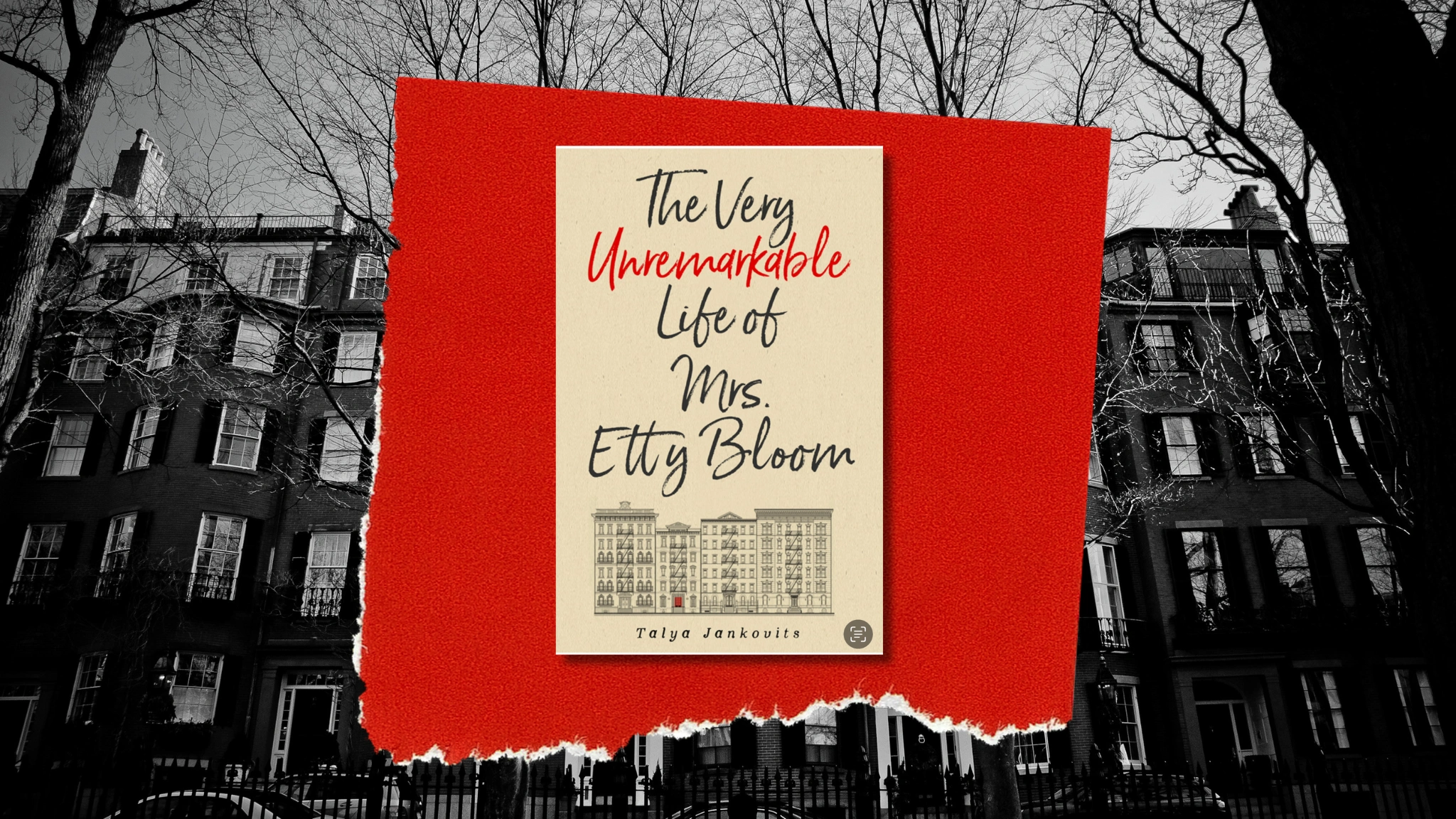
As soon as I permitted myself to draw on my own culture, heritage and religion, my writing became authentic and honest. I wanted to write about observant Jews the way other writers were writing about their own culture and heritage. Such as Ocean Vuong who infuses his work with Vietnamese mores or Junot Diaz who is known to seamlessly weave in Spanish and Spanglish into his works without explanation. This kind of writing is provocative, and offers a wider scope of storytelling that includes a multifaceted representation of narrative storytelling. So, I wrote a book about a Hasidic woman in post-WWII Williamsburg, New York, in my debut novel, The Very Unremarkable Life of Mrs. Etty Bloom.
Understandably, many people might say this is a Jewish book. It features Jewish characters with Jewish names. They speak Yiddish and Hebrew. They observe customs and eat foods specific to their religion and culture. Perhaps it is, in fact, a Jewish book, but it is not just for Jewish readers. It is also a book for everyone, just like the cultured works of so many of the writers I admire.
Just because a book focuses on marginalized characters and communities does not mean it should fall to the periphery. Nor should it be categorized for a particular readership just because many readers might lack an affinity for that book’s particular culture, race, religion or demographic. These narratives featuring characters whose lives don’t resemble our own are not only opportunities to consider other cultural experiences but are also equally infused with ubiquitous themes of humanity. This is a fundamental device of fiction — narrowing the divide.
Books that lean into their cultures without apology or explanation enrich the tapestry of the human experience and broaden the conversation of how, at the core, we are all alike. Readers benefit from a wide range of storytelling, as it breaks down the “other” and bridges divisions. There is great value in reading books about people who, on the surface, feel different from us, as it fosters empathy and encourages open-mindedness.
Though my character, Etty, is a Hasidic Jew, her story is still very much a pervasive one. Etty’s religious lifestyle is secondary to her human nature. She, too, endures hopes, dreams, shame, grief, love and joy. She navigates toxic relationships, disappointments and complex family histories and dynamics. She struggles with body image, fertility, friendships and fitting in. She has complicated feelings about her marriage, about motherhood, about her existential purpose. The life she inhabits is not so different from anyone else’s. Her Jewishness is just one nuanced detail of her life, and dismissing a book because of such a diminutive gradation can cause readers to overlook stories rich in universal themes.
Books have the capacity to break down differences by being different. It is very much my hope that my novel does just that. And that my readers might discover that a story about a Hasidic woman might also be a story about them.
This is what I know.