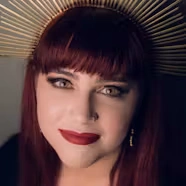
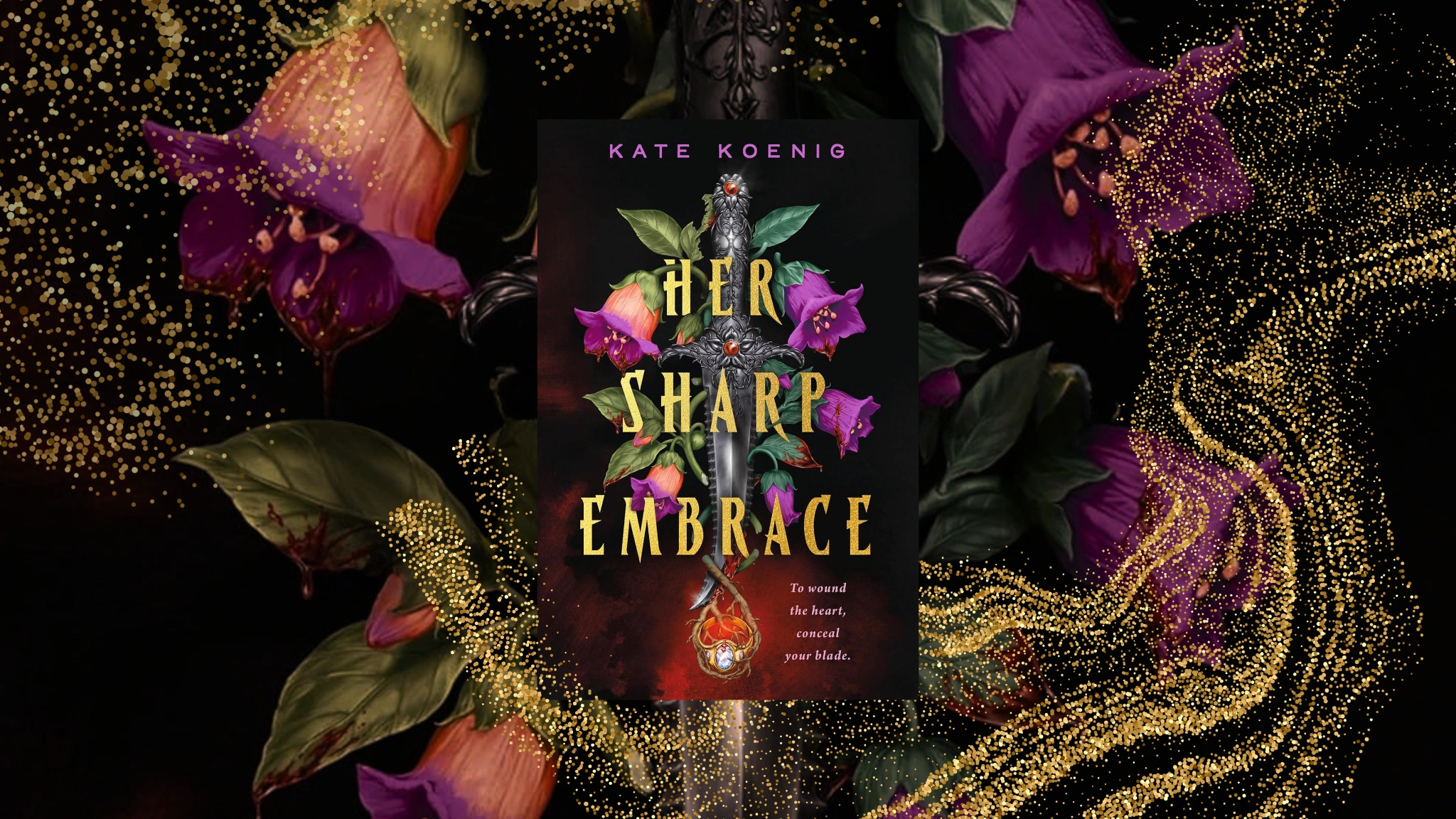
To find my place in this world. To be loved for all I am and all I would never be. To belong. If you traveled back in time to talk to teenage Kate, that’s what she’d tell you she desired most. That and someday publishing her own book. I’m happy to say all those dreams came true.
When I started writing Her Sharp Embrace, I returned to my teenage self. That anxious outcast was racing toward a future she hoped would embrace her more gently than the world she’d always known. As I drafted, the vice-tight ache of loneliness stayed with me. I wanted to remember what it felt like to want.
The heart of this story was planted long before I ever sat down to write. As a teenager, after my parents discovered I was queer and dating a trans man (now my husband!), they outed me to my siblings and extended family. Not long after, I received a letter from my parents informing me that I was disowned. If I wanted to return to the fold, I would have to adhere to their many demands, including breaking up with my partner, shoving myself back in the closet, and begging for forgiveness from a priest. I refused.
Noa Toussaint, the main protagonist of Her Sharp Embrace, made the difficult decision I once did — to walk away from her family and all the suffocating expectations placed upon her. I was eager to explore the visceral trauma and challenges of leaving a family behind. At its core, this story is about found family. As a queer woman, I wanted to explore a cast of diverse and fierce women who come from all walks of life and strive to build something better for each other and their city.
Belonging isn’t the only topic explored in Her Sharp Embrace. Another central tension in the novel is resource scarcity and the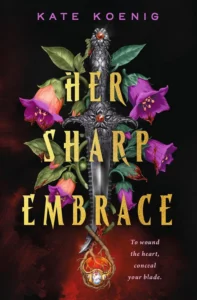 oppressive systems the wealthy uphold to preserve their power. Noa must confront her privileged upbringing as she begins her new life with the Nightshades gang, living among the city’s most vulnerable.
Writing this story was both exhausting and deeply cathartic. Returning to my past was daunting, but worth it. Because somewhere out there is a teenager, an outcast, who needs to know that they are enough and that blood doesn’t define a family.
I wrote Her Sharp Embrace as I write all my stories. I write for the outcasts, who hide their vibrant colors from the dull and dreary world they were born into. I write for the girls told to sit down and shut up, who are shamed for taking up space. I write for the queer and trans kids who tremble in their closets, scared of rejection or violence from their families and religious communities.
I write for teenage Kate, holding on for love.