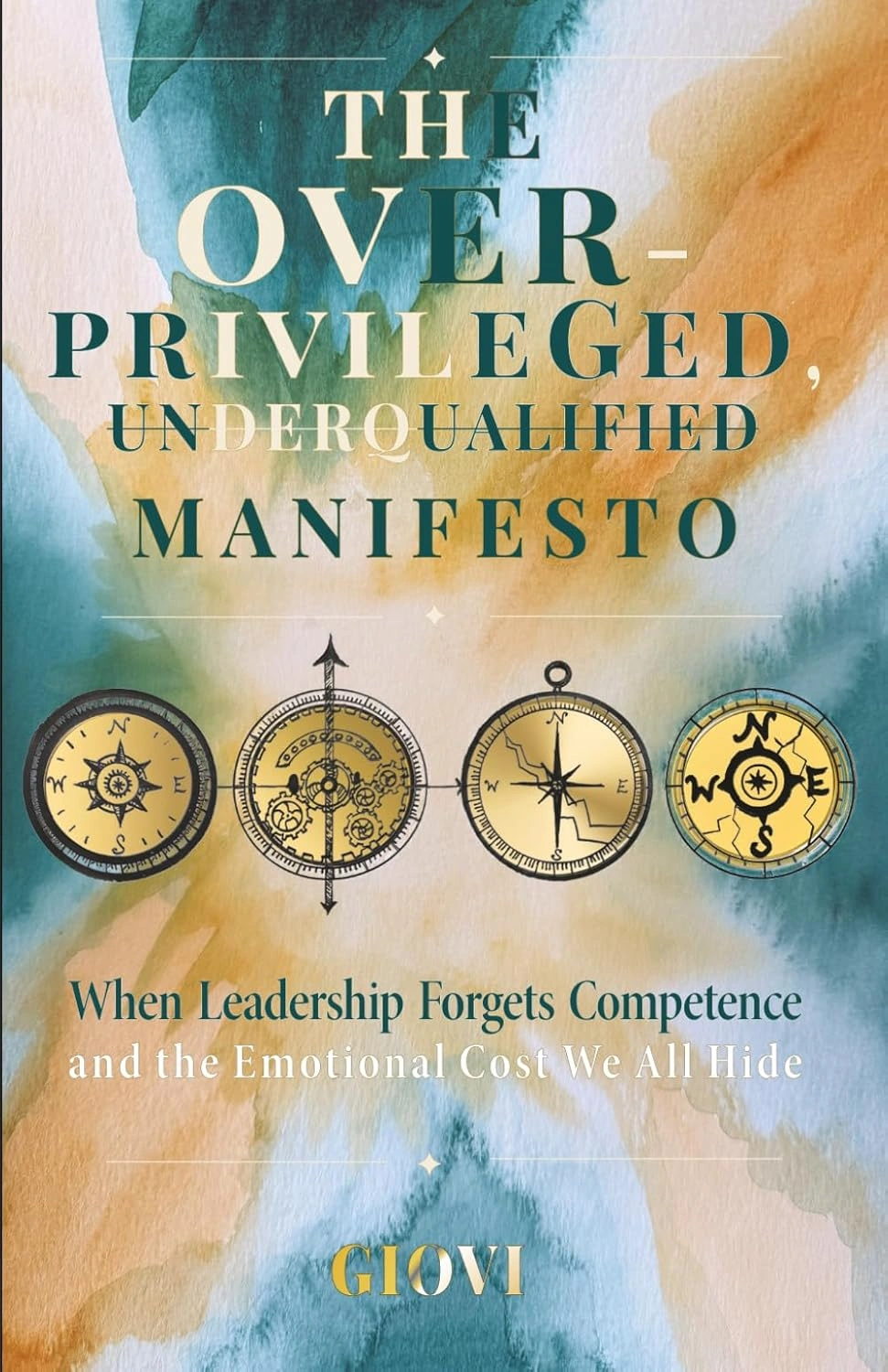
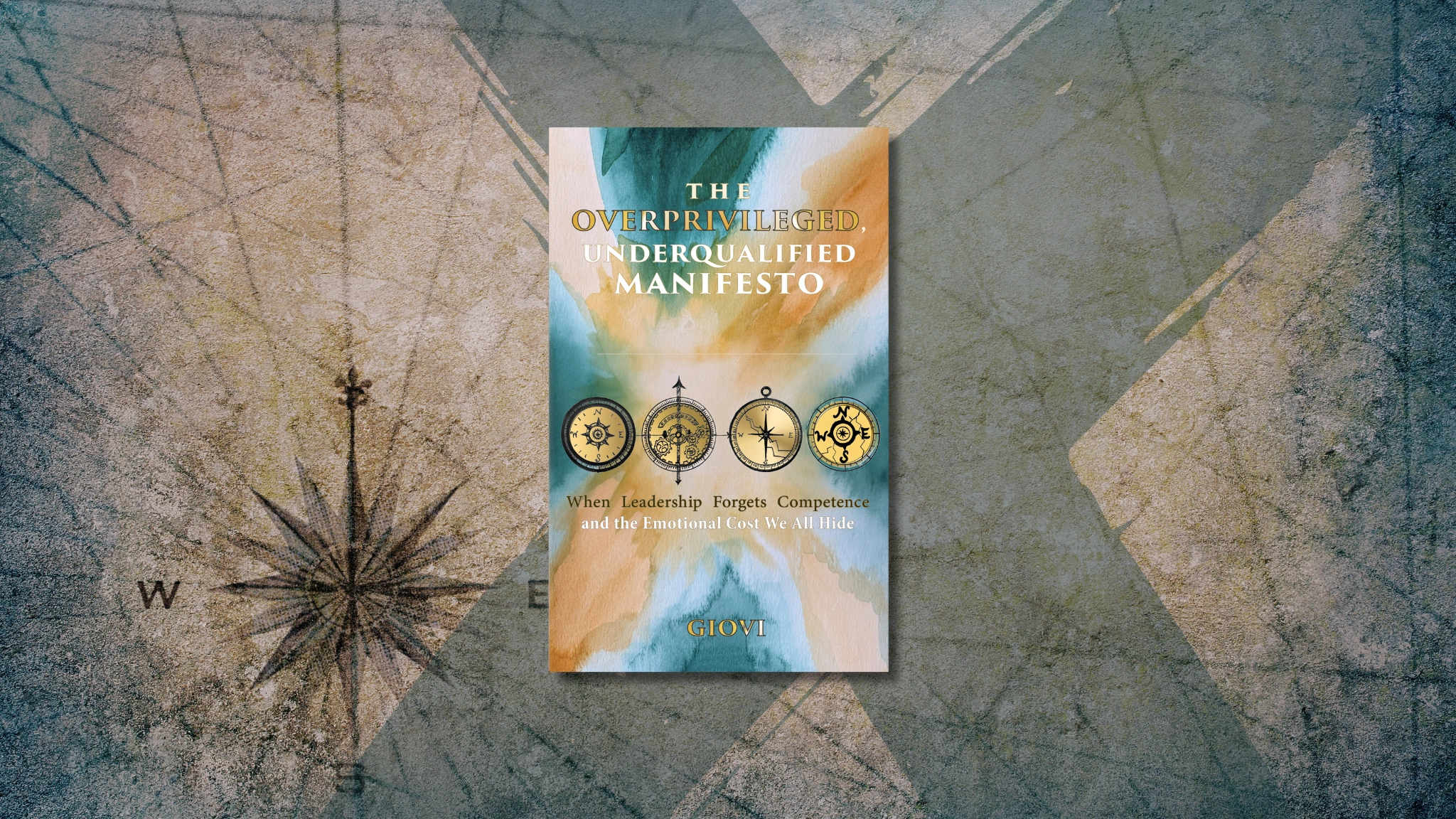
The Overprivileged, Underqualified Manifesto by Giovi
Drawing on more than two decades working across digital transformation initiatives spanning Latin America, Europe and the United States, Giovi, author of The Overprivileged, Underqualified Manifesto, brings to the page something most leadership books lack: the credibility of someone who has lived inside the dysfunction they describe. This is written by someone who gave the system the benefit of the doubt for long enough to know it didn’t deserve it.
The book’s central argument is straightforward and devastating: corporate leadership has become untethered from competence. Too many executives now occupy positions built not on skill, vision or merit, but on availability, political maneuvering and the projection of confidence. The result is a crisis of institutional decay. Giovi calls this out with grief and then hope.
The Theater of Corporate Decline
Chapter by chapter, the reader travels through the mirage of digital transformation (and how its language is coopted by leaders who don’t understand it), the skills gap corroding corporate leadership, the “theater of avoidance” that passes for strategy, and what Giovi calls the “Empire Cycle” — the predictable arc of institutional hubris followed by institutional collapse. The chapter on accountability dissects how cultures that reward performance over truth systematically destroy themselves from the inside.
Giovi anchors abstract patterns in concrete moments — conference rooms, projection slides, survey scores that climb while attrition rates quietly follow — and the effect is that the reader recognizes these scenes immediately. Anyone who has spent time in a large organization will find themselves nodding, sometimes uncomfortably.
A Call for Leadership Rooted in Trust
The book’s greatest strength is its refusal to stop at critique. The final chapters pivot toward what genuine leadership demands: visibility, accountability, humility and the willingness to be wrong in public. Giovi asks leaders to exchange the performance of competence for the actual cultivation of it. The call to action is not a list of best practices, but something more enduring — a moral invitation. “Power comes from trust,” Giovi writes. “That trust is not yours by right. It’s a gift.”
This is also a hopeful book. A steady current of belief flows throughout. There is belief in the people buried under bureaucracy, in the “brilliant voices” who still show up with integrity and in the possibility that institutions can remember what they are for.
The Overprivileged, Underqualified Manifesto is essential reading for anyone navigating corporate life — whether you are the one holding power or the one watching it be misused. It is a mirror, as Giovi puts it.
About Giovi:
 Giovi is a technology and digital transformation leader with more than two decades of experience inside large, complex organizations, working at the intersection of systems, culture and power. Having built and modernized platforms across continents (from Latin America to Europe and the United States), Giovi has lived the promises and the failures of corporate “transformation” from the inside: the late-night incident calls, the glossy executive decks, the quiet brilliance of teams, and the slow corrosion that happens when optics replace outcomes.