Spy fiction comes in all shapes and sizes. They can be grim, sardonic, playful, weary, intricate, or a sheer adrenaline rush. They can represent worldviews as different as those of Ian Fleming, John Le Carre, Daniel Silva, Mick Herron, or I.S. Berry, the CIA veteran whose debut novel, The Peacock and the Sparrow, swept the awards tables two years ago.
This spring brings us two more, and we might be seeing them at awards time, too.
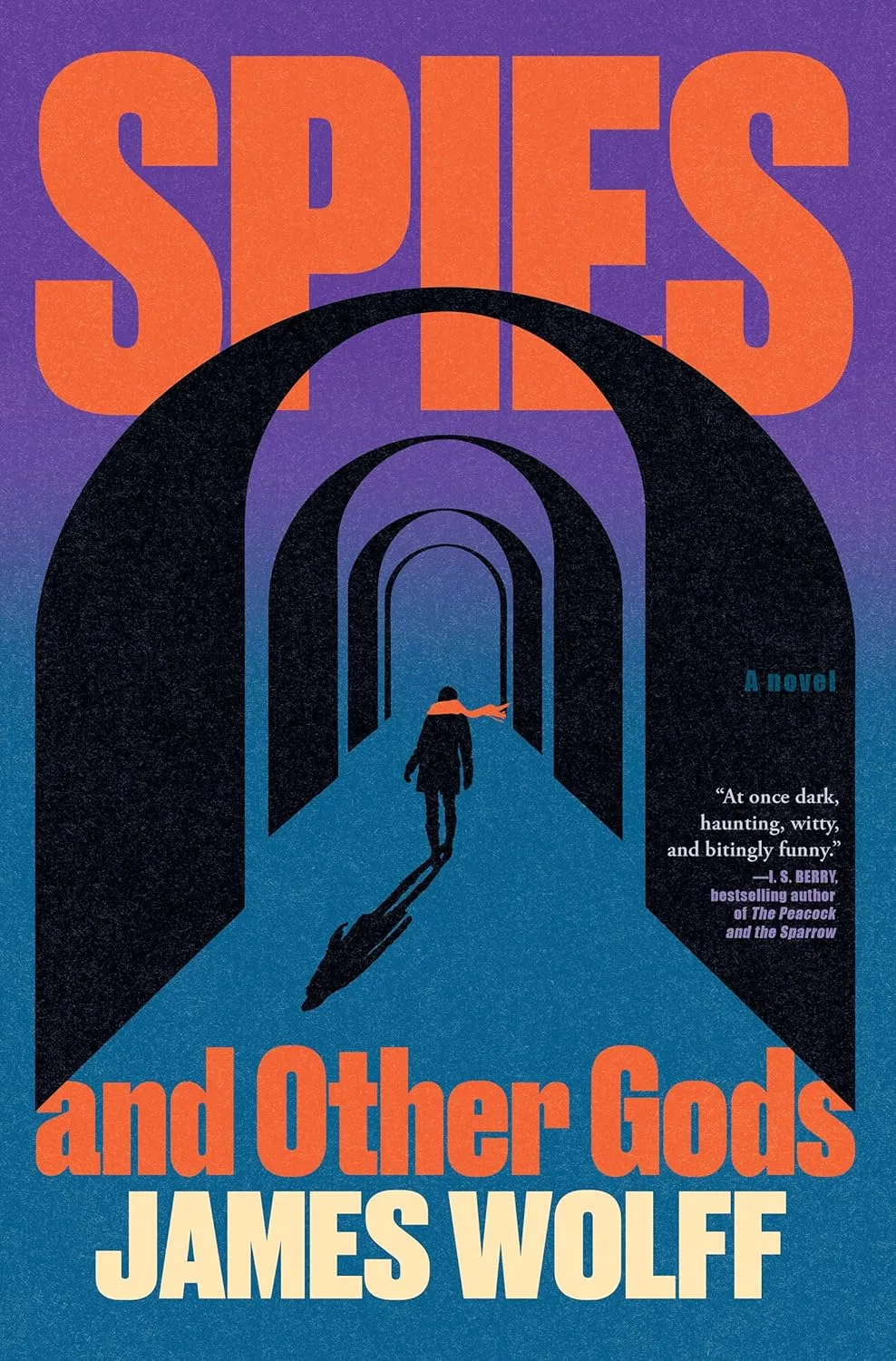
Spies and Other Gods by James Wolff
James Wolff’s Spies and Other Gods is both darkly funny and irresistibly tense, and told to us by an omniscient narrator who delivers an early warning: “Think of me as a pane of glass, nothing more. I might choose where to look, I’ll give you that. But what happens out there, the way the world is, that’s nothing to do with me. Got it?”
We do. The tale he has for us is about the massive bother created by an anonymous whistleblower from within British intelligence. It’s something that must be heeded, but at the same time thoroughly squelched, especially when the investigator turns up a hitherto unknown assassin murdering Iranian dissenters on foreign soil, which doesn’t reflect well on anybody. Central to the story is the investigator, an idiosyncratic parliamentary researcher named Aphra McQueen, who is exactly, and at the same time much more, than she appears to be; the British dentist she encounters who harbors a burning desire to be of use to the Service; and the head of British Intelligence himself, who, in order to fight off brain fog and a sense of impending obsolescence, makes the unfortunate decision to head out into the field personally one last time. Chaos ensues.
Altogether, it is a very lively story, told with wit and warning, by an author who is himself a former British intelligence officer, and hence pseudonymous. He notes in the acknowledgments to the book his “two children, who are not satisfied in the slightest with my explanation for why their father’s real name isn’t on the front.”
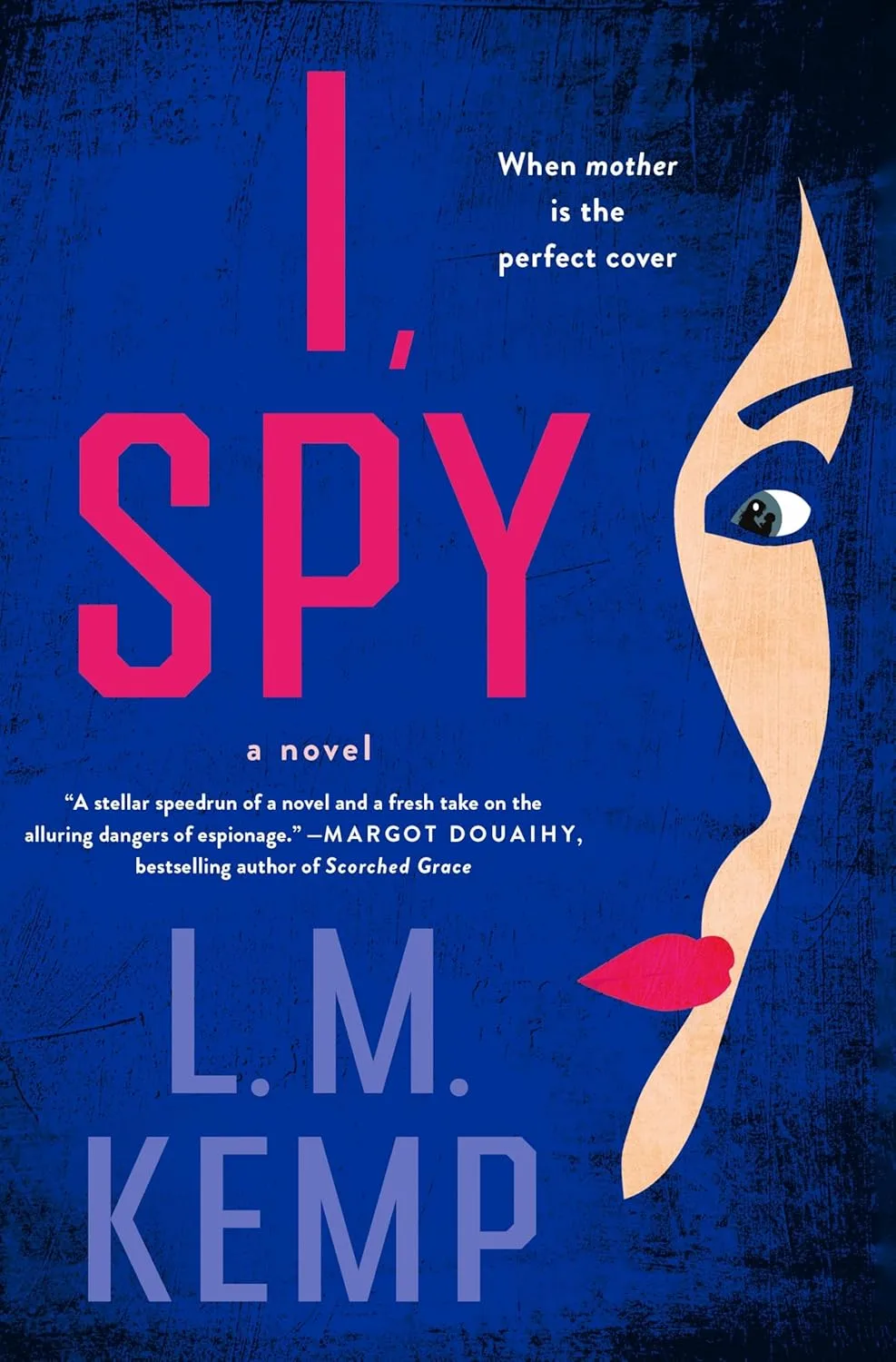
I, Spy by L. M. Kemp
By contrast, L. M. Kemp, the author of the second book, I, Spy, is not an intelligence officer, either former or present. In an author’s note, however, she does admit, “My application to the UK secret service remains incomplete (but the tab is still open)….”
I, Spy demonstrates why that might be so. It’s a complete immersion in a totally different aspect of the spy world, one that could only be gleaned through a mountain of research. Different, however, doesn’t mean any less dangerous. Its lead character, Kendal Carter (not her real name), used to work for a private agency, but quit four years ago when her lover was murdered and then her daughter was born. Rosie is her only priority now, but she should have heeded her old boss’s warning: “People like us do not retire, we have only one way out.”
She learns the truth of that the hard way, when a trusted neighbor of hers is killed, mistaken for Kendal, and she has to call that boss for help. He is delighted to oblige, but there is a price. It’s an easy job, he assures her. A London corporation is developing some kind of educational app for kids, but an insider has warned that there might be something hinky about it. The insider needs to be babysat, he tells her, and taught some basic tradecraft: “If he can keep his cool, he might be a natural. And if anyone can teach him cool, it’s you.”
Set up in a luxury safe house, with a nearby school for Rosie, Kendal is reluctantly inclined to agree that this job may not be so bad. Of course, she’s nervous about being separated from Rosie, but “she’d put trackers in Rosie’s bag, coat, and shoes, and if she ran full tilt, she could be at the school in six minutes and thirty-eight seconds. It was fine.”
Until it isn’t. The more she comes to know about the corporation, the school, the school’s parents and kids, and her own particular pupil, the more uneasy she becomes. And then it all explodes in spectacular fashion.
“She had never, in a long career of dealing with liars, players, crooks, and criminals, even once fallen for a line or been duped by a double.” But those days are over. Everything she thought she knew about the case, and about her entire life – everything we thought we knew – is completely and catastrophically turned upside down. Now she’ll have to use every trick she knows not only to prevail – but simply to survive.
Both books are exhilarating journeys. I, Spy is a twister that lulls you deep into the story, then starts hitting you with surprises. Spies and Other Gods darts over a lot of terrain before drawing you inexorably into a devastating slow-burn conclusion. The biggest surprise about both books, though? They’re also remarkably touching.
Because no matter how jaded our characters are, how deep into their own particular world … spies are people, too.