When I was seven or eight, my parents left me with a neighbor so they could attend a healing Mass at Our Lady of Perpetual Help in Ozone Park, Queens — just a few blocks from where we lived. The sitter explained that if it worked — if the Lord saw fit — my parents would come home healed; my father would no longer walk with the profound limp caused by the strokes that had paralyzed his right side. My mother would no longer need to spend weeks at a time in Creedmoor Psychiatric Hospital.
I lay in bed imagining what it would be like to do things, any things, with my parents. They were shut-ins, dependent on government programs to survive.
That night, I allowed myself to believe everything could change.
Americans are the most heavily advertised-to people in the world. And over time, that has made us deeply cynical — but also strangely vulnerable. We know we’re being sold something. We know the pitch is too good. And yet, at some point, almost all of us have called the number on the screen. We’ve ordered the product. And when it arrived, it was a piece of shit.
We’ve all been duped. But still hope that maybe next time it will be different.
Meaningful change, whether improvement or regression, takes time. The consequences of decisions made today often don’t fully reveal themselves until years later, when they are much harder to reverse.
On June 24, 2022, I got a New York Times alert: the Supreme Court had overturned Roe v. Wade. I sat with it for a while. I knew states would move quickly to criminalize abortion and potentially broader aspects of prenatal care. My daughter was in her second year of college.
This wasn’t abstract. It was a direct threat. To her. To my family. To all of us.
Even out of office, Trump’s first term had already shifted the baseline. Norms that once felt durable had proven fragile. Progress that seemed settled was suddenly reversible. And it was clear this was strategic. Decades of planning on the far right were beginning to compound. The infrastructure was in place. This time, they didn’t even bother to hide it. They published the roadmap — Project 2025 — and began executing it immediately upon returning to power: a presidency sold on lower costs, more jobs through mass deportation, and “peace through power.”
Everyone in that church in Queens knew my parents and those with them would leave with their afflictions: in their wheelchairs, on their crutches, with their psychoses. It is insidious to give desperate people hope when you know there is none coming. Because hope, even false hope, is powerful. Especially for people who feel they have no other options.
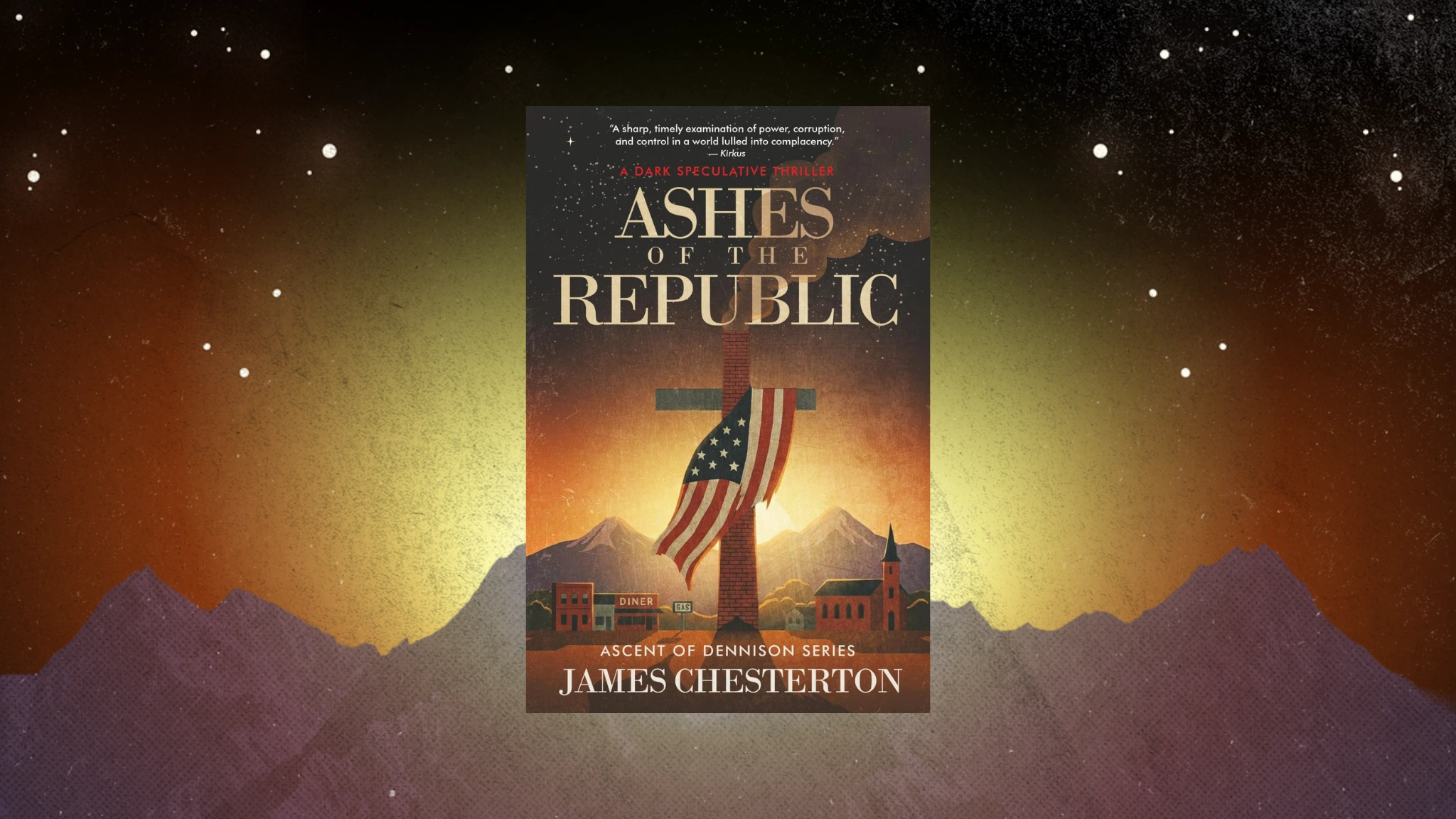
I began Ashes of the Republic in 2022 because I recognized that people were too busy living their lives to see the long-term effects of their vote, taking the salesman at his word. In my first draft, I made the image of the president as Jesus Christ central to the climax because keeping that flame of hope lit is key to their maintaining political power.
The United States has been sold a lemon. Ashes of the Republic is my attempt to show what that purchase actually looks like — years later, when the return policy has expired and the damage is no longer theoretical.