It’s true. Millennials and Gen Xers love nostalgia. There’s a reason so many of us keep mining that time period of our childhood in the 1980s and ‘90s for fiction. Nostalgia isn’t just about reliving our carefree past when our knees were stronger, our skin was firmer, and our hair less gray. The late ‘90s occupies a really interesting period in time. It’s recent enough to feel familiar for those of us who remember it clearly, but it’s still distant enough to feel somewhat like another world. It’s a truly perfect era for storytelling.
In my opinion, the end of the 20th century was a time of peak culture. Movies and television shows were monumental pop culture events viewed collectively. Huge numbers of people watched, talked about, and quoted at the water cooler or the lunch table the next day. Seinfeld, Friends, The X-Files, Buffy, ER. They were cultural juggernauts that influenced fashion, hair, slang. Studios and networks were pulling in money hand over fist as there were far fewer alternate media sources to pull our eyes and attention away. More gambles were taken and new shows were given multiple seasons to find their footing and their audience.
It was also the heyday of indie movies with films like Rushmore, Trainspotting, The Blair Witch Project and Being John Malkovich and more truly great stories either made on a shoestring budget, or in that small (for movies) $30 to 50 million range that has all but disappeared these days. They gave audiences ideas to chew on, quirky characters to fall in love with and an artistic vision to sit with.
Then there was the music. Before Napster changed the industry forever, music artists could still make their money on album sales and not touring, or the pittance that streaming currently offers. We still bought albums and listened to them all the way through with regularity. There were mixtapes and radio call-in requests. We were introduced to new songs on the radio or MTV or VH1. Music was a way of life that we all participated in together, hearing the same things at the same time when we were on the same channel.
And technology was also different. We used to have missed connections, missed calls, no call waiting, expensive long distance, and scratchy answering machine tapes necessary to leave someone a message. As a storyteller, before the proliferation of cell phones, characters needed to leave notes, write letters, wait by the phone for a call, or drive across town to talk to people face to face, because the other options were more limited. It’s easy to forget how much narrative tension a smartphone erases. From a writing craft perspective, that sort of disconnection between people, with everyone not constantly available, is a gift. Writing a story in the present day, you have to work twice as hard to manufacture some of those stakes and conflicts.
But we were still connected in the ‘90s. It was the early days of the internet. Many people had email accounts, and more were getting them. There were chat rooms and dial-up, and people were meeting and speaking to one another online thought it was still considered unusual, odd, or dangerous. We had enough connection to feel like the modern age, but not so much that we were constantly reachable. Characters could discover each other. There was mystery in our screen names. There was privacy. And there wasn’t an algorithm deciding who saw what and who could talk to whom.
Also, prior to September 11th, in the United States at least, we had a feeling of safety that we just haven’t had since. In that period after the Cold War but before the horrific terrorist attacks, there was a generation that had a kind of optimism that we lost in the 2000s.
Basically, the late ‘90s was peak everything from music, movies, TV, and culture as a shared experience… with the notable exception of fashion, which is a topic for another day. Although it’s interesting to see how ‘90s fashion is back. (I’ll leave it up to you to decide if that’s for the best or not.)
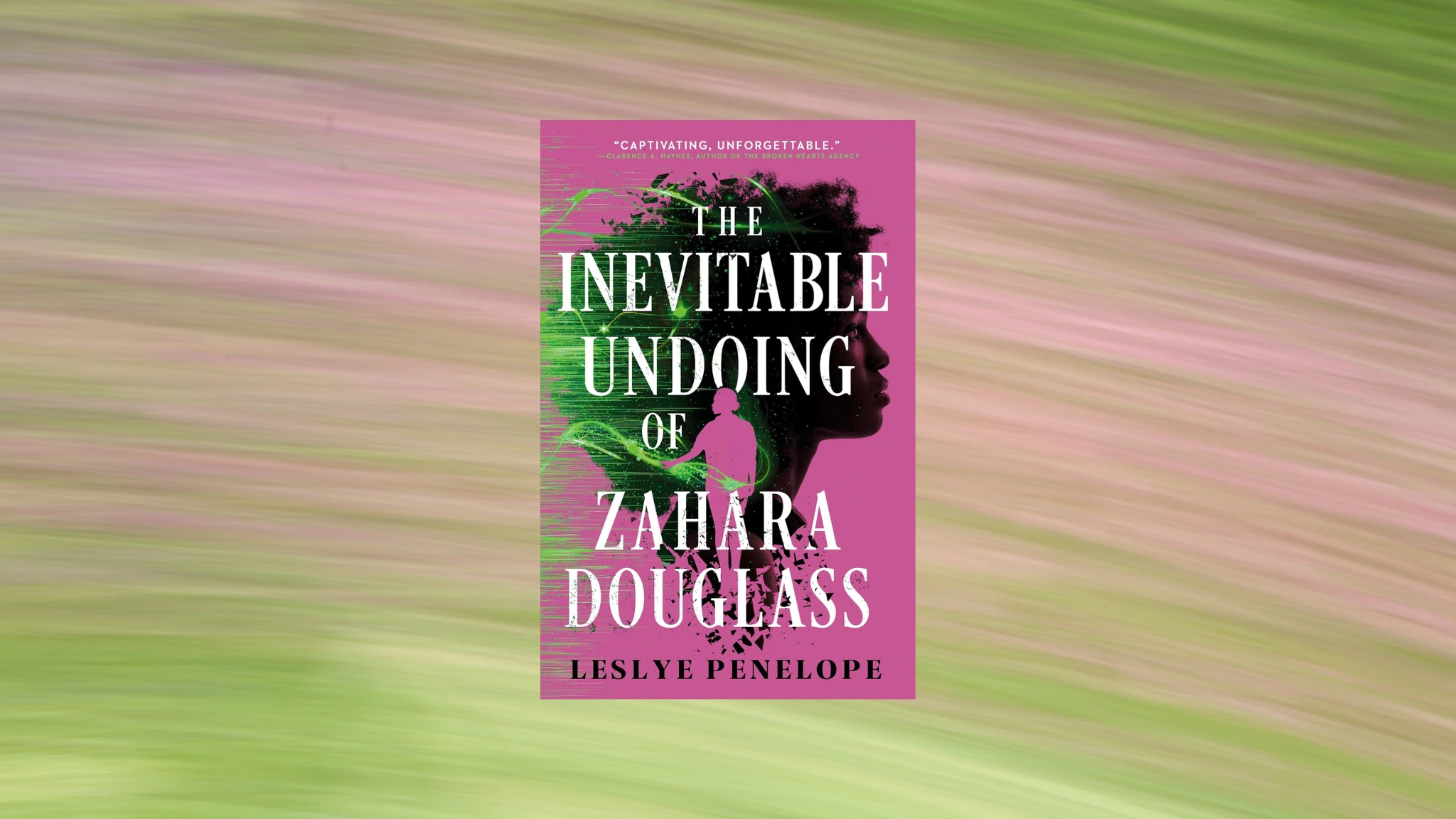
I set my new novel, The Inevitable Undoing of Zahara Douglass in the late ‘90s partially because of nostalgia, but also because of the mirror that time period holds up to the current day. The technological fears of the Y2K crisis are reflected in the current concerns about Artificial Intelligence. Our relationship with technology has shifted and changed over the past thirty years, but it’s still causing conflict.
Also, writing a mystery about a missing person in the ‘90s provides rich opportunities. It brings back images of faces on milk cartons and warnings of stranger danger that set the tone of the story I wanted to tell. Inside our rich and vibrant culture was still an underbelly of risk. We weren’t in a surveillance state with doorbell cameras and tiny recorders in everyone’s pocket. Vanishing without a trace was even easier to accomplish.
The 90s isn’t just about flannel and grunge, dial tones and answering machines. There was distance without isolation, connection without over saturation, and an interplay between freedom and danger that feels unique to that time period. Those of us who lived through it as teens or adults don’t mind going back. And those too young to remember it get to visit another world that is very specific, but also universal. There’s a balance there. There’s longing built in. And longing is fertile ground for a good story.