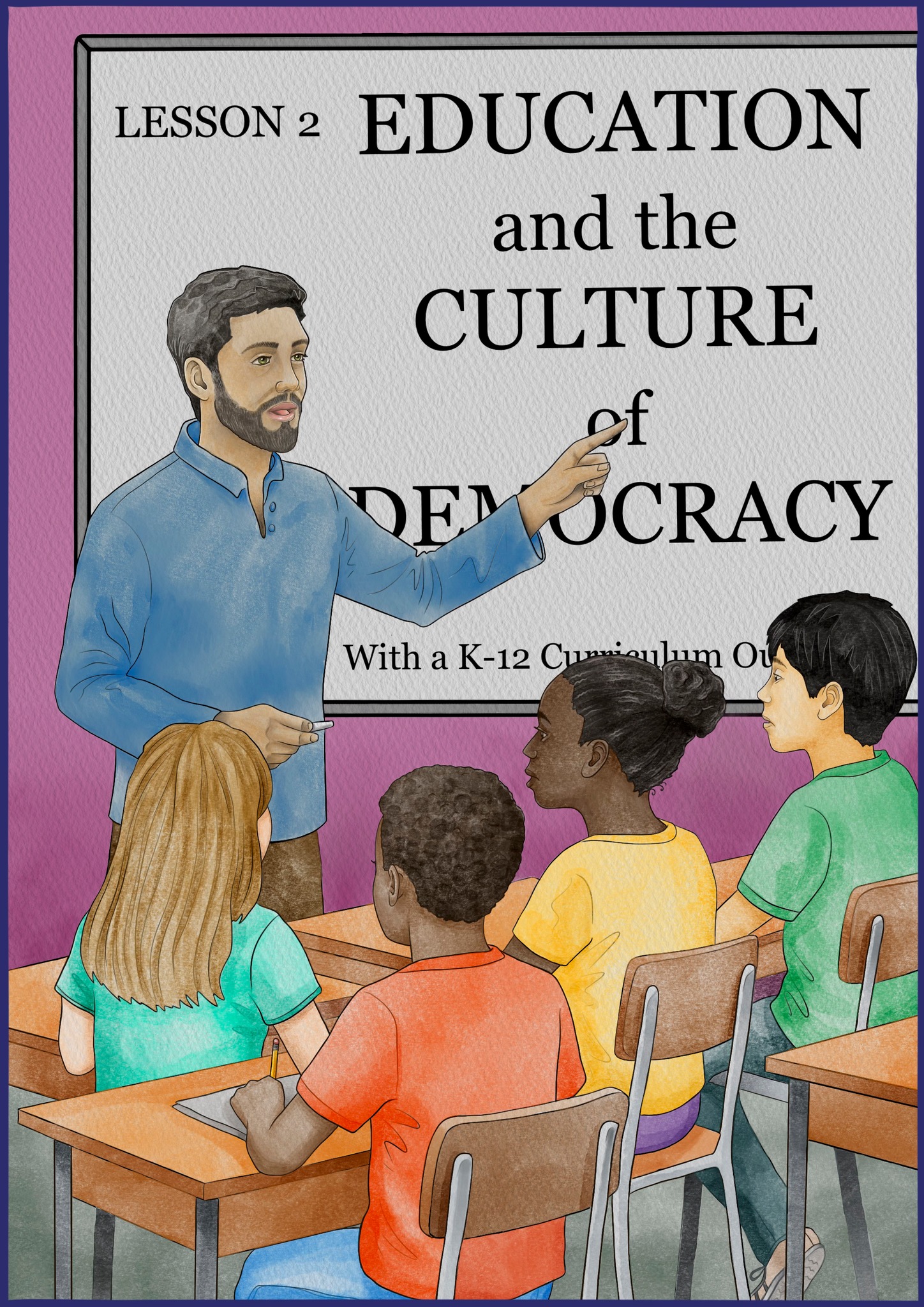
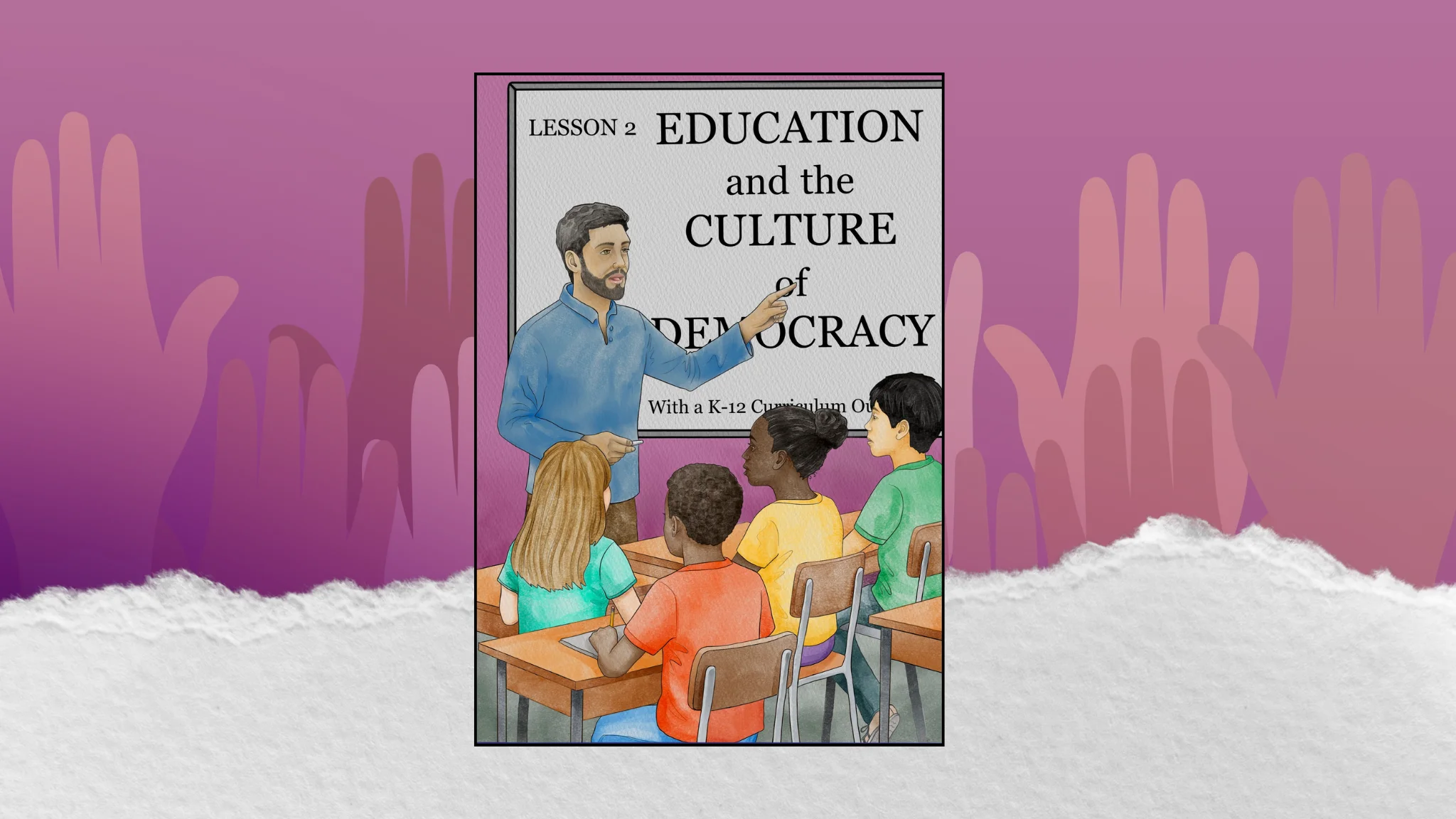
Education and the Culture of Democracy With a K-12 Curriculum Outline by Robert Mitchell
What does it mean to teach democracy — not just as a form of government, but as a habit of mind, a civic culture, even a way of understanding the self? That is the large and difficult question Robert Mitchell sets for himself in Education and the Culture of Democracy. This is not a policy book in the usual sense, nor is it a quick intervention in the latest education debate. It is a serious, often meditative work that asks readers to think about what schools are really for, and what kind of society they quietly help produce.
Mitchell, a retired secondary teacher who taught math, English and history, writes from a perspective shaped by both classroom experience and a deep interest in philosophy and psychology. His frames of reference are varied and broad. Ancient Greece, Native American traditions, T. S. Eliot, William James and Jungian thought all find their way into the book’s argument. Yet the central concern remains steady throughout: democracy, he argues, cannot survive as a mere political mechanism. It has to be sustained by a culture, and that culture depends on how people are formed.
The Strength of Democracy Lies in Its People
The idea that anchors the book is what Mitchell calls the “sanctity of the individual.” He means something larger than individual rights. For him, the phrase points to the development of inward character: a personality that is not wholly shaped by ideology, standardization or materialism. Education, in this view, is not simply the delivery of information or preparation for work. It is one of the chief ways a society teaches the young what a person is, what a community owes its members and what democratic life demands in return. He also calls for a recovery of an older and more expansive understanding of education — one in which history, literature, religion and art are not ornamental subjects tucked around the edges of “real” learning, but central to the making of citizens.
That gives the book a unique perspective. Mitchell is clearly responding to present-day disputes over curriculum, identity and civic education, but he does so by stepping back from the usual partisan language. He is less interested in scoring points with the left or the right than in diagnosing what has gone missing. Again and again, he returns to the belief that education in the United States has drifted away from questions of culture, moral formation and the life of the imagination, giving way instead to technocratic priorities and ideological conflict. The result, in his telling, is a narrowing of both the classroom and the self.
A Curriculum that Reimagines Education’s Purpose
Mitchell does not merely critique education, however. The most distinctive sections of the book are those that move from philosophy to educational vision. He outlines a K–12 cultural curriculum organized around child development and designed to balance rational learning with the symbolic, cultural and civic dimensions of life, including what Mitchell describes as the interplay between the “sacred” and the everyday. The framework is more conceptual than prescriptive, so readers looking for a step-by-step reform agenda will need to put in some work themselves. But this is precisely the point; it is a structured outline, not a policy manual. Mitchell is trying to imagine what a democratic education might look like if it took the inner life seriously.
Education and the Culture of Democracy is rich with ideas. Mitchell proceeds through his arguments by accumulation, layering concept upon concept. This book requires its readers to slow down and think. It does not simplify itself for the sake of speed. For readers inclined to pay close attention, these deep excursions yield rewards in the form of a more nuanced understanding. Mitchell is attempting something larger than commentary. He is building a worldview.
Educators and others concerned with the current direction of schooling will gain valuable insights from Mitchell’s work. But its philosophical arguments will also interest readers drawn to questions of civic life, cultural continuity and the moral purpose of institutions. In the end, whether readers agree with Mitchell’s ideas or not, his book presses on a question that feels more urgent the longer one sits with it: If schools do more than transmit skills — if they also shape a people’s sense of reality, value and belonging — then what happens when that deeper work is ignored?
Mitchell’s answer is clear. A democracy cannot renew itself on procedure alone. It must also know what kind of human being it hopes to form.
About Robert Mitchell
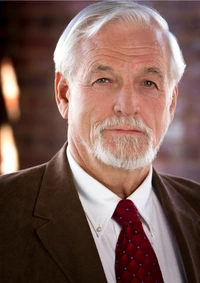 Robert Mitchell is a retired secondary teacher of math, English and history. He has an academic background in the history of consciousness and Jungian psychology and is a veteran of the Vietnam War. Previous books by Mitchell include Journey to Myrtos, The Trials of the Initiate: Transforming the Warrior Spirit and TEACHER: Seeking the Vocational Archetype. Since his retirement from teaching, Mitchell has become a lecturer and writer on educational reform, child development and the educational process of nurturing the presence of a future spiritual democracy in young people.
Buy this Book!
Amazon