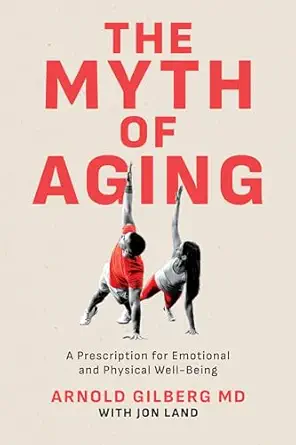
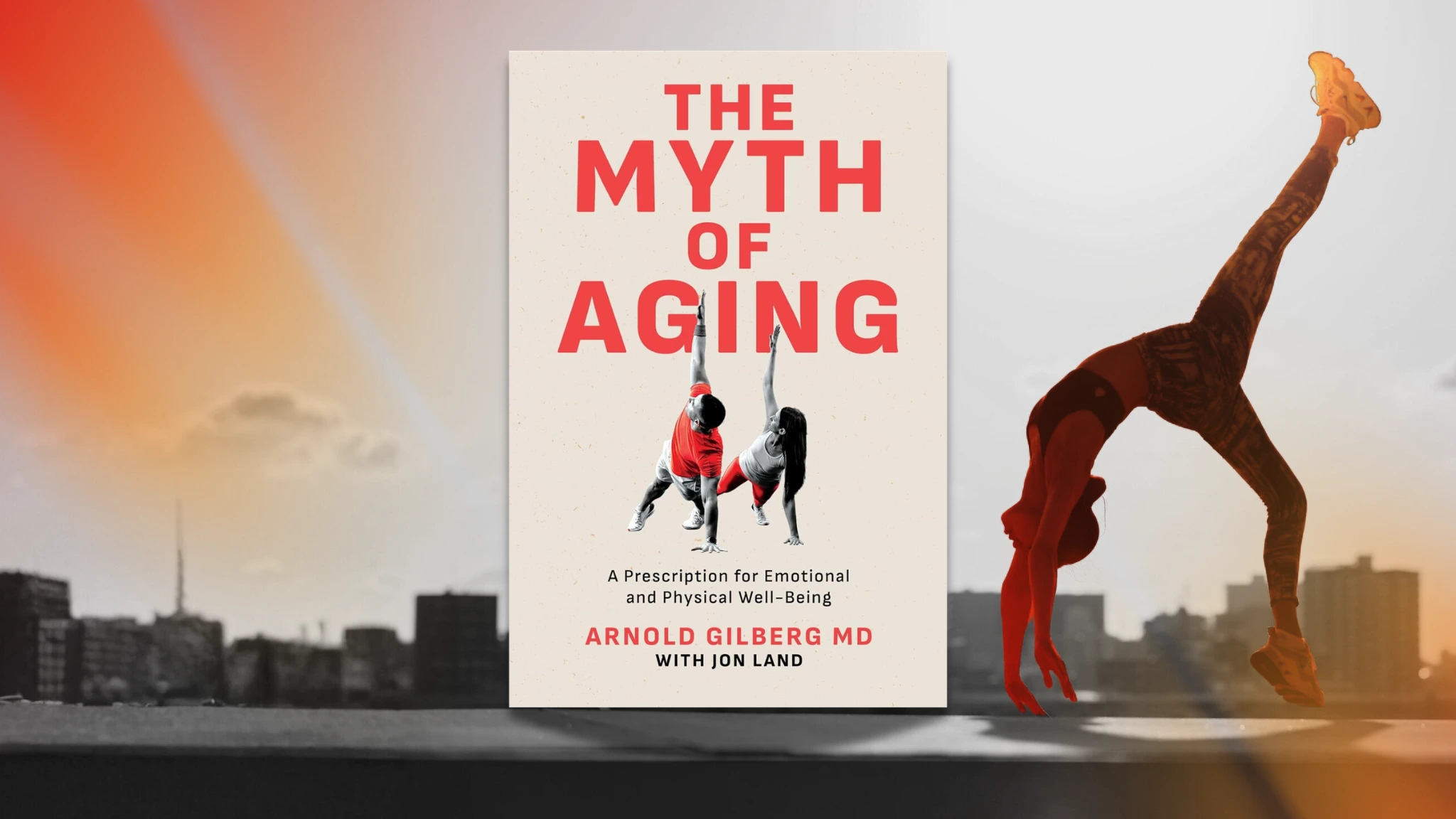
The Myth of Aging: A Prescription for Emotional and Physical Well-Being by Arnold Gilberg, MD
What if the most limiting beliefs about aging aren’t biological — but cultural? What if the narrative of slowing down, shrinking ambition and quietly stepping aside simply isn’t true?
In The Myth of Aging: A Prescription for Emotional and Physical Well-Being, Beverly Hills psychiatrist Arnold Gilberg, MD — writing with Jon Land — challenges the quiet assumptions that aging equals decline. Drawing on more than six decades of clinical experience, Gilberg delivers not nostalgia about “golden years,” but a practical, deeply informed guide to navigating life’s later chapters with clarity, resilience and purpose.
Aging Is Not the Enemy … Disengagement Is
At the heart of the book is a simple but powerful premise: aging itself is not the enemy — disengagement is. Growth, reinvention and joy are not privileges reserved for youth. They remain available to anyone willing to approach life with intention.
Designed as both a cohesive read and a reference-style guide, The Myth of Aging allows readers to move through it sequentially or consult specific sections as needed. Gilberg addresses an expansive range of challenges that often define midlife and beyond: grief after the loss of a spouse, shifting identities in retirement, intimacy changes in long-term relationships, financial setbacks, addiction, loneliness, evolving roles within blended families and adult-child dynamics, and the physical realities of aging.
Rather than framing these experiences as signs of diminishment, he presents them as pivotal transitions — moments that call for recalibration, not retreat.
One of the book’s greatest strengths is its practicality. Each section concludes with clear, actionable “prescriptions” — structured guidance that translates insight into behavior. Gilberg offers strategies for cultivating gratitude, managing jealousy and envy, strengthening communication with adult children, maintaining both physical and mental fitness, and approaching inevitable life milestones with steadiness. The advice is grounded and specific without feeling rigid.
From Insight to Action
Gilberg writes with the authority of a physician who has treated thousands of patients, yet the tone remains accessible and compassionate. He avoids jargon and sensationalism, opting instead for clarity and calm. His perspective is shaped not only by decades of psychiatric practice, but also by his own continued evolution — now practicing as an octogenarian and having become an ordained rabbi later in life. His life itself reflects the book’s thesis: purpose does not expire.
Importantly, The Myth of Aging does not deny reality. Gilberg acknowledges physical limitations, loss and uncertainty. What he challenges is the assumption that these inevitabilities signal the end of relevance or possibility. The focus shifts from what cannot be controlled to what can: daily habits, mindset, relationships and the conscious cultivation of meaning.
Throughout the book, emotional well-being is inseparable from physical health. Relationship quality influences longevity. Identity remains fluid. Agency — even in small choices — becomes a stabilizing force. Gilberg repeatedly emphasizes that fulfillment requires effort. Happiness is not passive. But neither is it inaccessible.
The scope is broad, yet the writing remains steady and readable. Readers can explore sections on resilience, trauma, intimacy or family transitions without feeling overwhelmed. While particularly resonant for those in midlife and beyond, its insights extend to younger readers seeking a long-term framework for emotional durability.
Rewriting the Narrative of Later Life
In a culture saturated with anti-aging promises and cosmetic reversals, Gilberg’s message feels both countercultural and grounded. He does not offer a way to turn back the clock. Instead, he offers a way to move forward with awareness and engagement.
The myth, he argues, is not that aging brings change — it certainly does. The myth is that change must equal contraction.
The Myth of Aging reframes later life not as a gradual narrowing, but as an opportunity for refinement — of priorities, of relationships, of self-understanding. For readers willing to question inherited assumptions and take an active role in shaping their next chapter, Gilberg provides both reassurance and challenge.
You are not finished. You are not sidelined. Your story is still unfolding.
And that may be the most liberating idea of all.
About Arnold Gilberg, MD:
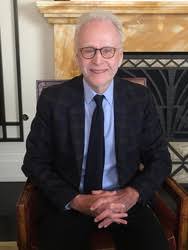 Arnold L. Gilberg, MD, PhD, received his bachelor’s degree in political science and Doctor of Medicine degree from the University of Illinois. He interned at the Los Angeles General Medical Center. He is the last person alive trained by Franz Alexander, MD, a distinguished colleague of Sigmund Freud. His psychiatric training took place at the Cedars-Sinai Medical Center, where he was chief psychiatric resident. He also has a doctorate in psychoanalysis from the Southern California Psychoanalytic Institute.
Dr. Gilberg is a Distinguished Life Fellow of the American Psychiatric Association, the former Clinical Chief of Psychiatry at Cedars-Sinai Medical Center in Los Angeles, and an associate clinical professor at UCLA School of Medicine (honorary). He served for ten years under three different governors on the Medical Board of California for LA County, and has treated thousands of patients in his Los Angeles-based practice.
Today he lives with his wife in LA, where he continues to see patients on a regular basis.