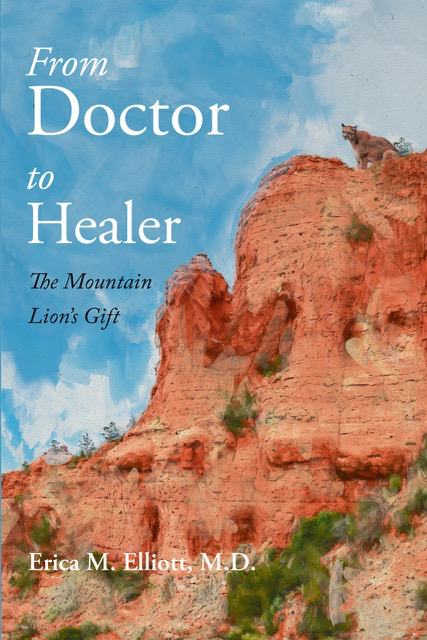
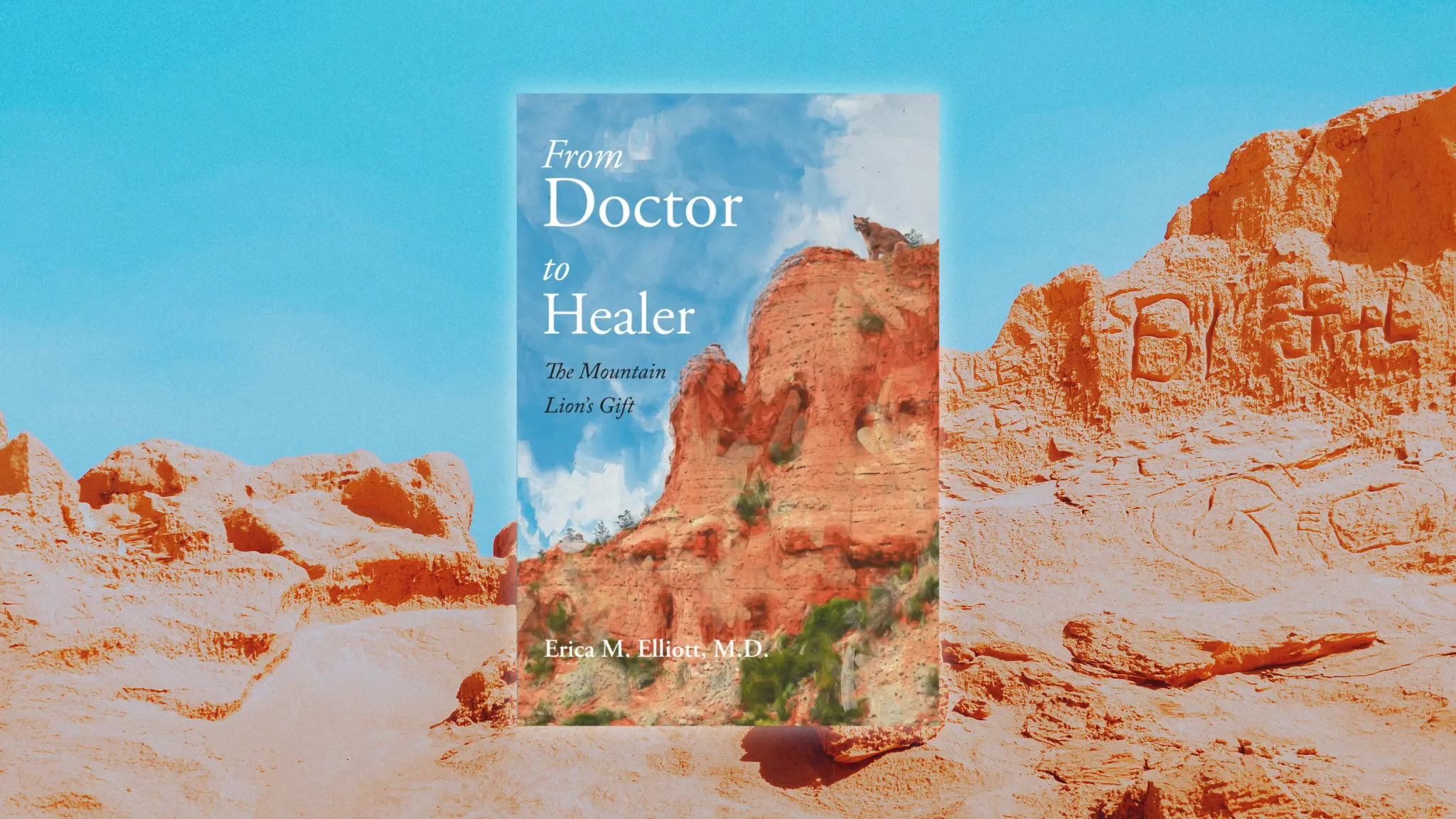
From Doctor to Healer by Erica Elliott
The subtitle is no flourish: a mountain lion encounter early in her life becomes a touchstone for courage as she faces chemical injury, catastrophic illness and a coin-flip brain surgery — then remakes her vocation from the inside out. Even if you haven’t read Elliott’s earlier memoirs, this volume stands on its own as an intimate account of how a doctor learns, painfully and persistently, to become a healer.
Elliott begins as many doctors do: eager, idealistic, and certain that stamina and study will be enough. Medical school leads to the wards, to nights on call and days that blur together. Then come the chapters that set this book apart. As a student, she treks to a charity hospital in the Himalayan foothills and is thrust into a moral crucible: with the surgeon away and a patient dying of appendicitis, she’s told to operate — without gloves, without a net. Elliott’s description of that emergency appendectomy is steady-handed and, somehow, tender; it’s one of several scenes where necessity and compassion collapse the distance between training and real life.
Illness, Transformation and the Work of Healing
The book’s middle third chronicles a different kind of trial: an on‑the‑job chemical exposure that scrambles her cognition and narrows her world. She follows the clues like a detective — malfunctioning ventilation, monthly pesticide applications (chlorpyrifos, better known as Dursban), sealers and solvents — and, finally, must leave a clinic she loves. That loss leads, unexpectedly, to environmental medicine, a specialty she studies first to save her own life and then to serve patients no one else can help.
Then the bottom falls out. After a near‑fatal accident and cascading complications, Elliott develops multiple carotid‑cavernous fistulas. The surgery she’s finally offered — a marathon embolization with coils — comes with a 50/50 chance of improvement versus death. She says yes. The chapters that follow, including a pre‑op healing ceremony and a brutally honest account of recovery, insomnia, and fear, are the beating heart of the memoir. They’re also where the “mountain lion’s gift” returns: not as myth but as a felt presence, a reminder of strength when strength seems gone.
Plenty of physician memoirs narrate the apprenticeship — anatomy labs, overnight calls, the first time a young doctor says “I am the doctor.” Elliott does that, but she refuses the tidy arc. What she offers is the lived texture of perseverance: learning neuroplasticity techniques when sleep collapses to an hour a night, rewiring anxious circuits with deliberate practice, and reframing setbacks with a discipline she calls “composting disaster”— turning what threatens to undo her into something that can fertilize a new life. The pages on acceptance are practical and moving, never saccharine: mindfulness in a kitchen sink, a breath counted out when storms trigger pain, the quiet heroism of washing one dish at a time.
What also lingers is how community carries her: colleagues who make calls when she can’t, friends who sit vigil, patients who turn up with soup and stay with their own hard work. As she painstakingly rebuilds her practice — the “medical detective” many travel to see — Elliott does not claim sainthood. She writes about irritability and doubt, about how healing is less an endpoint than a set of habits we return to, especially on bad days. The result is a memoir that respects both science and spirit without romanticizing either.
Moments You Won’t Forget
Denali at minus forty. Elliott and a climbing partner take on North America’s highest peak, bivouacking in a storm, passing the bodies of a fallen team on the descent. The scene is stark and humane at once; it’s also a foreshadowing of the tenacity she’ll need later.
An OR with no gloves. In India, with a generator humming and a nurse swatting flies, a medical student must become the surgeon. The way Elliott steadies herself — by recalling the careful, respectful butchering she learned while herding sheep on the Navajo Nation — tells you everything about her presence of mind and her reverence for bodies.
The janitor’s calendar. Back home, the culprit behind monthly “flu” episodes turns out to be routine pesticide applications. The revelation is less a twist than a turning point: the day a mystery becomes a map.
Fifty‑fifty. In Phoenix, a neurosurgeon explains the plan: thread catheters, place coils, aim fluoroscopy for hours; odds even. Elliott signs. What follows — shaved hair in a radiation field, prayers, the slow return of hope — burns bright but never lapses into melodrama.
Elliott’s prose is clear. She favors precise verbs over ornate description; when she does reach for imagery, it lands. The structure — three parts that carry us from training to disillusionment to re‑imagination — gives the book a natural velocity. The clinical passages are lucid without jargon; the spiritual ones are grounded, never airy. Readers who loved Kitchen Table Wisdom or When Breath Becomes Air will feel at home here, but Elliott’s voice is absolutely her own: candid about fear, stubborn about grace.
Big Themes, Gentle Touch
Resilience without denial. This is not a bootstraps fable. Elliott doesn’t minimize grief or pain; she simply refuses to stop at either.
Science and spirit in conversation. Acupuncture sits beside angiography, Buddhist mantras alongside lab results. The book respects multiple ways of knowing and shows how those ways can meet at the bedside.
Service as destination. The “doctor to healer” shift isn’t a rejection of medicine; it’s a widening of its lens — one that includes the built environment, the foods we eat, and the stories our bodies tell when we listen.
Page after page, Elliott earns your trust. By the end, you understand why patients call her a medical detective and why the mountain lion’s gift—the courage to stand still and not flinch — feels like more than a metaphor. From Doctor to Healer is a generous, quietly thrilling memoir that will speak to clinicians, caregivers and anyone re‑assembling a life after the unthinkable.
About Erica Elliott
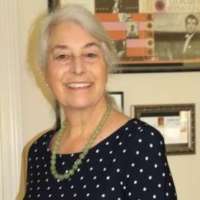
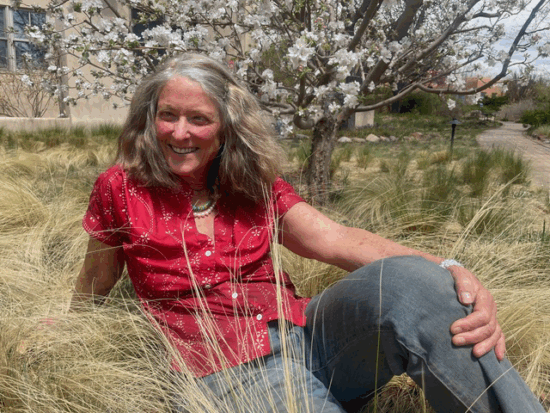 About the AuthorErica Elliott lives in Santa Fe, New Mexico, where she has a busy medical practice treating patients from across the country. After graduating from University of Colorado Medical School and completing her training in family practice, Erica began her medical career in an understaffed, underfunded health clinic in Cuba, New Mexico. From there, she served in a variety of healthcare settings, including a clinic for indigent care, a busy emergency room, a women’s clinic, and a multi-specialty clinic.In 1993, Erica opened her own private practice in her home. Affectionately referred to as “the Medical Detective,” Erica specializes in difficult-to-diagnose chronic illnesses. Over the years she has written countless health-related articles and has spoken at many different venues. She gave a weeklong workshop at both Esalen and Omega Institute.Erica is a founding member of The Commons, a cohousing community where she raised her son, Barrett. She gave a TED talk in 2015 about life in cohousing.Erica is currently writing a “how to” book about her techniques for discerning the underlying causes of both common and elusive medical problems. The working title is The Medical Detective: Simple Solutions for Solving Medical Mysteries.Over the past decade, Erica has blogged about her life and her medical insights at www.musingsmemoirandmedicine.com. Her website, www.ericaelliottmd.com, features synopses of her books, photos from her life, and short, compelling videos.