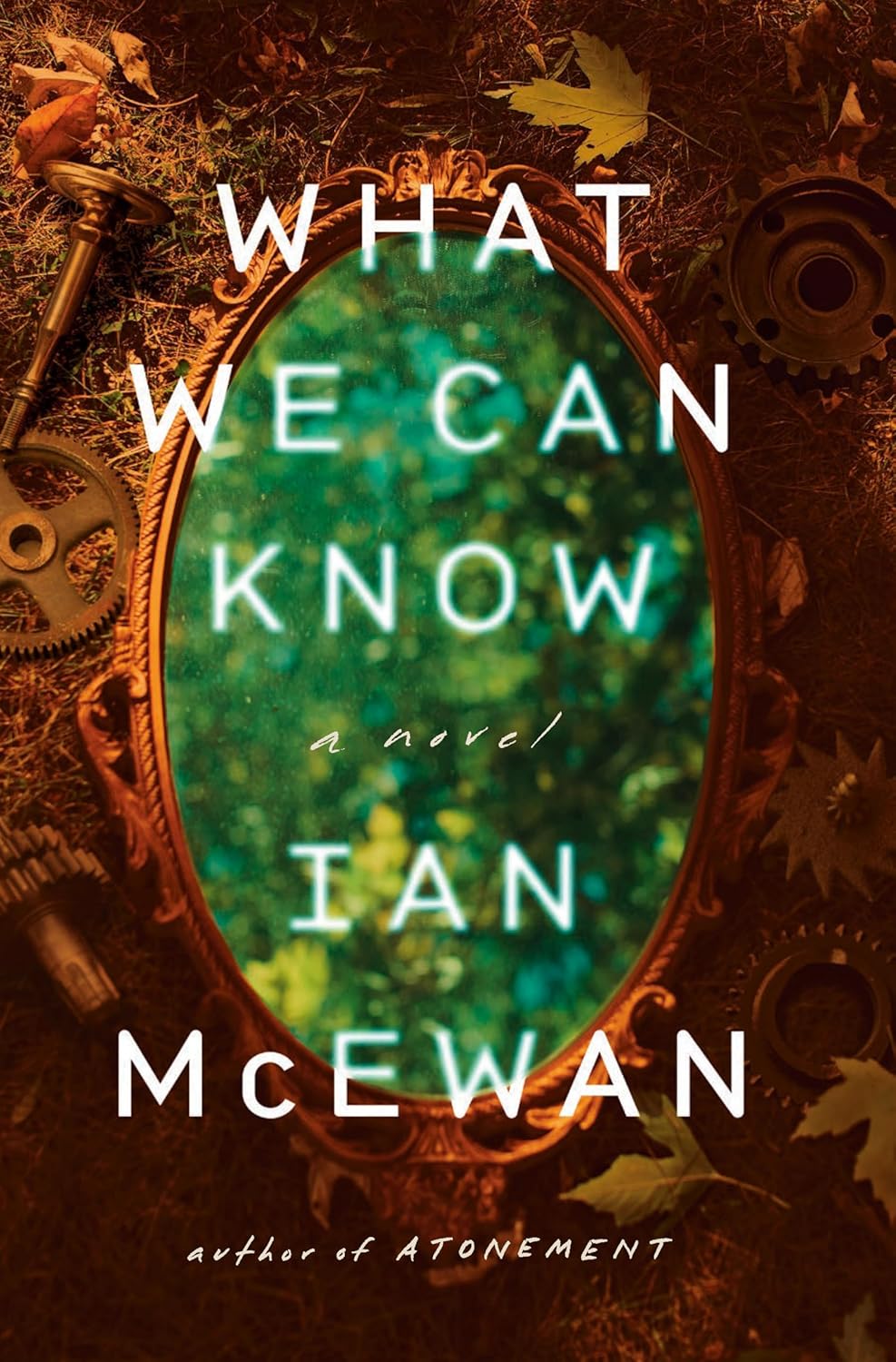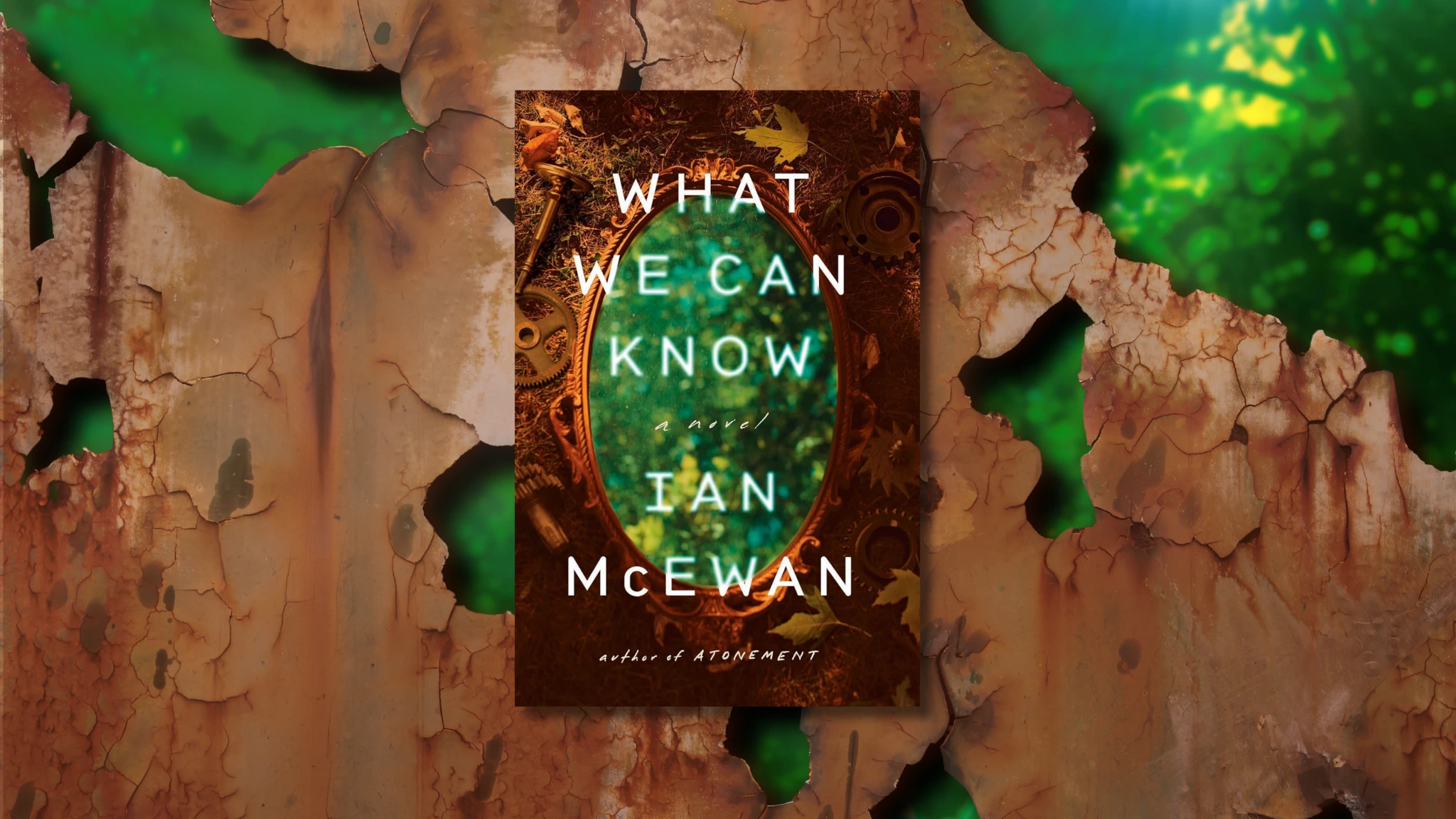
What We Can Know by Ian McEwan
Ian McEwan is no stranger to tackling big questions. Over his decades-long career, he has given us novels that explore morality, memory, love and loss through the most intimate of lenses.
With What We Can Know, he sets his sights on something even more ambitious: the very limits of human understanding. It is a daring project infused with his signature beauty, rigor and sweeping ambition, with a heavy emphasis on thought rather than feeling.
The Vision Behind “What We Can Know”
Few contemporary writers marry intellectual curiosity with literary precision quite like McEwan. From Atonement to Machines Like Me, his work often asks how ideas — scientific, moral or philosophical — shape the lives we lead. Here, he goes further, probing what it means to know anything at all. How do memory, perception and belief form our realities? What happens when certainty slips through our fingers?
McEwan brings all his usual strengths. His prose remains polished, every sentence carefully tuned. He has a remarkable ability to take abstract concepts and render them in lucid, even lyrical, language. There are moments where science, literature and history intertwine beautifully, and readers will recognize the intelligence and clarity that have defined his career.
When Ideas Outweigh Emotion
The characters in What We Can Know sometimes feel more like vehicles for ideas than fully lived figures, and at times, the novel leans more towards philosophical reflection than narrative drive. This tension is especially clear in two of the novel’s major threads.
On one hand, McEwan confronts climate change with chilling urgency, imagining a near-future where environmental collapse has ignited civil war and torn apart the fabric of society. These passages feel raw, urgent and deeply human, forcing readers to sit with the catastrophic consequences of inaction. On the other hand, much of the novel circles around an extended dialogue about a missing poem, an abstract exercise in what can and cannot be known.
The existential immediacy of climate conflict versus the intellectual back-and-forth of literary mystery is an ambitious pairing that may feel uneven to some readers, but it offers both immediacy and intellectual depth.
A Novel of Ambition and Restless Curiosity
McEwan has given us deeply human works before, such as the quiet devastation of On Chesil Beach, but that intimacy is absent here. What We Can Know pushes readers to think. There is something admirable in McEwan’s refusal to write a safe, conventional novel.
As a reviewer, I do not approach his work as an academic but as a reader trying to honor both the challenge and the craft. My hope is that in engaging with this novel’s ambition, I have done so in a way McEwan himself might appreciate.
Ultimately, McEwan delivers a book that challenges, causes the reader to think and question and ultimately, step out of their comfort zone. What We Can Know is a brave and ambitious exploration of uncertainty that challenges more than it comforts, but reminds us why McEwan remains one of the most vital and cherished voices in contemporary fiction.
About Ian McEwan:
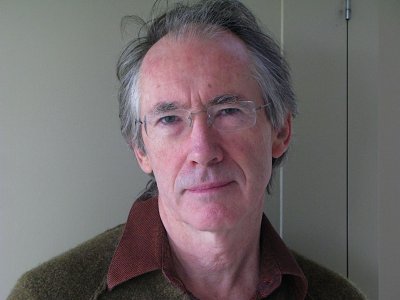
photo credit: Annalena McAfee
Ian McEwan, born in Aldershot, England, is a critically acclaimed author and winner of the Booker Prize 1998
His collection of short stories, First Love, Last Rites, won the 1975 Somerset Maugham Award. His novels include The Child in Time, which won the 1987 Whitbread Novel of the Year Award; The Cement Garden; Enduring Love; Amsterdam, which won the Booker Prize 1998; Atonement; Saturday; On Chesil Beach; Solar; Sweet Tooth; The Children Act; Nutshell; and Machines Like Me, which was a number-one bestseller. Atonement, Enduring Love, The Children Act and On Chesil Beach have all been adapted for the big screen.
He was also shortlisted, for his entire body of work, for The Man Booker International Prize 2005 and 2007.
In June 2023, he became a Companion of Honour after being recognised in the King’s first official birthday honours.