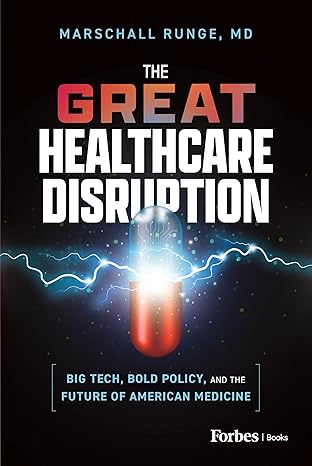
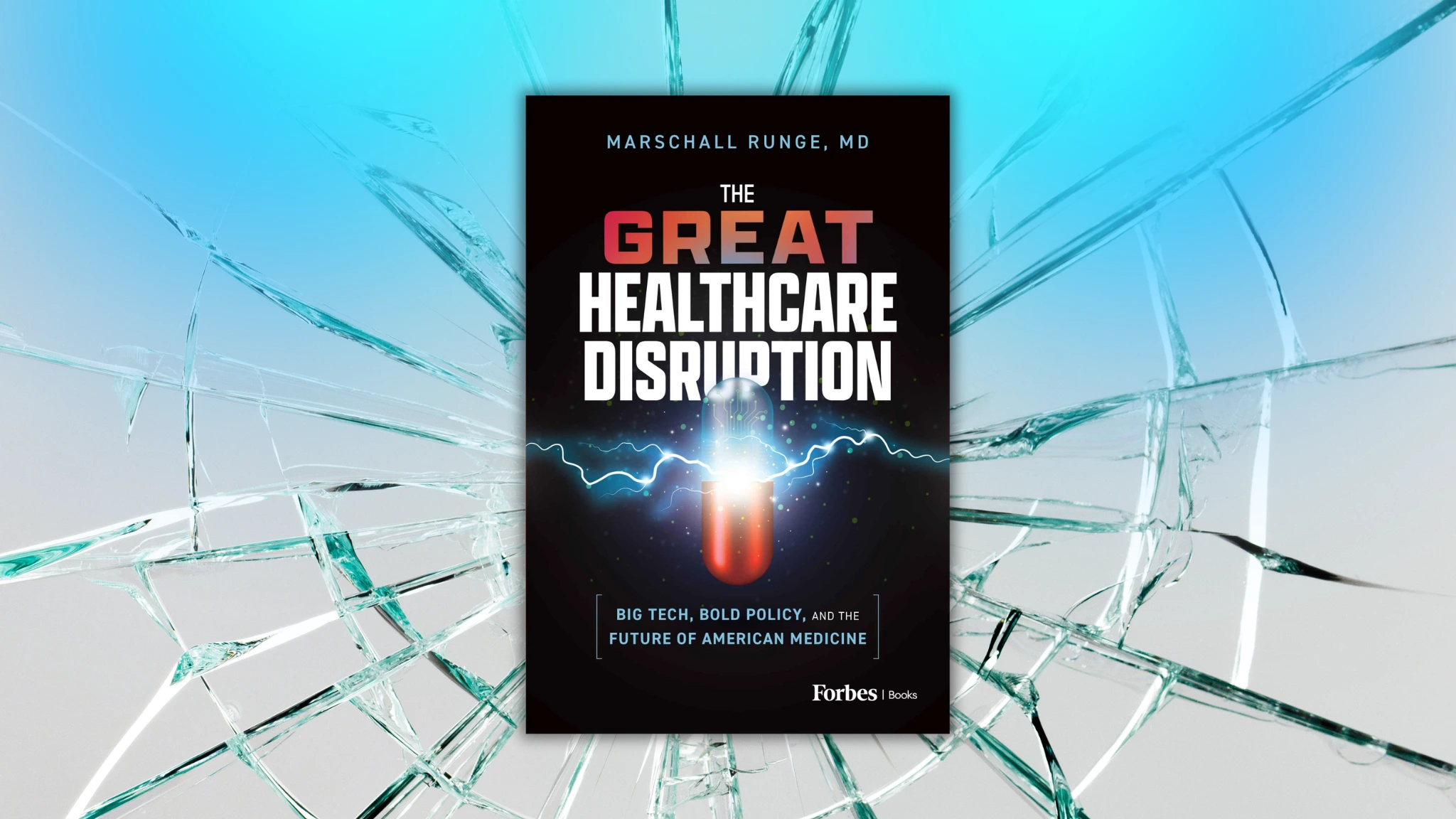
The Great Healthcare Disruption: Big Tech, Bold Policy, and the Future of American Medicine by Dr. Marschall Runge
This absorbing nonfiction read dives deep into the upheaval quietly (and not-so-quietly) reshaping American medicine. From artificial intelligence and gene therapies to retail giants like Amazon offering primary care services, the landscape of how we receive — and even think about — healthcare is shifting dramatically. Runge’s book is part explainer, part cautionary tale, and part rallying cry. It’s also refreshingly accessible, even when exploring technical or futuristic ideas.
A Vision That’s Big, Bold — and Grounded
Runge, a longtime healthcare leader, clinician, and researcher, draws from decades at the helm of one of the country’s major academic medical systems. But he doesn’t write like an ivory-tower insider. Instead, he communicates with the urgency of someone who’s seen the writing on the wall and wants the rest of us to see it, too.
Among the most compelling sections are those examining how tech titans like Google and Amazon are carving out space in the healthcare world. Whether it’s virtual visits, home-delivered prescriptions, or AI-driven diagnostics, these companies are betting big on convenience — and challenging traditional care models in the process. It’s not just disruption for the sake of buzz; it’s disruption that’s already altering how people access care and what they expect from providers.
Runge doesn’t stop with big tech. He dives into the new wave of pharmaceutical breakthroughs, such as GLP-1 obesity drugs and next-generation mRNA treatments. What’s striking is his balanced approach: he’s enthusiastic about the medical promise these innovations hold, but just as focused on the moral and logistical questions they raise. Who gets access to these life-altering treatments? How do we fund them? And what happens when medicine becomes more like a digital service than a human experience?
Clear, Thoughtful, and Surprisingly Relatable
Despite the high-tech subject matter, the writing feels grounded and human. Runge often weaves in personal anecdotes, including a vivid story about recovering from his own surgery at home through a program he helped implement. These moments bring warmth and real-life relevance to the book, reminding readers that healthcare isn’t just a system — it’s something that touches all of us, often when we’re most vulnerable.
Throughout the book, Runge poses big-picture questions. How do we maintain the essential doctor-patient relationship in a world dominated by algorithms and remote care? Can we embrace innovation without leaving behind those already struggling to access basic services? And what kind of responsibility do patients have in managing their own wellness amid a glut of new tools and treatments?
His tone isn’t preachy or pessimistic. Instead, there’s a sense of quiet determination — and optimism. He believes we can get this right. But we have to be honest about the challenges and creative in our solutions. It’s a voice that feels both authoritative and approachable.
Big Themes, Bite-Sized Insights
The book is smartly structured around core themes, such as retail medicine, obesity treatments, AI in diagnostics, and policy reform. Each chapter reads like a deep but digestible exploration of a specific aspect of healthcare’s transformation. Readers won’t need a medical degree to follow along, but they will walk away with a better understanding of what’s happening — and why it matters.
One standout chapter unpacks the evolution of pharmacies and the rise of mail-order prescriptions, with companies like Mark Cuban’s Cost Plus Drugs offering transparency and affordability in a market long plagued by opacity. Another section dives into the ripple effects of AI in healthcare: it’s not just about replacing radiologists, but about unlocking new efficiencies, improving accuracy, and raising new ethical concerns. Runge highlights how AI models can perform well in labs but stumble in real-world hospital settings — offering a healthy dose of skepticism amid the excitement.
Accessible to All, Not Just Insiders
Although healthcare professionals will undoubtedly find value in the detailed policy and systems analysis, this is not a book just for insiders. In fact, Runge seems to have written it precisely because these conversations belong in the public sphere. He invites everyday readers into the discussion — arming them with enough information to feel informed, without overwhelming them with jargon.
The writing is paced well, the examples are relatable, and the tone walks that rare line between informed and humble. You don’t have to agree with every point Runge makes to appreciate the clarity and care with which he makes it. He’s not pushing an agenda so much as opening a much-needed dialogue about how to preserve the best parts of medicine while letting go of what no longer serves us.
Final Takeaway: The Future Is Already Here
What makes The Great Healthcare Disruption stand out is that it doesn’t treat healthcare like a puzzle to be solved with one clever idea. It recognizes the complexity — economic, political, human — and still offers a hopeful path forward. Whether it’s reimagining how hospitals function, advocating for smarter drug pricing, or envisioning partnerships between traditional providers and retail disruptors, the book is full of insights that feel both urgent and practical.
If you’ve ever found yourself wondering how AI, Amazon, or gene editing might impact your next doctor’s visit—or your aging parent’s care — this book is well worth your time. It’s not just a book about what’s next in medicine. It’s a reminder that the choices we make now will shape a healthcare system for generations to come.
And in that future, as Runge points out, we all have a role to play.
About Dr. Marchall Runge
 Marschall S. Runge, M.D., Ph.D., is the executive vice president for Medical Affairs at the University of Michigan, dean of the Medical School, and CEO of Michigan Medicine. He earned his doctorate in molecular biology at Vanderbilt University and his medical degree from Johns Hopkins School of Medicine, where he also completed a residency in internal medicine. He was a cardiology fellow at the Massachusetts General Hospital.
He is the author of over 250 publications and holds five patents for novel approaches to health care. As a Texas native who spent fifteen years in North Carolina and an avid thriller reader, Runge has experienced so many you-can’t-make-this-up events that his transition to fiction was inevitable. He is the author of the techno-thriller Coded to Kill and is currently working on his second novel.