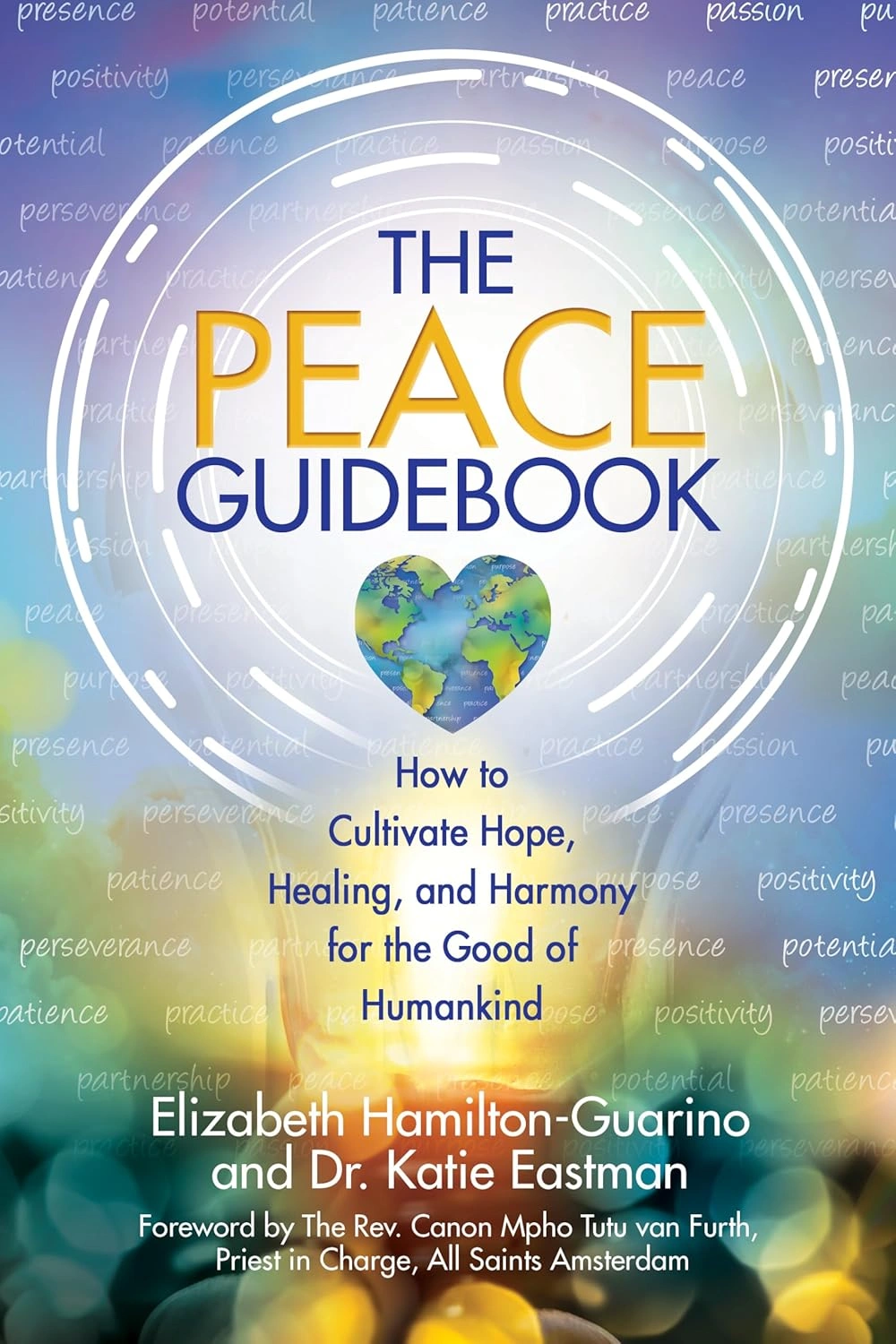
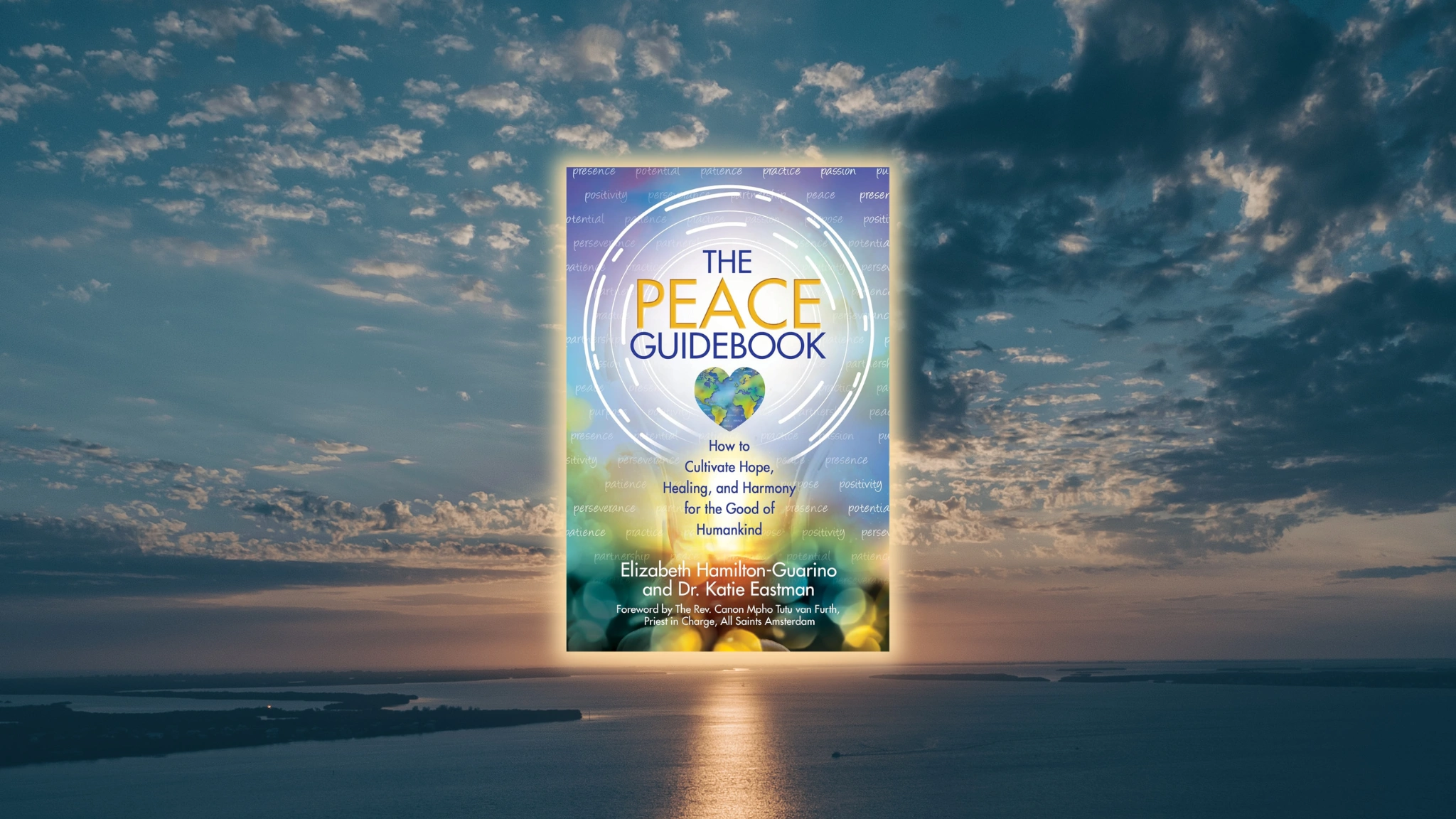
The Peace Guidebook by Elizabeth Hamilton-Guarino and Dr. Katie Eastman
Co-authored by Elizabeth Hamilton-Guarino and Dr. Katie Eastman, The Peace Guidebook is for anyone who has ever wondered how to find stillness in the middle of a storm and how to stay there.
Building Peace One Choice at a Time
The book is organized around three parts — Foundation, Growth and Harmony — each subdivided into chapters built around a single guiding word: Presence, Perspective, Potential, Perseverance, Passion, Purpose, Positivity, Partnership, and finally, Peace itself. This structure gives the reading experience a sense of progression. Each chapter delivers “Peace Points” — numbered, actionable insights that range from “Do the Best You Can with What You Know at the Time” to “Recover When You Lose It.” There are 80 of them in total, and their cumulative effect is remarkable: by the book’s final pages, peace feels less like an abstract ideal and more like a set of daily choices within anyone’s reach.
Hamilton-Guarino and Eastman do not pretend the path to peace is smooth. They write with the kind of vulnerability that can only come from experience, sharing personal stories throughout. These “Pathways to Peace” sections, one from each author per chapter, transform the book from an instruction manual into something far more resonant: a conversation between friends who have been through it.
The “Stories from the Heart” sections take that intimacy even further. Contributions from real people — a Ukrainian psychologist living through war, an emergency physician, a coach at Georgetown University, a man inspired by the Savannah Bananas — lend the book a remarkable breadth of perspective. Peace, the authors convincingly argue, is not the exclusive domain of the spiritually inclined or the fortunate. It is available to anyone willing to pursue it with honesty and intention.
From Reflection to Action
The theoretical underpinnings are handled with a light but credible touch. The authors draw meaningfully on trauma theory, Buddhist philosophy, the Ubuntu principle and Dr. Elisabeth Kübler-Ross’s Four Quadrants model, weaving these frameworks into the narrative without overwhelming the reader.
Each chapter closes with “Points to Ponder” and practical exercises — tools like the “Chaos Check-In,” “The Peaceful Passion Inventory,” and “Re-Create Your Peace” — that invite readers to move from reflection into action. These exercises are genuinely useful, the kind you’ll find yourself returning to long after a first read.
The foreword, written in the spirit of Archbishop Desmond Tutu’s legacy, sets a powerful tone, reminding readers that peace is not passive — it is a practice, a decision made in the middle of disruption. The Peace Guidebook honors that vision on every page. It is expansive enough to speak to the personal and the global, intimate enough to feel like it was written just for you.
For anyone navigating grief, burnout, conflict or the relentless pace of modern life, this book offers something rare: not a quick fix, but a trustworthy path.
About Elizabeth Hamilton-Guarino:
 Elizabeth Hamilton-Guarino is the founder of The Best Ever You Network and host of The Best Ever You Show, a top-ranked podcast with over 5 million global downloads. She is also the co-founder of Compliance4, a consulting firm providing strategic solutions in regulatory compliance, leadership, and business excellence. A Master Life Coach and bestselling author, Elizabeth is widely recognized as one of America’s leading voices in personal development, leadership, and mindset transformation.
Through her books, coaching, and global media platform, she has helped individuals and organizations achieve world-class excellence by integrating strategic vision, gratitude-centered leadership, and empowered action. She is the author of The Change Guidebook and The Success Guidebook, and co-author (with Dr. Katie Eastman) of Percolate – Let Your Best Self Filter Through (Hay House) and the forthcoming The Peace Guidebook. She also co-authored award-winning children’s books with Sally Huss.
A sought-after speaker and media contributor, Elizabeth brings a unique blend of heart, strategy, and soul to everything she does. She and her husband, Peter, split their time between Maine and South Carolina, where they enjoy life with their four adult sons, two dogs, and three beloved rescue cats.
About Dr. Katie Eastman:
 Dr. Katie Eastman is a nationally respected grief and change expert with over three decades of experience helping people turn heartbreak into healing and trauma into transformation. A psychotherapist, master grief coach, organizational consultant, and cofounder of Recreate Coaching and Counseling, Dr. Katie brings deep emotional insight, spiritual awareness, and practical tools to life’s most profound challenges. Trained in the integration of psychology and spirituality, she infuses every aspect of her work with compassion, presence, and purpose. As coauthor of The Peace Guidebook, Percolate: Let Your Best Self Filter Through, and author of Uplifting: Inspiring Stories of Loss, Change, and Growth, she helps others discover that even in the midst of loss, peace and meaning can rise.