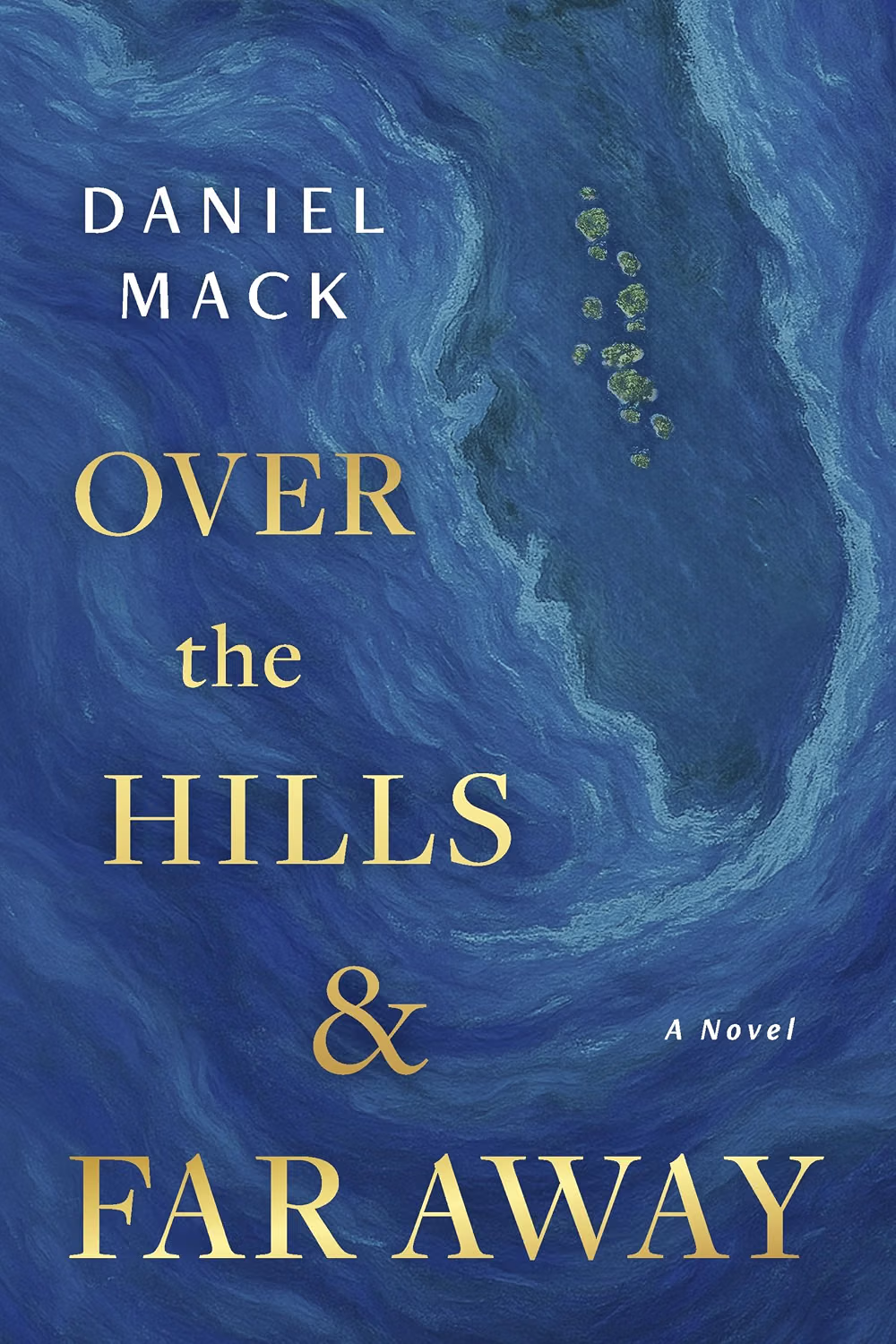
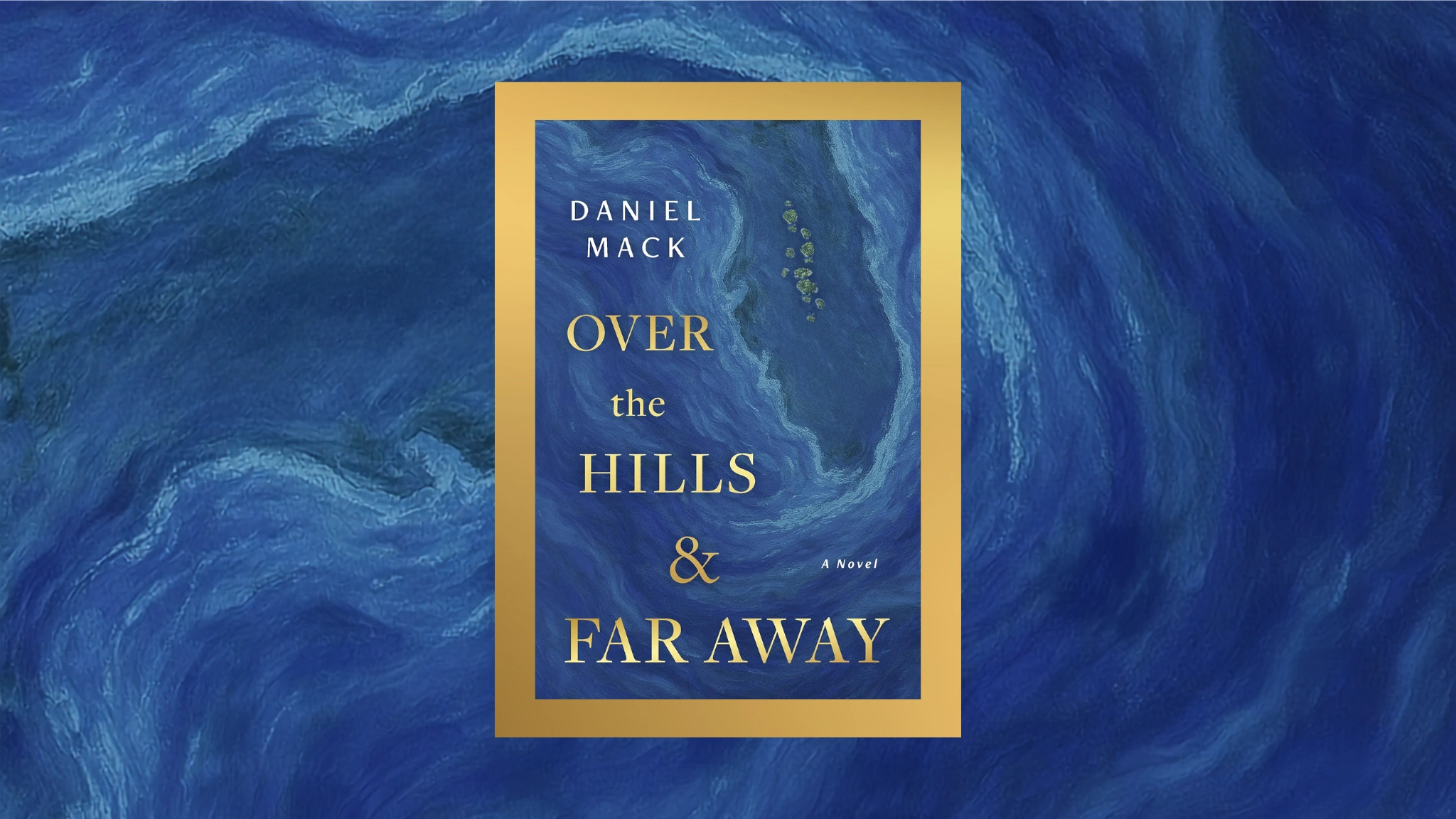
Over the Hills and Far Away by Daniel Mack
John Merlan thinks he is nearing the end of things: his career is sputtering out (no thanks to his employer), his heart will not keep a steady rhythm, and most of his oldest friends are gone, save one. What remains is the question of what to do with the freedom he still possesses, and how much of it is really his in a world increasingly determined to tell him how to live. Half a world away, one government is making headway on a far more radical possibility: What if free will could be eliminated altogether?
John, an aging behavioral therapist newly settled in Central Florida, spends much of Daniel Mack’s Over the Hills and Far Away driving the rolling roads of the Lake Wales Ridge, conducting Zoom sessions with a dwindling roster of clients, and deciding how aggressively he wants to treat his persistent atrial fibrillation. He is funny, profane and deeply curious, with an instinctive resistance to nearly every institution that presumes to tell him what is best for him.
Finding Meaning in the Hills
John’s fascination with Central Florida sends him into libraries and down back roads, from the Lake Wales Ridge and Bone Valley to Bok Tower and Casa de Josephina. Mack gives the region a strong physical presence, mixing natural history and local lore with John’s running commentary. The landscape gives him another way to think about change and the human urge to impose order on the world.
A drive to a cardiologist can send him thinking about aging; a phosphogypsum stack, about the uneasy tradeoffs behind human progress. Even a playground sends him back to the freedoms children once had to work things out for themselves. John’s thoughts roam, double back and make unexpected connections.
His therapy sessions work much the same way. Relationship Guy, a widower who has retreated into the familiar company of old television shows, prompts questions about loneliness and memory. Mind F Guy pushes John’s suspicion of social manipulation much further, arguing that modern systems are particularly good at making people surrender freedom while believing they are still choosing for themselves.
John may think he is treating them, but more often they help him understand himself.
An Amusement Park Called Life
John keeps returning to the question of how much control people really have over their own lives. He sees pressure everywhere — from corporate bureaucracy and medicine to advertising, religion and what he calls “The Tribe.” More important than whether people possess free will, though, is what they do with it.
For John, that means more than resisting outside influence. It means paying attention, learning from mistakes, taking care of oneself and trying not to quit. He believes life sometimes brings old situations back around, offering a chance to respond differently the second time. Freedom, in that sense, carries an obligation to learn something from the choices one makes.
His spiritual views are equally independent. John speaks of “The Sky” rather than committing himself to conventional theology, while respecting the faith of two Jehovah’s Witness women he jokingly calls Laverne and Shirley. Human existence, to him, sometimes resembles an amusement park: exhilarating, baffling and temporary.
Then he meets the mysterious El Roy at Bok Tower Gardens. Their conversation about creation, human imperfection and free will takes John’s thinking somewhere stranger. El Roy is never neatly explained, nor is the beautiful Ursuline nun who accompanies him. Mack leaves the encounter open enough to be read as revelation, symbolism or something in between. As the novel goes on, reality and imagination become harder to separate.
A Nested Russian Doll of a Story
The prologue introduces a clandestine Chinese project built around a startling premise: if the human soul is the source of free will, perhaps the soul itself can be intercepted. Scientists identify what they believe to be a physical phenomenon by which souls reach Earth, while a Jesuit astrophysicist monitoring events from Arizona watches an inexplicable threat to those ambitions develop.
John never knows this plot is unfolding. While he worries about the ordinary ways people surrender control over their lives, the novel’s other storyline imagines free will being taken away at its source.
Late in the novel, a new acquaintance, Kelly Pendar, encourages John to write down the people, places and ideas occupying his mind. Her suggestion gives shape to what John has been doing all along: collecting observations and memories and wondering whether they mean anything together. With that, Mack adds another layer: John begins turning the life we have been reading about into a story of his own.
Not every question receives an answer. John does not arrive at a grand theory that explains the world. What he does begin to see is that the life he thought was winding down may still contain new work, new connections and more road ahead. Over the Hills and Far Away does not solve the mystery of existence. Its more immediate concern is what John will do with the freedom he still has — and whether he will use it while there is still time.