
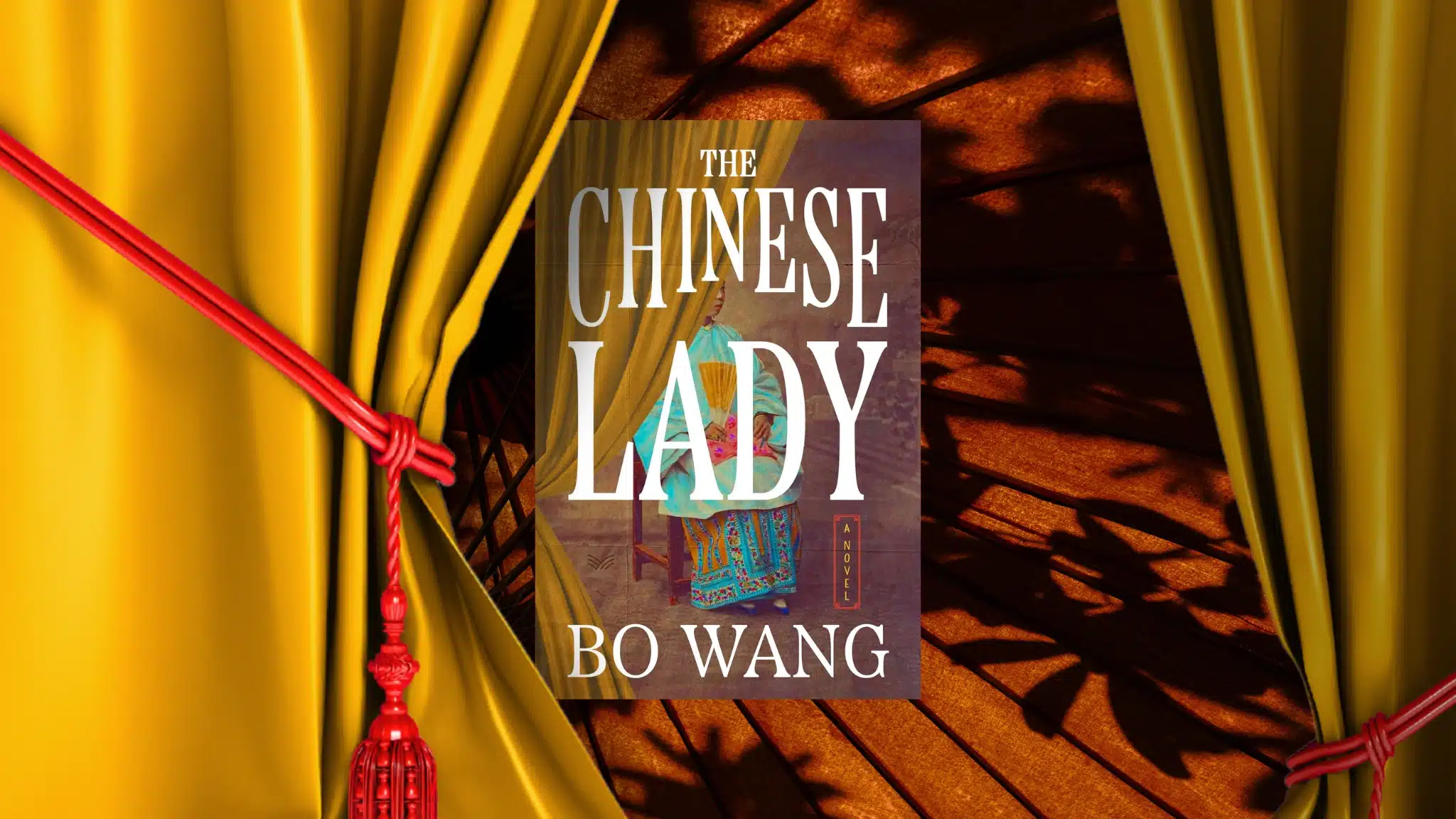
I spent a lot of my younger life fantasizing about living in Regency England or the nineteenth-century United States. As I got older, I understood either context would have been intensely uncomfortable — for anyone used to modern hygiene and for me as a Chinese American, in particular. I was less likely to dance with Mr. Darcy or go buggy-riding with Almanzo Wilder than to find myself displayed as a public curiosity.
In 2019, while working on a project to expand U.S. history curricula, I came across a review of Nancy E. Davis’s phenomenal nonfiction book, The Chinese Lady, which details the life of the first Chinese woman in the United States. I was astonished I had never heard of her; she had been brought to New York by two American merchants as a live exhibit to promote Chinese imports.
As with many marginalized figures, her historical record is full of gaps. But two mysteries really provoked my imagination: How would a girl with bound feet have ended up in her situation? And what happened to her after she disappeared from the public eye?
The whole premise of The Chinese Lady’s story was unlikely. Since binding hindered girls’ abilities to work, it was usually a practice reserved for well-off families. It seemed incredibly odd that a household wealthy enough to bind their daughter’s feet would then sell or surrender her to foreign merchants like the Carnes brothers. I started writing The Chinese Lady as an exercise to imagine what kind of household that could be.
Once I started imagining The Chinese Lady’s origin story, I couldn’t stop filling other gaps in the historical record. And I didn’t want to fill in the gaps of just her story, but in the stories of the women around her: her mother, the wife of the captain whose ship brought her to New York, and Joice Heth, another woman exploited by P.T. Barnum. What started as a novel about one young girl became a novel about four women — all of whose ideas and perspectives were lost in part or in full to history.
For me, the magic of writing fiction, generally, lies in interiority — in being able to imagine not just what happens, but what characters think as stuff happens. Interiority distinguishes characters as individuals rather than tropes. The magic specific to writing historical fiction lies in walking the line between possibility and improbability. How far could I bend the constraints of time and place without slipping into alternative history? It’s highly improbable the real Chinese Lady had anything other than a miserable ending. But as an author, I had the power to give her — and my readers — a little bit of hope.