
Llanderado! All That Glitters Is Not Coal by shoeless
Blaenavon is a town where clocks tell their own time, the dead remain present and coming home can take more than a century. That makes this Welsh mining town fitting territory for Llanderado! All That Glitters Is Not Coal, the final book in shoeless’s Cranehill Saga, a trilogy loosely built around the further lives of two characters from Charles Dickens’s Oliver Twist: the pompous parish beadle Obadiah Bumble and the fiercely protective Nancy.
After beginning with Dickensian orphans and Victorian injustice in Out With Time, then following their daughter Olivia’s search for the truth of her origins in The Dying Art of Life, the saga ends in the modern world, where Nancy and Bumble are now Mrs. Williams and Skeeter, Olivia has risen to astonishing prominence as a world leader, and the past has not vanished so much as changed clothes.
Perhaps most remarkably, this new timeline has returned Nancy to Bumble and given him a second chance to face the wife and daughter he once lost. If only he can find the one “immaculate word” to say what he couldn’t before.
Mysterious Wealth and Secretive Citizens
Skeeter arrives in Blaenavon as an investigative journalist with what sounds like a straightforward assignment. His London editor, Tina, wants him to find out why the town seems to be doing unusually well and whether public grant money has been misused.
Blaenavon, however, is not interested in making his work easy.
The local mining economy appears to be exhausted, yet signs of prosperity keep surfacing. There are expensive cars, ambitious projects and a standard of community care that does not fit the visible evidence. Something valuable is moving through the town, but almost everyone seems to have agreed not to say exactly what it is.
The eventual answer is more interesting than ordinary corruption. Blaenavon has turned its mine, natural resources and collective ingenuity into considerable wealth used to support housing, education, health and the wider life of the town. Herein lies an irony: Skeeter has been sent to uncover wrongdoing, but the real story is why a town might need to disguise its success from outsiders eager to exploit it, regulate it, sensationalize it or claim a share.
Playing the Pauper
Tragedy strikes when a mine explosion traps several men underground. This is where the true nature of the community comes to the fore, in who turns up, who takes responsibility and how quickly individual interests give way to collective action. The miners’ rescue efforts reveal that Blaenavon’s solidarity is more than civic branding.
Unfortunately, the event brings unwanted media attention to the town, and now they must find a way for their secret wealth to withstand the scrutiny. They soon resolve to paint a portrait of a town devastated by a mining disaster, and Skeeter becomes a key player in a media manipulation scheme. Fundraising plans and an increasingly ambitious benefit concert follow.
The latter brings all of the book’s energies together. Aging prog-rock star Stephen Rivers comes to perform music from The Mine, while the organizers’ appetite for spectacle demands increasingly expensive — and bizarre — stagecraft. Celebrity, local pride, media frenzy and a giant tunnel-boring machine collide in a climax that is hilariously ridiculous and oddly fitting.
Trying Not to “Bumble” His Second Chance
Beneath the civic mystery lies Skeeter’s private reason for being in Blaenavon. His return to Mrs. Williams’s Cnoc Craen Cottage places him inside a past he has spent years avoiding. The house holds a white shawl, a Frodsham watch, a Japanese sword and other remnants of the Cranehill family’s history. More painfully, it holds reminders of a child who died and of the family that fractured in the aftermath.
Skeeter has responded to grief by turning absence into a way of life. He talks around uncomfortable truths. His elaborate language is entertaining, but it is also a defense. He can describe, qualify, digress and perform at great length when saying something plainly would bring him too close to what hurts.
Mrs. Williams has no patience for such evasion. Their exchanges establish one of the novel’s most effective comic patterns: he talks, she acts; he inflates, she punctures; he tries to explain himself, and she understands him before he is finished. Yet there is tenderness beneath the irritation. She knows the difference between his foolishness and his fear, and she refuses to let the latter excuse the former.
The expected arrival of Olivia on the day of the concert brings that fear into the open. His first instinct is to run. His eventual choice to remain is quiet but significant. The novel does not offer him a grand act of redemption or pretend that one reunion can erase years of absence. It asks him to do something both smaller and harder: remain where he is, face Olivia and accept that this second chance will be measured not by what he says, but by whether he stays.
A Digressive Tale That Refuses to Stay in Genre Lanes
Shoeless writes in a style that is comic, crowded and unapologetically digressive. A simple observation may expand into a historical aside, a technical explanation or a mock-philosophical argument. Cars, mining machinery, music and the peculiarities of language receive more attention than narrative economy requires.
Yet the excess belongs to Skeeter. His voice is not just the means by which the story is told but one of the things the novel is examining. His sentences entertain, frustrate and expose him. The jokes frequently arrive through inflated comparisons, linguistic misunderstandings and the collision between grand plans and stubborn physical reality. Even at its broadest, however, the farce rarely erases the sadness underneath.
The novel also asks readers to accept its own peculiar relationship with genre. The investigation never becomes a conventional thriller. The bending of time is not explained through science-fiction mechanics. Its Dickensian characters are not treated as museum pieces but allowed to acquire new names, histories and regrets. The result is less an imitation of Dickens than an argument with the finality of literary endings.
The novel is best read as a comic Welsh mystery with a family reckoning running beneath it. The hidden fortune supplies the intrigue, but the more lasting question is whether Skeeter can stop narrating his life from a safe distance and step back inside it. The clocks may disagree, history may double back, and the perfect word may never arrive on cue, yet Llanderado! reaches a fitting conclusion: home is where the people who know your whole story still understand what you are trying to say.
About shoeless
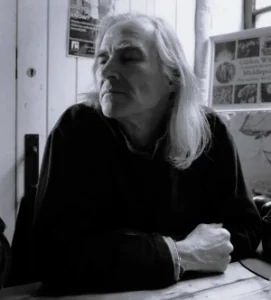 The author, shoeless, continues to toil under the shadow of the master of fiction, Charles Dickens, but now at the safe distance of a century or more. After Out With Time and award-winning The Dying Art of Life, Llanderado! is the final part of the Cranehill Saga featuring characters from Oliver Twist. While South London is where shoeless is holed up, part of his soul resides in the valleys of South Wales, and this is where the characters now find themselves.