Folklore has been relegated to entertainment in many ways, but I want us to remember the power of a folk story.
A mother in a dark room, tucking her child into bed at night, giving them a cautious warning to not get out of bed for the creature in the closet, El Duende, may get them. A similar warning has also been uttered by mothers to small children in grocery stores: ‘Stay close to me or The Man will get you.’ That’s a common warning in Latin American culture, so common to the point that mothers will say it loudly, within earshot of other shoppers, and other shoppers will play along and agree, ‘Oh yes, be careful, little one. Don’t wander away, or The Man will get you.’
The warning given to a child at night is much less terrifying than the one given to a child during the day, but ultimately both of them ring true and should be looked at side-by-side: At night, we speak of imaginary creatures that live in our closets with claws and fangs, but in the daytime, we speak of the real monster, who can be anyone, who can take us away. And that is what folklore does: it takes a story, shapes it within a community and culture, and spreads it by word of mouth with its message and warnings. Legends do the same, but they are focused on a single person; think of the legend of La Llorona.
Now, why do we need folklore? Why do we need legends? I think folklore and legends go beyond entertainment, because they have always done more than just frighten us. These stories are how people have held onto what happened to them throughout history, and sharing these accounts became a record with the purpose of preventing the message from being erased.
Years ago, I wrote a short story collection titled Lotería, and in the back of the original edition I included an index of legends, superstitions, myth, and lore that inspired each short story. At that time, I knew it was important to remind myself where the vision for each story came from and especially what the fear was behind each because I myself did not want to forget. You see, that’s because we can’t forget. We should not forget. Because people risked their lives crafting these tales so that we would remember. That’s why we tell these stories again and again; it’s not just a way of creating a living map from our ancestors to us here in present day, but it’s also a way to maintain the lessons each of those stories implored.
Consider the folk story of the Pishtaco of the Andes. He is generally described as a pale stranger who hunts Indigenous people, kills them, and removes the fat from their bodies. Horrifying? Yes, completely. And on the surface, it sounds like a classic boogeyman-type story, but if we take a few steps back, what we see is a story about a foreigner who arrived in a new land and took what lived inside the body of that land’s people. That is the history of colonization, all told in a quick, scary tale that a child can tell another child on the playground, and so on and so forth. And maybe those children can’t grasp that this is a story of the brutality of conquest, but I want to believe that subconsciously something sits in them, in the energy of those words repeated, in that warning, to be cautious because there are those in the world who will hunt you, kill you, and then extract all that they can from you.
Folklore also shows us who it was that wanted to define the record. In August of 1791, enslaved people in Haiti gathered at Bois Caïman for a ceremony that helped ignite the Haitian Revolution, one of the largest slave revolts in history. A legend soon formed, claiming that the people had made a pact with the Devil in order to win their freedom. Well, when a story is told, it’s always worth asking who needs which of those elements to be true. Because which elements make someone look good and which elements make someone look not so good can indicate who is the record keeper. And in this story what’s interesting is how people gathering in power, in community, and in ceremony to plan their freedom were later given an element of damnation. The pact with the devil component could be argued to be rooted in colonial fears and racism. Very often one can tell who it was that held the pen. So, when we read myth, folklore, and legend, we always should ask ourselves not only what is being remembered but also who is doing the remembering.
The enslaved throughout the Americas kept their own records too. Their customs and gods were forced into hiding, and so the enslaved people hid their memories and their history inside the saints of the Catholic Church, as well as in music and song. Legends survive in many forms, but it’s always important to remember that they survived because people made it a point to risk their lives so that their descendants could one day remember them.
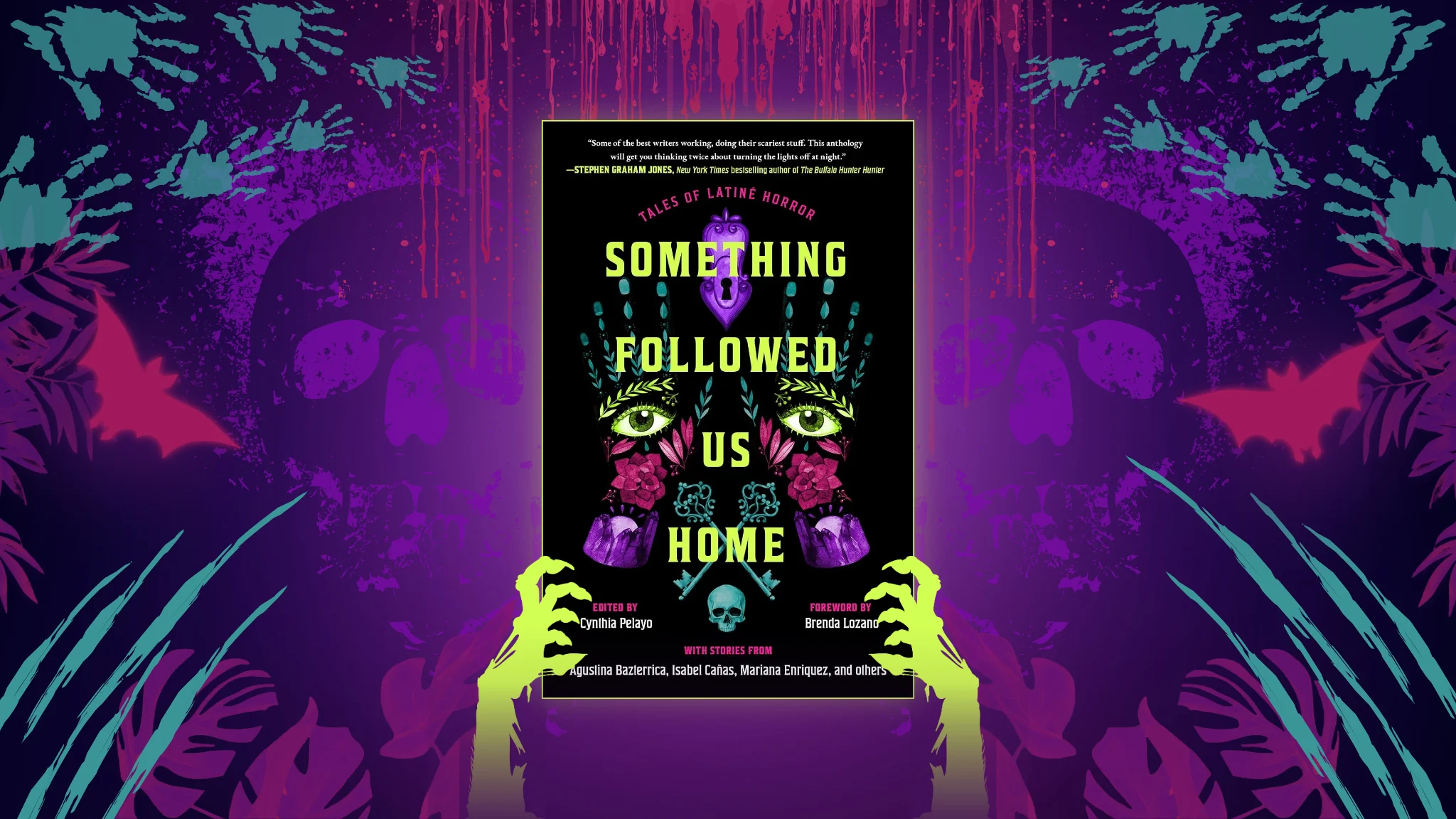
In her foreword to Something Followed Us Home, Brenda Lozano wonders whether Latin American ghosts are connected to histories of colonialism, dictatorship, repression, and femicide. I believe they are. And I believe that is why they continue to follow us today. Yes, one can begin a new life across a new border, but I believe the old stories follow us, in words, in song, in music, in food, and in art. Especially for people throughout Latin America, I believe there has been so much beauty and so much loss that our ancestors desperately did all that they could to make sure we would never forget them or what they encountered, what they endured or how they survived.
I believe horror is the genre of truth, and I believe the key marker of a horror story is fear – what scares us, and what scares us is all subjective. What scares me may not scare you. You may be terrified of a clown. You may be terrified of a shark. I’m terrified of something different, of slowly being stripped away of all that I am. I’m terrified of losing my birth language, Spanish. I’m terrified of forgetting my father’s voice. I’m terrified of forgetting the memories of us dancing salsa in the kitchen. I’m terrified of forgetting my grandfather’s face and how he held my hand as we sat on the porch of his mountain home in Puerto Rico, and he said, “I’ll always be with you.”
And I’m terrified of my children forgetting that one day, hundreds of years ago, ships arrived on the shores of the homeland of their ancestors, and later millions were murdered. It’s been ever since then that we have been trying to reclaim what we lost.
So, I hope that the folk stories and legends and myths we have told and retold ensure that monsters don’t destroy whatever records we have left of us.