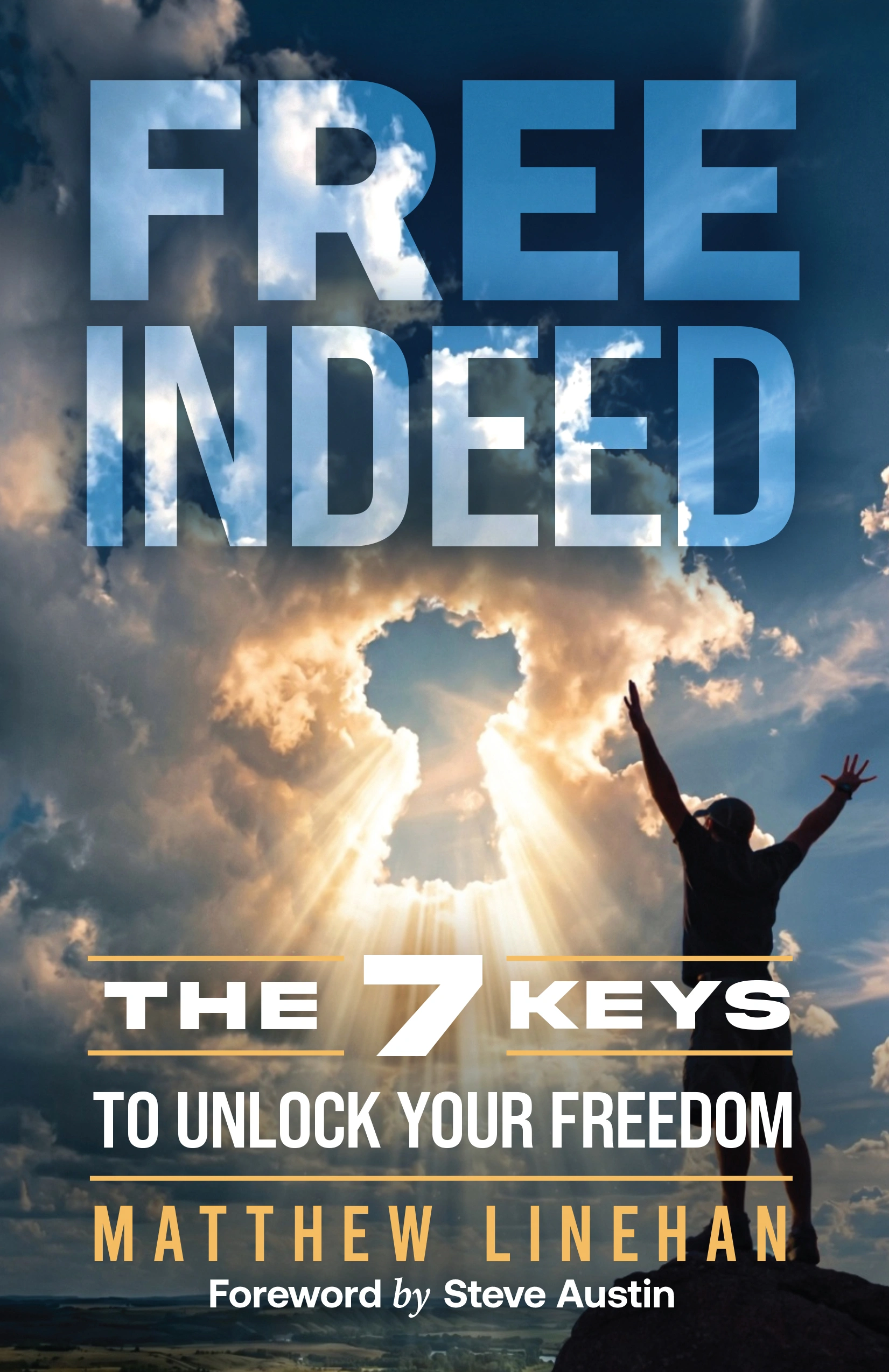
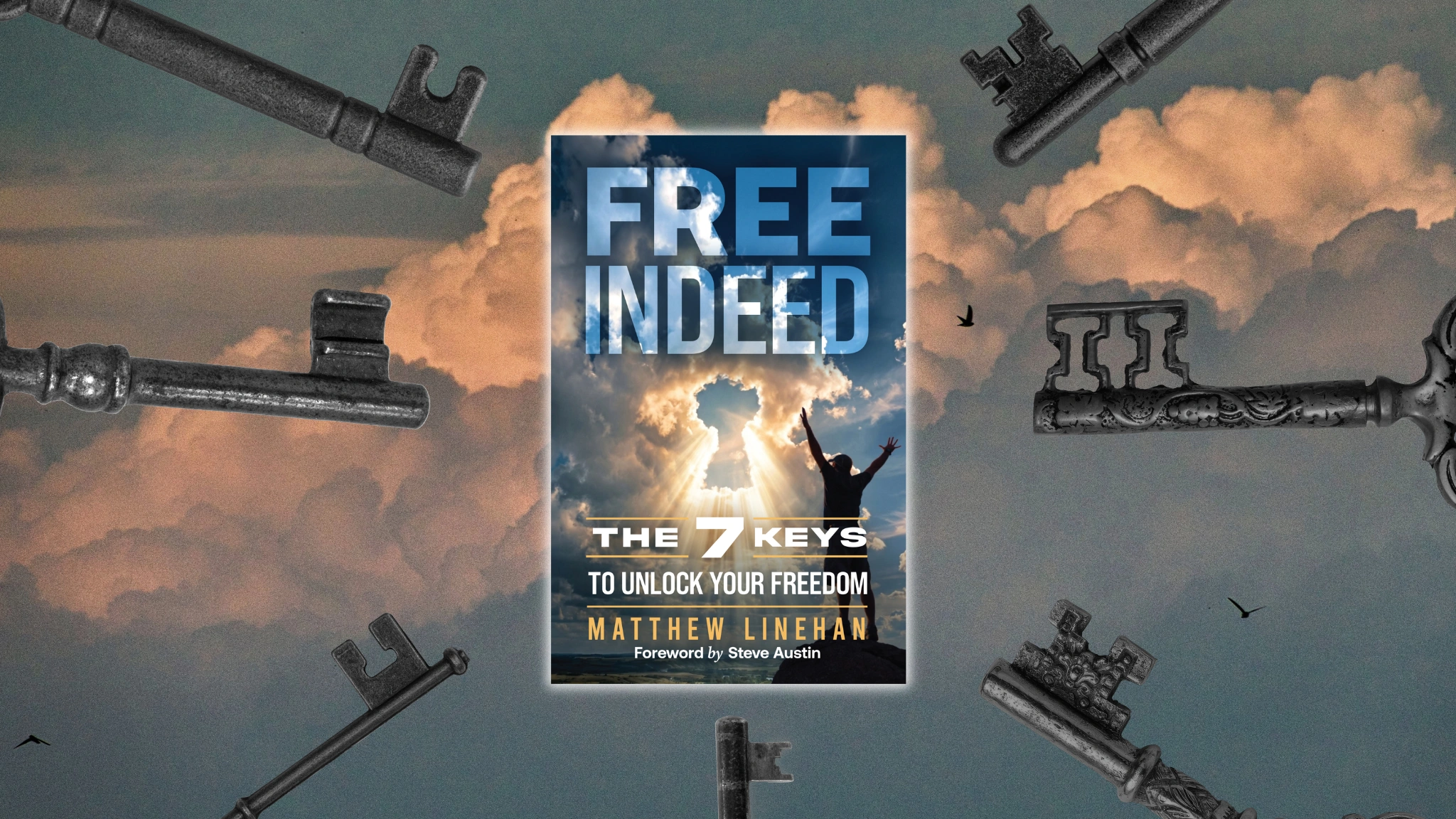
Free Indeed: The 7 Keys to Unlock Your Freedom by Matthew Linehan
For Matthew Linehan, escaping addiction was not the end of the story. It was the beginning of learning how to live.
In Free Indeed: The 7 Keys to Unlock Your Freedom, he recounts his journey from three decades of alcohol and drug addiction to a life rooted in Christian faith. The transformation was hardly instantaneous. Nor did he make that journey alone. Again and again, people appeared when he needed them: a therapist who helped him confront decades of grief, Christian men who showed him another way to live, mentors who challenged and guided him, and church communities that gave him somewhere to belong. Those relationships, along with the spiritual practices he adopted, eventually became the basis for the “seven keys” at the heart of Free Indeed.
The Road to Recovery Continues After Sobriety
Linehan’s story is candid and often painful. Adopted into a loving Ohio family, he began drinking and using drugs as a teenager. His father’s suicide in 1990 deepened patterns of anger and grief that would shadow him for years. Addiction led to arrests, lost jobs, treatment programs and, eventually, homelessness.
He first attended Houston’s Lakewood Church in December 2013 and accepted Christ, but his recovery did not follow a neat conversion-story arc. He relapsed. After another crisis in late 2014, he had his last drink and used drugs for the final time on January 5, 2015, entering the Salvation Army treatment program four days later.
That rocky path gives Free Indeed credibility for anyone who has struggled with relapse themselves, while also offering hope that recovery really is possible nonetheless. Linehan does not describe faith as a single moment that erased every problem. Instead, it provided a framework that helped him transform his life — over time and with effort. Scripture and prayer, treatment and therapy, community and accountability all played a role.
Out of that framework comes the book’s seven keys: salvation, identity in Christ, renewing the mind, forgiveness, fellowship, mentoring and discipleship, and service.
They form more of a progression than a checklist. The early chapters focus on rescue and identity. The middle ones turn toward old wounds and the influence of the people around us. By the end, Linehan moves outward — first learning from others, then becoming useful to someone else.
Teaching Through Personal Stories
Every idea Linehan presents connects to something he has lived through or witnessed.
His chapter on forgiveness returns to his father’s suicide and the anger he carried for more than two decades. He compares a person to a jar gradually filled with hurt and resentment; when life shakes the jar, whatever is inside spills out. Grief therapy at the VA, including cognitive behavioral therapy, helped him recognize that he could hate what his father had done without ceasing to love him. It’s a good example of how faith and professional help can work together to mend what’s broken.
He remembers the Christian men from Lakewood who came faithfully to the Salvation Army each week to teach Quest for Authentic Manhood. The curriculum was life-changing, but so were the men themselves: Linehan watched how they spoke, carried themselves and showed up for others. Later, Pastor Elvin Craig became his first spiritual mentor, meeting with him regularly, assigning Scripture and offering correction when needed. Years afterward, Linehan found himself mentoring other men in return.
These stories elevate Linehan’s advice from theory into practice. Some return several times, revealing new lessons as they are viewed from different angles.
A Practical Christian Discipleship Guide
Linehan writes plainly and personally, using questions, anecdotes and simple metaphors to make the book’s ideas easily accessible. He writes from a Bible-centered Christian worldview; Jesus Christ, Scripture and the Holy Spirit are central to lasting freedom. Each chapter ends with questions and prayer, a workbook-like structure that lends itself to church groups, recovery ministries and small-group discussion. Still, individual readers looking for a practical Christian addiction recovery book will find these features helpful for solo reflection.
What distinguishes Free Indeed is that it isn’t just a memoir offering the familiar testimony of hitting bottom and finding faith. Linehan is interested in the long stretch thereafter — learning who you are, figuring out what still needs healing, choosing better influences and eventually finding a way to serve others. He has boiled down his journey into a map others can use to find their way, too.
By the final chapter, freedom no longer means simply escaping the life Linehan once lived. It means having enough of a life back to offer some of it to someone else.
About Matthew Linehan
 Matthew Linehan grew up on a grape farm in Northeast Ohio. He is a disciple of Jesus Christ, a U.S. Army veteran, and co-founder of Men in Christ Global Ministries. After nearly 30 years of addiction to drugs and alcohol, Matthew encountered Jesus Christ in January 2015 and was completely set free. Through that life-changing experience, he discovered seven key biblical principles that not only transformed his life but now form the foundation of his message and this book. Since then, Matthew has devoted his life to helping others find the same freedom, hope and restoration available in Christ. Drawing from his personal testimony and years of hands-on experience in men’s ministry, pastoral care and discipleship, he walks alongside those seeking lasting change and spiritual renewal. He remains actively involved in leading men’s ministries and is a graduate of the Lakewood Church Pastoral Care Internship. Matthew currently lives in Taipei, Taiwan, with his wife, Emily, and their daughter.