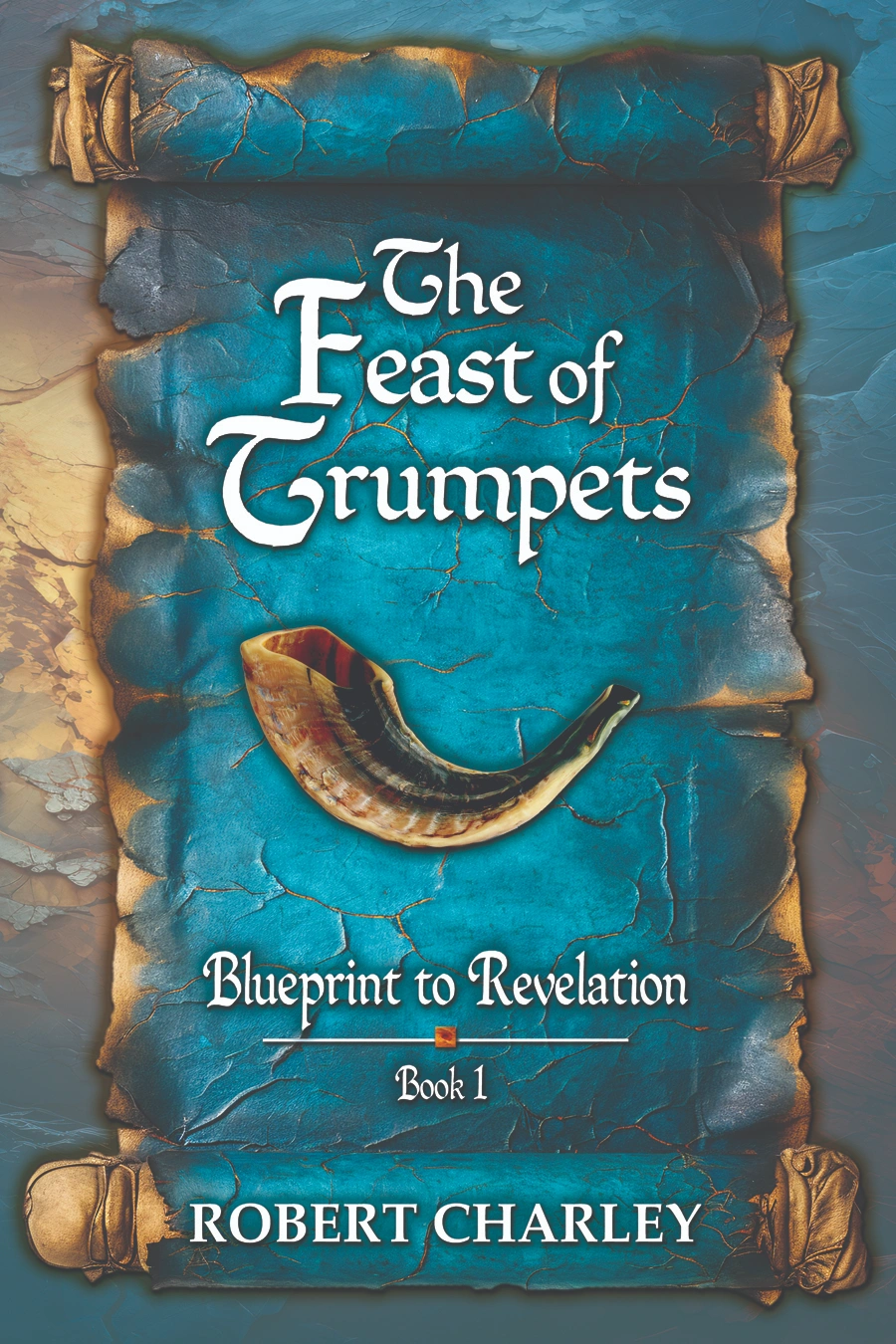
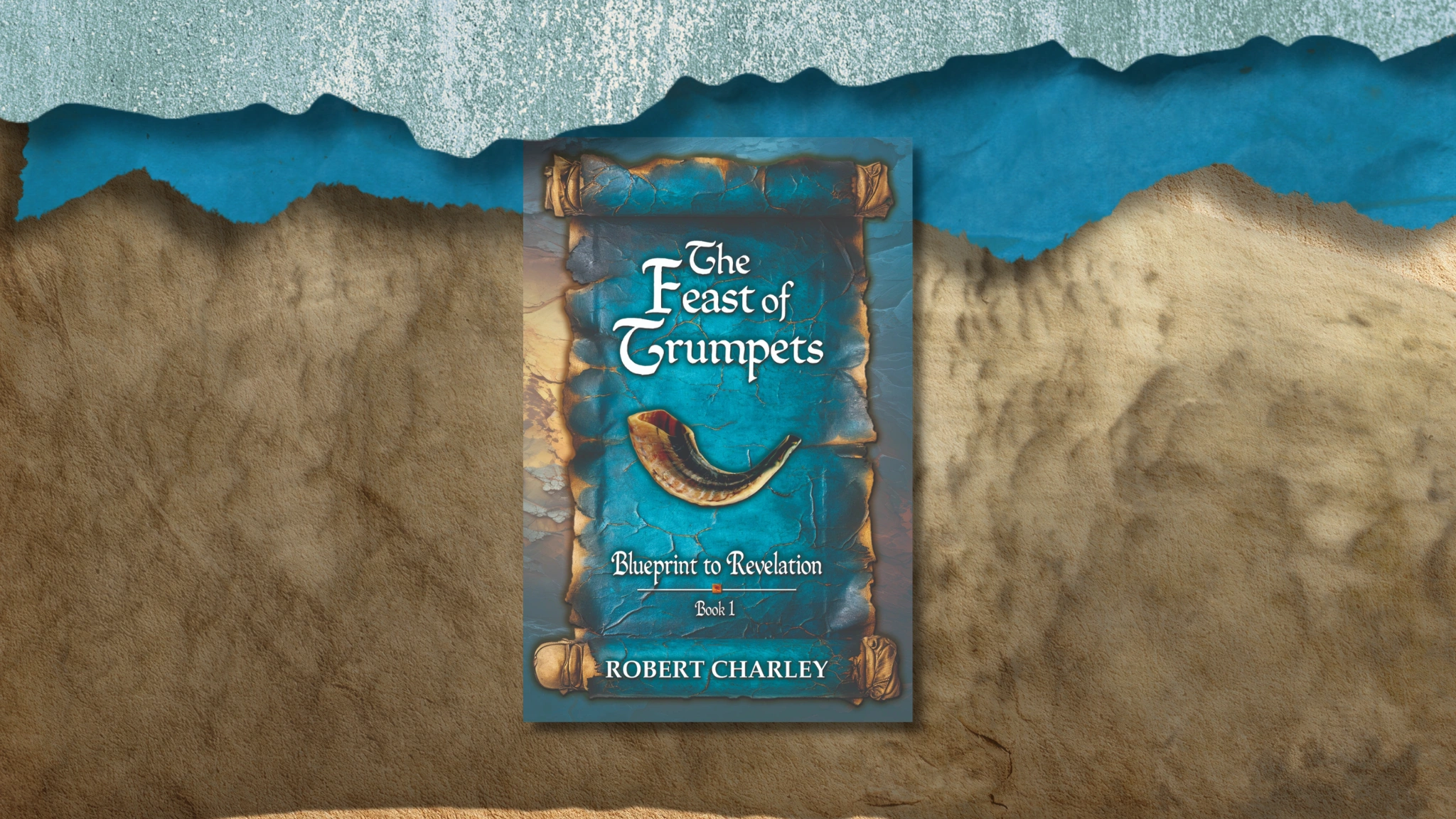
The Feast of Trumpets by Robert Charley
For anyone who has ever closed the Book of Revelation feeling more confused than illuminated, Robert Charley‘s The Feast of Trumpets: Blueprint to Revelation offers a fresh lens, grounded in scholarship yet written with the warmth of a friend walking you through a subject he loves.
Understanding Revelation Through the Fall Feasts
Charley’s central premise is elegantly simple and, once stated, hard to unsee. He argues that Revelation isn’t meant to be a locked vault of cryptic symbols, but a prophetic sequel to the fall feasts of Leviticus 23 — appointments God set on His calendar millennia ago. Just as Jesus fulfilled Passover, Unleavened Bread, Firstfruits and Pentecost at His first coming, Charley makes the case that the Feast of Trumpets, the Day of Atonement and the Feast of Tabernacles are the “blueprints” for the events John records. It’s a framework that reorganizes the entire book around a coherent, calendar-based logic rather than a scramble of disconnected images, and it makes an enormous amount of the text click into place.
What sets this book apart from a lot of prophecy literature is its intellectual rigor paired with humility. Charley doesn’t merely assert interpretations; he builds them from the Hebrew text itself, unpacking words like moedim (appointed times) and mikra (rehearsal/convocation) to show how the original language carries meaning that gets flattened in translation. He draws on Strong’s Concordance, classic commentaries, rabbinic sources and multiple English Bible translations (ESV, NASB, KJV, TLV and others), weaving them together so that readers without any Hebrew background can follow the argument. Yet for all this scholarly texture, he’s careful to say upfront that he doesn’t have all the answers and invites readers to extend him grace where they disagree.
Scholarship Rooted in Personal Experience
The book’s emotional core comes from Charley’s own story. His background is unusual for this kind of work: raised on Hopi and Navajo reservations, he later spent years immersing himself in Hebrew and rabbinic thought, and that fusion of cultural perspectives gives the writing a distinctive voice. A standout passage recounts him tending his grandfather’s cornfield in Northern Arizona and returning from a trip to find the crop ravaged by crows because the field went unguarded — a story he turns into a vivid, memorable meditation on what it means to “keep” one’s faith, tying Genesis, the parable of the sower and personal experience together.
The book opens by explaining foundational concepts — why the number seven recurs throughout Revelation, why God’s name matters, how Hebraic circular time differs from Western linear time — before working through the text, from the titles of Jesus Christ through the seals, the four horsemen and on toward the rapture. Readers looking for a “big picture” companion to Revelation, rather than a verse-by-verse technical commentary, will find the pacing well-suited to sustained reading.
Ultimately, The Feast of Trumpets succeeds at its stated goal: turning what Charley calls the “blares and tones” of a misunderstood book into something clear and meaningful. Whether or not readers adopt every conclusion, the book’s core contribution — restoring the Jewish festal calendar as the interpretive key to Revelation — is a compelling, well-supported and illuminating read for anyone hungry to understand this often-intimidating book in a new light.