Decades ago, there was a story in Time Magazine (Volume 86, Page 98, 1965) about a family who survived getting lost in the desert by drinking water from the car radiator and eating crayons. When that issue arrived at our house, my parents must have talked about the broken-down car, the 124-degree temperatures, and the way the kids buried themselves in the sand to escape the heat. Because in 1965 I was four years old, I couldn’t have read the story, but I remember the details. The mother put lipstick on her kids’ lips to protect them from the sun. They ate a pot of glue for sustenance.
I imagine my young-self thinking, I’ve eaten crayons and licked glue, these people must have been desperate! Then the dawning of a realization. Uh-oh. We go on road trips. Should I bring something better to eat than crayons?
For years after, I’d put water into my dad’s miniature liquor bottles from his air travels and pack them in my suitcase. What if we were going to the desert? I think this led to my obsession with survival stories. Lost at sea, plane crashes, dangling off a mountain — I can’t get enough of that high-stakes intrigue. I want to know exactly how people endure, what they eat, how they make fire, build a shelter.
Side note: Yes, my dad saved tiny liquor bottles for me to play with. It was the seventies — a very loose parenting time and no one saw the harm in my elaborate Barbies-bar for Skipper who already couldn’t stand on her own feet.
Which, all things considered, might explain my active imagination where survivor stories are concerned.
I want to be one of those people that makes it against all odds. To use whatever is at my disposal, be it a paper clip, a soda can, a palm frond, and engineer my own rescue.
But would I live? Would I be the kind of survivor that Time Magazine would interview, and parents would whisper about in front of their kids? Or would I cry and fall apart? Would I look to someone else to save me? How could I possibly know?
Without putting myself in peril, the only way to think this through is sitting down to write it all out. To put words, scenes, and dialogue to it.
I’ve never written a book about getting lost on Mars, but I like to write about average people saving the day when the odds are stacked against them. Not the extreme athlete who belays down Everest in an avalanche, not the seasoned pilot who lands a plane on the deck of a sailboat after losing a wing. No, I’m interested in a you or a me, faced with an impossible situation, who must think on their feet to survive.
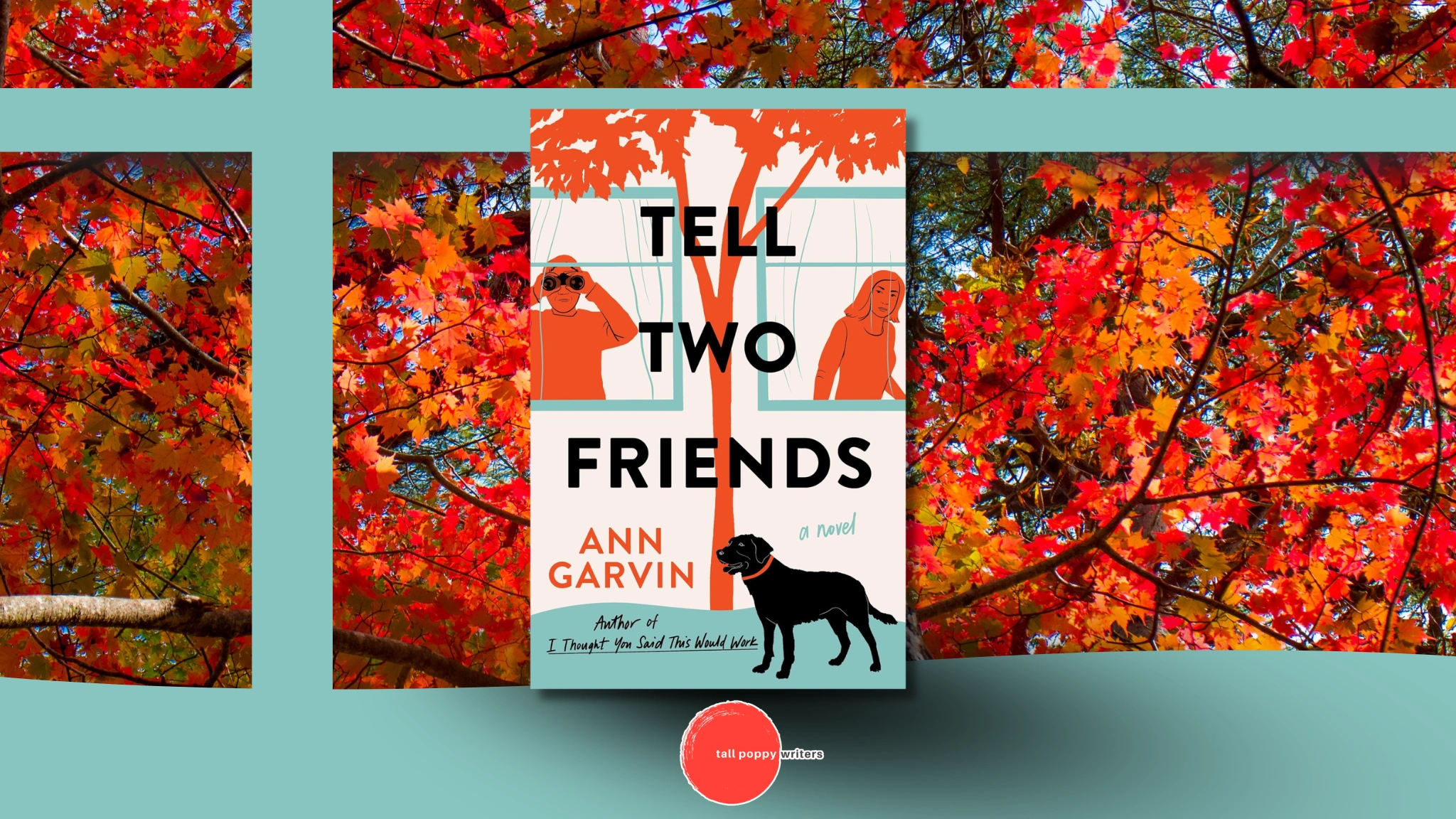
And that’s how Tell Two Friends was born. I sat down with two good friends a few years ago and said, “Hey, I’m thinking about writing a book about a serial killer, but make it kind of funny.”
My most careful friend said dubiously, “Um. A funny serial killer?”
“The serial killer isn’t funny. But if I’m writing a hero protagonist who is a real person, I want to see them fight as they really are.” Flawed, unprepared, smart, and resourceful.
Take me for example. If I’m faced with a life-or-death situation, I’m still me. I’ll do what I always do. I’ll shout for my kids using my dog’s names. I’ll lose my keys, and drop my phone when I need it most. I don’t know jujitsu. I can’t do parkour, but I’m scrappy.
I write about women who do too much in a world that asks too much from them. What could possibly be more too much than a serial killer? If you want to survive, I think scrappy is key. I would trust my life to a scrappy woman. We keep fruit in the house, make dentist appointments, and like Jane in Tell Two Friends, learn to dance at a Norwegian festival when everything is falling apart.
That’s what women do for the people we love: we save the day, even if we have to eat crayons to do it. Jane doesn’t have to eat crayons, but she does do things she never dreamed she’d have to do, to keep her family safe.