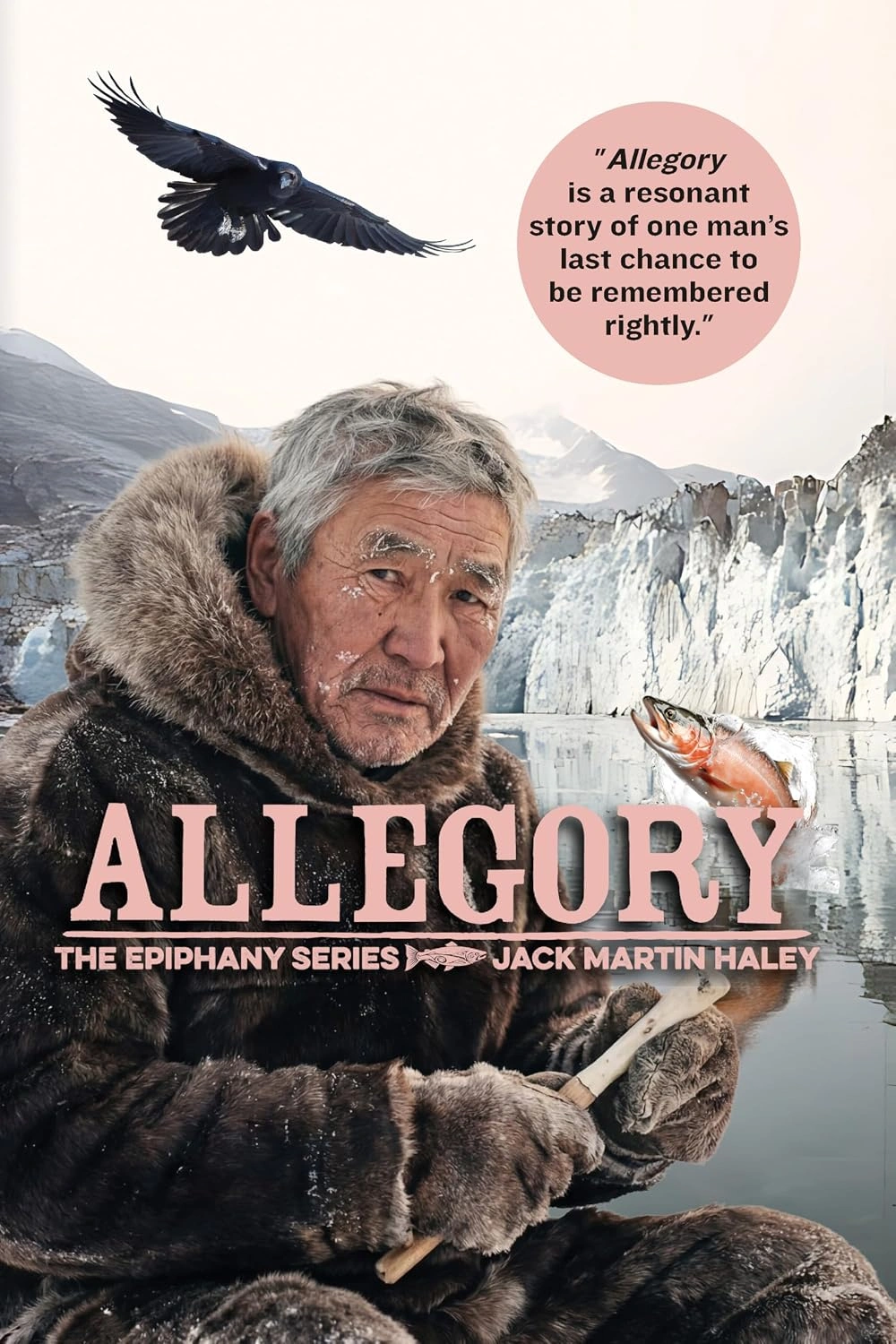
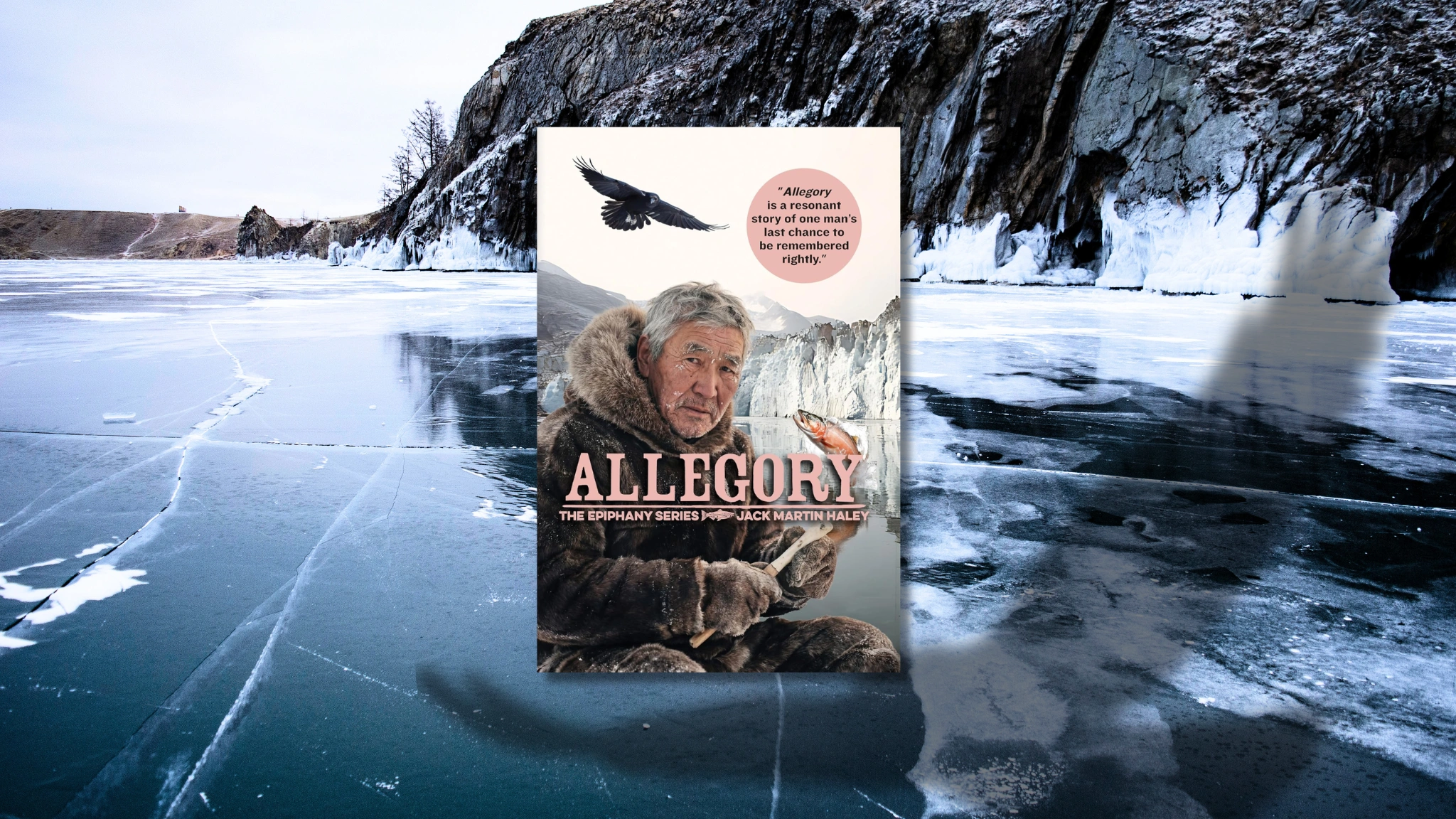
Allegory by Jack Martin Haley
Jack Martin Haley‘s Allegory is a work long in the making, rooted in stories heard more than sixty years ago in the villages of the Yukon Flats, and given the shape they always deserved. The result is a book about dignity, decline and the human hunger for redemption.
At the center of the story is Fred, a Gwich’yaa Gwich’in elder in a small Alaskan village who has fallen far from the man he once was. He is a Korean War veteran with a Purple Heart, the great-grandson of the legendary “Christian Grandfather” Shahnyaatii, and the finest fish wheel builder his community ever produced. Now he is mostly drunk, shoved around by young men who laugh at his stories, and tended to by his wife Sophie with a patience that is itself a kind of heroism. The book opens with Fred face-down in the dirt after a beating.
Fred is not a noble relic preserved in amber; he is messy, shambling and self-pitying. His cough may be cancer. His pride is genuine but also painful to witness. Yet Haley loves this man without excusing him, and that balance is one of the book’s great achievements. Fred’s slow gathering of purpose, his decision to restore the derelict fish wheel as a final gift to his people, carries emotional weight because the reader has been made to feel the full depth of what was lost.
A Life Reclaimed Through Memory and Sacrifice
Sophie is Fred’s equal in every way, and the chapters that linger in her kitchen — the cracked china cups, the rose hip jelly, her wordless conversations with the other elder women — are among the most beautifully rendered in the book. Through Sophie’s reflections on the Gwich’in and the world the “vaanoodlit” (White men) have reshaped, Haley delivers an elegy for a way of life that is neither romanticized nor mourned as entirely gone but understood as transformed and enduring in ways that resist easy accounting.
Chapters following Fred and Sophie alternate with passages describing the great coho salmon making their perilous run upriver. The salmon — instinct-driven, magnificent, doomed by the very act of completing their purpose — mirror Fred’s own final journey with a resonance that builds until the two narratives converge at fish camp, where Fred’s redemption and the salmon’s sacrifice become a single image.
The prose is conversational, shot through with Gwich’in words and phrases that Haley has integrated with a sure hand. He uses the language to remind the reader that Fred and Sophie inhabit a world with its own logic and poetry. Father Wink’s tender eulogy, delivered partly in Gwich’in, and the Psalm read from the Tukudh — the Gwich’in Book of Common Prayer — spiritually resonate.
An Enduring Legacy of Faith and Storytelling
Allegory is a book about what it means to give something away. Fred’s final gift — fish from a wheel he rebuilt with what little strength remained — is echoed in Sophie’s potlatch, in the salmon’s sacrifice, in Haley’s own act of finally setting these stories free after carrying them for sixty-five years.
At 83, Jack Martin Haley has written a book that is both an act of remembrance and an act of faith that stories held long enough will eventually find their moment. Allegory richly rewards the wait.
About Jack Martin Haley: