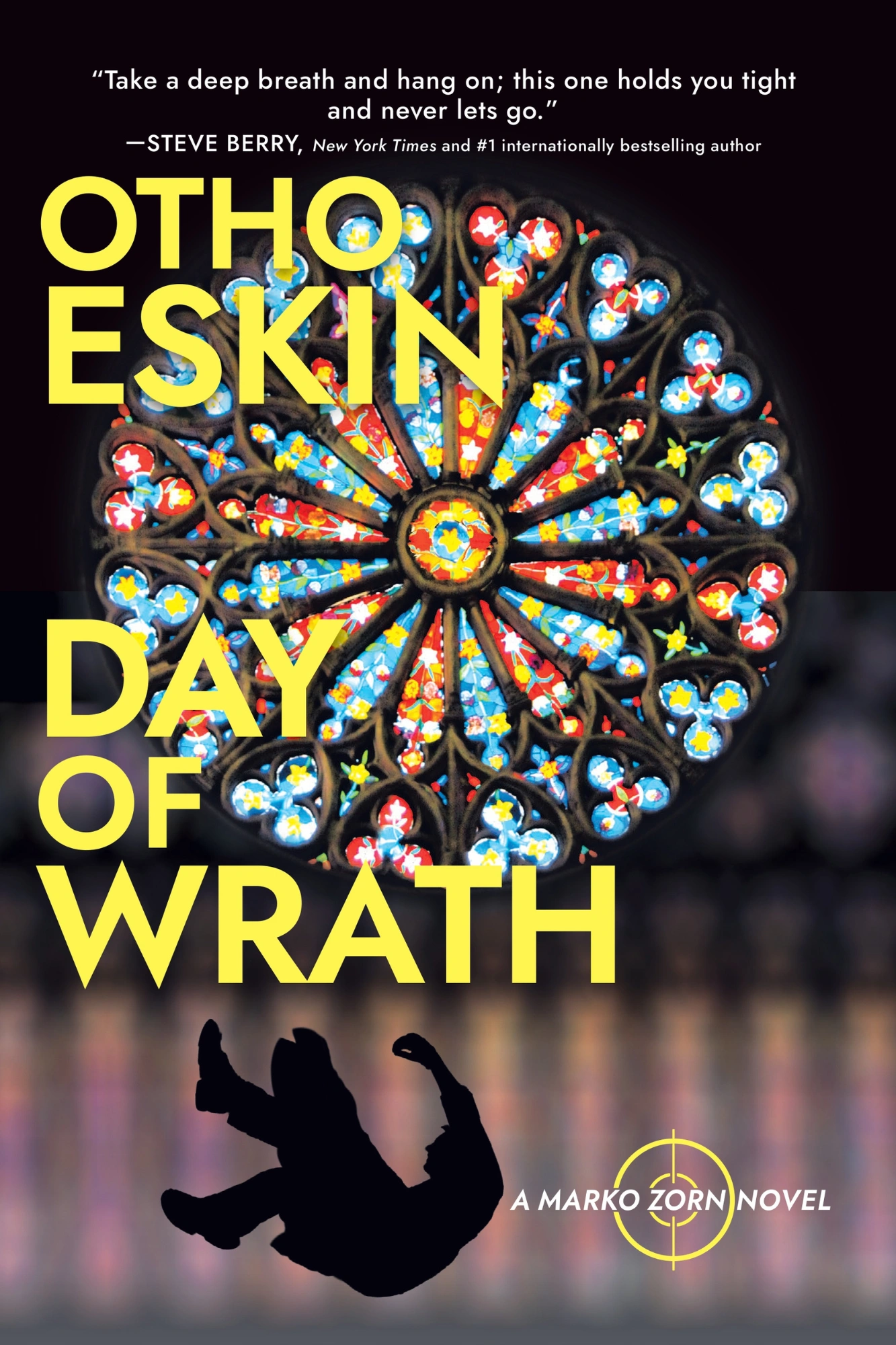
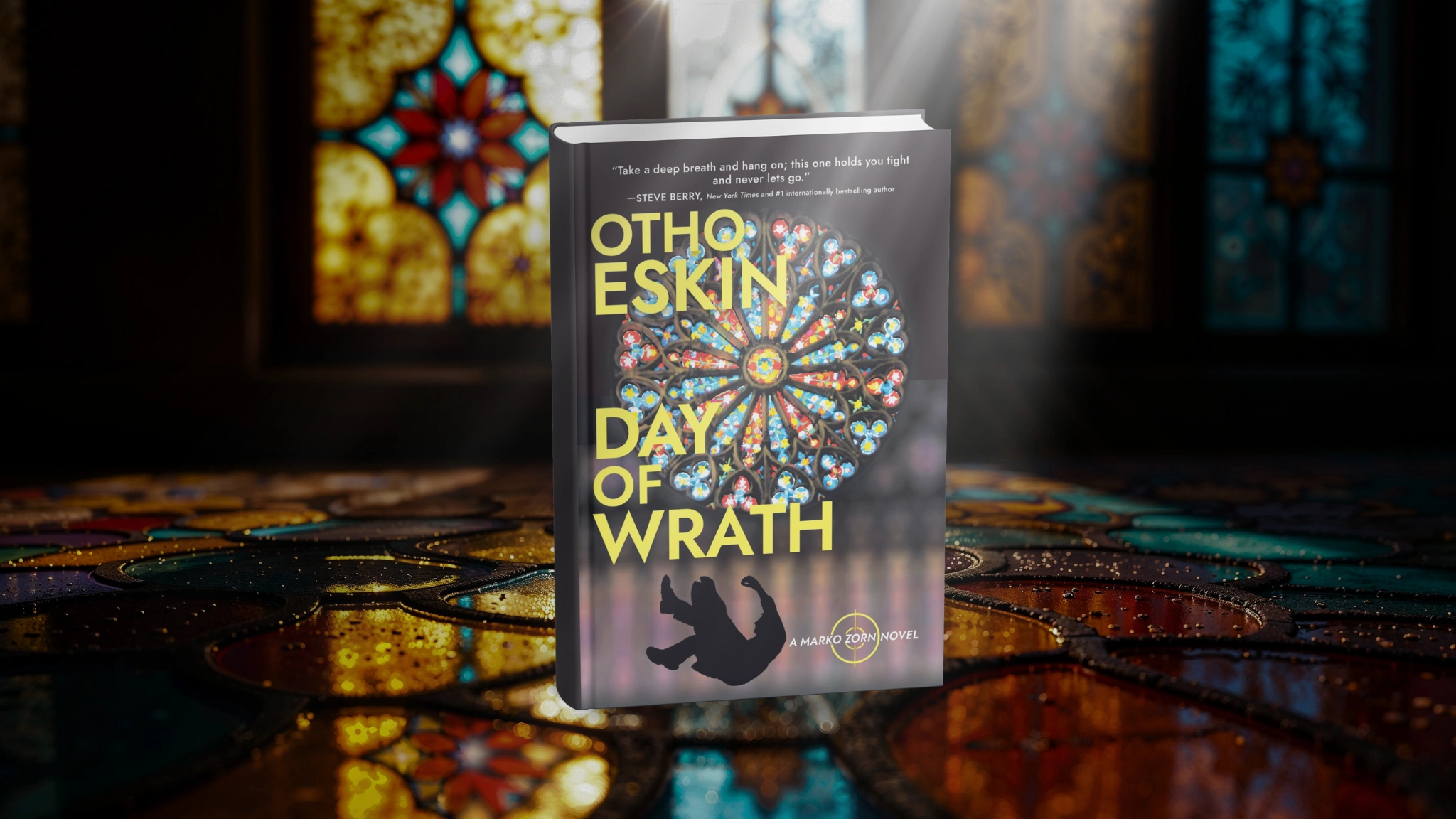
Day of Wrath by Otho Eskin
There are thrillers that ask you to race through the pages, adrenaline pumping through your veins, and there are thrillers that invite you to look twice at every clue, every conversation and every seemingly insignificant detail because it all matters. Day of Wrath by Otho Eskin belongs primarily in the second camp, while still providing enough suspense to keep you hooked. That balance is a testament to Eskin’s skill as a writer of thrillers that also make you think.
The fifth entry in Eskin’s Marko Zorn series opens with a crime scene unlike anything Marko has encountered before. Washington D.C.’s Cardinal Archbishop lies sprawled beneath a cathedral balcony. At first, you might assume this was a terrible accident, a fall from the clerestory, perhaps. Except for one detail: Clutched in the archbishop’s hand is the Death card from a tarot deck.
That card becomes the first thread in a carefully woven tapestry connecting present-day D.C. to a remote village in the mountains of Mexico, where a young Jesuit priest first encountered a charismatic local cleric and the earliest stirrings of what would become a dangerous cult. As Marko follows the evidence, the investigation grows to encompass centuries-old Crusades lore, whispers of a mysterious figure known as Apollyon, and a dangerous effort to exploit the impending papal conclave to reshape the future of the Catholic Church itself.
It’s a far-reaching conspiracy, yet Eskin never loses sight of the detective story at its center. The mystery may span continents and generations, but every revelation is earned through careful investigation rather than convenient coincidence. Each answer opens another door; each clue redefines what came before.
A Detective I’d Follow Anywhere
Marko is one of the most appealing protagonists in contemporary crime fiction. He isn’t a brooding genius or an indestructible action hero, like so many others in the genre. He’s a detective in the truest sense of the word: patient, observant, skeptical and persistent. He listens more than he talks, trusts evidence over assumptions and isn’t easily intimidated, whether he’s questioning street criminals or senior church officials. His dry, understated wit cuts through the tension, making him feel less like a fictional hero and more like someone you’d actually want to hang out with. Even as the stakes grow from a single murder to a conspiracy that reaches into the Vatican itself, Marko remains grounded, relying on intelligence, persistence and instinct rather than on impossible feats of heroism. He’s also a bit of a maverick, prone to bending the rules when the truth demands it, a quality that gives him an edge — and frequently lands him in trouble.
Eskin’s background in diplomacy and government service lends the novel an authenticity that never feels forced. He understands institutions — how they function, how power accumulates, and how vulnerable even the oldest organizations can become when ambitious people begin working from within. The Church is portrayed with nuance and respect, neither idealized nor demonized, while the conspiracy itself unfolds with enough historical texture to feel unsettlingly plausible. While there is plenty of atmosphere, Eskin doesn’t rely on supernatural spectacle; he keeps the emphasis where it belongs: on the dangerous intersection of belief, ideology and power.
Day of Wrath isn’t interested in attacking faith. Instead, it explores what happens when faith is manipulated by charismatic leaders and transformed into an instrument of control. The echoes of history — from medieval Europe and the Children’s Crusade to modern-day Mexico — reinforce the unsettling idea that old movements never disappear completely; they simply wait for the right moment to return in a new form.
A Tightly Plotted, Intelligent Mystery
Eskin has enough confidence in both his story and his readers to let the mystery unfold at its own pace, never sacrificing complexity for easy thrills. He patiently assembles a remarkably intricate puzzle, so readers can enjoy the process of discovery as much as the final reveal. Every historical thread, every conversation and every seemingly incidental clue ultimately finds its place. Nothing is purely ornamental. By the time the last pieces click together, the resolution feels not merely surprising but inevitable. That’s the hallmark of a carefully constructed mystery.
Readers who enjoy Dan Brown or Steve Berry will certainly enjoy the historical conspiracy aspects of Day of Wrath, but the novel ultimately charts its own course through these waters. By anchoring its sweeping conspiracy in the perspective of a homicide detective who never loses his humanity, the novel achieves something many thrillers strive for but few accomplish: it makes the extraordinary feel believable.
With its richly layered mystery, intelligent plotting and one of the genre’s most compelling detectives, Day of Wrath is the kind of thriller that reminds you why conspiracy fiction is so captivating in the first place. It entertains, it challenges and, perhaps most importantly, it reminds us that the best thrillers don’t simply hide the truth until the denouement — they reward our curiosity every step of the way.
About Otho Eskin
 Otho Eskin served as a US Foreign Service officer for over 20 years, with assignments across Europe and the Middle East. He was involved in negotiations on the United Nations International Conference on the Law of the Sea, the International Space Station, and the Committee on the Peaceful Uses of Outer Space. Upon retirement, Eskin became an internationally produced playwright and a thriller novelist.