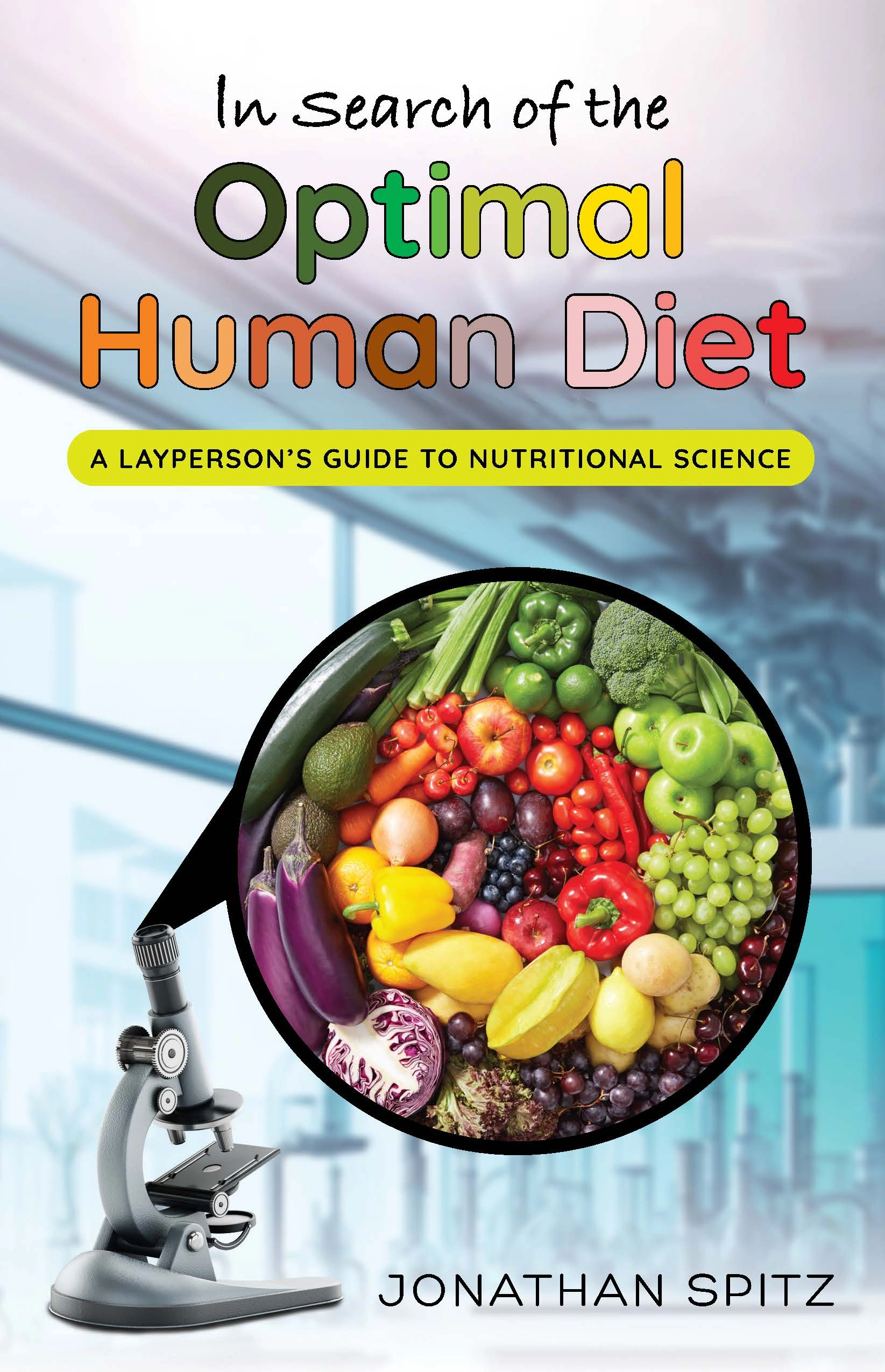
In Search of the Optimal Human Diet: A Layperson's Guide to Nutritional Science by Jonathan Spitz
Jonathan Spitz set out to write the book he wished he’d had when he first went plant-based, and the result is an impressive achievement: a rigorously documented history of nutritional science that manages to be both scholarly and readable by people without any scientific background.
The History Behind Modern Nutrition
What makes In Search of the Optimal Human Diet: A Layperson’s Guide to Nutritional Science stand out is its structure. Rather than simply telling readers what to eat, Spitz walks them through how we know what we know about nutrition, starting with Dr. James Lind’s 1747 shipboard experiment on scurvy and moving methodically through the chemical revolution of Lavoisier and Berthollet, the discovery of protein, carbohydrates and lipids, the identification of vitamins and minerals and on into the twentieth and twenty-first century studies that have mapped the metabolic pathways of chronic disease. By the time you reach the final chapters on fiber, the gut microbiome and the “optimal” diet itself, you’ve absorbed a condensed history of nutritional science — and you understand why the conclusions the author draws are built on more than two centuries of accumulated evidence rather than fad-diet intuition.
Spitz has a knack for finding the human drama inside the science: Lavoisier guillotined the same afternoon he begged for a stay of execution to finish one more experiment; the often-brutal animal trials of François Magendie that nonetheless cracked open our understanding of dietary nitrogen; the slow, costly process by which the Royal Navy finally accepted that citrus fruit cured scurvy, decades after the evidence was in. These vignettes keep biochemistry feeling alive, and they reinforce one of the book’s themes that scientific consensus is hard-won, frequently resisted and worth taking seriously precisely because it survived so much scrutiny.
From Research to the Dinner Table
Spitz advocates for a whole-food, plant-based diet, and he devotes attention to the institutional and financial pressures that he argues have kept US dietary guidelines lagging. Readers who want to evaluate the claims themselves are well served by the extensive notes section and a battery of nine appendices covering everything from B12 and vitamin D to food additives, agricultural chemicals, and GMOs — turning the book into a reference work as much as a narrative one.
After several hundred pages building the scientific case, Spitz brings in Dr. Michael Greger’s “Daily Dozen” as a concrete, actionable framework, walking through the evidence behind each food group so that the science never feels disconnected from what goes on your plate.
This is not a quick diet book promising a miracle in thirty days. It’s a well-sourced education in how nutritional science developed, written by someone who clearly fell in love with the subject and wanted to share that rigor with the rest of us. For anyone tired of contradictory headlines and looking for a single resource that explains the science behind the recommendations, this book delivers that. This book is highly recommended for curious readers or anyone considering a dietary change.
About Jonathan Spitz:
 Jonathan Spitz is an independent researcher and writer with a deep interest in nutritional science and its historical development. Driven by a desire to cut through dietary confusion and misinformation, he has dedicated years to studying the evolution of nutrition research—from its earliest experimental foundations to modern metabolic science. Through careful review of academic literature and scientific methodology, Spitz seeks to make complex nutritional concepts accessible to everyday readers who want to make informed decisions about their health.