
In his novel In a Strange Room, the South African Booker Prize winner Damon Galgut, wrote, “a journey is a gesture inscribed in space, it vanishes even as it’s made… the very air closes behind you like water and soon your presence, which felt so weighty and permanent, has completely gone. Things happen once only and are never repeated, never return. Except in memory.”
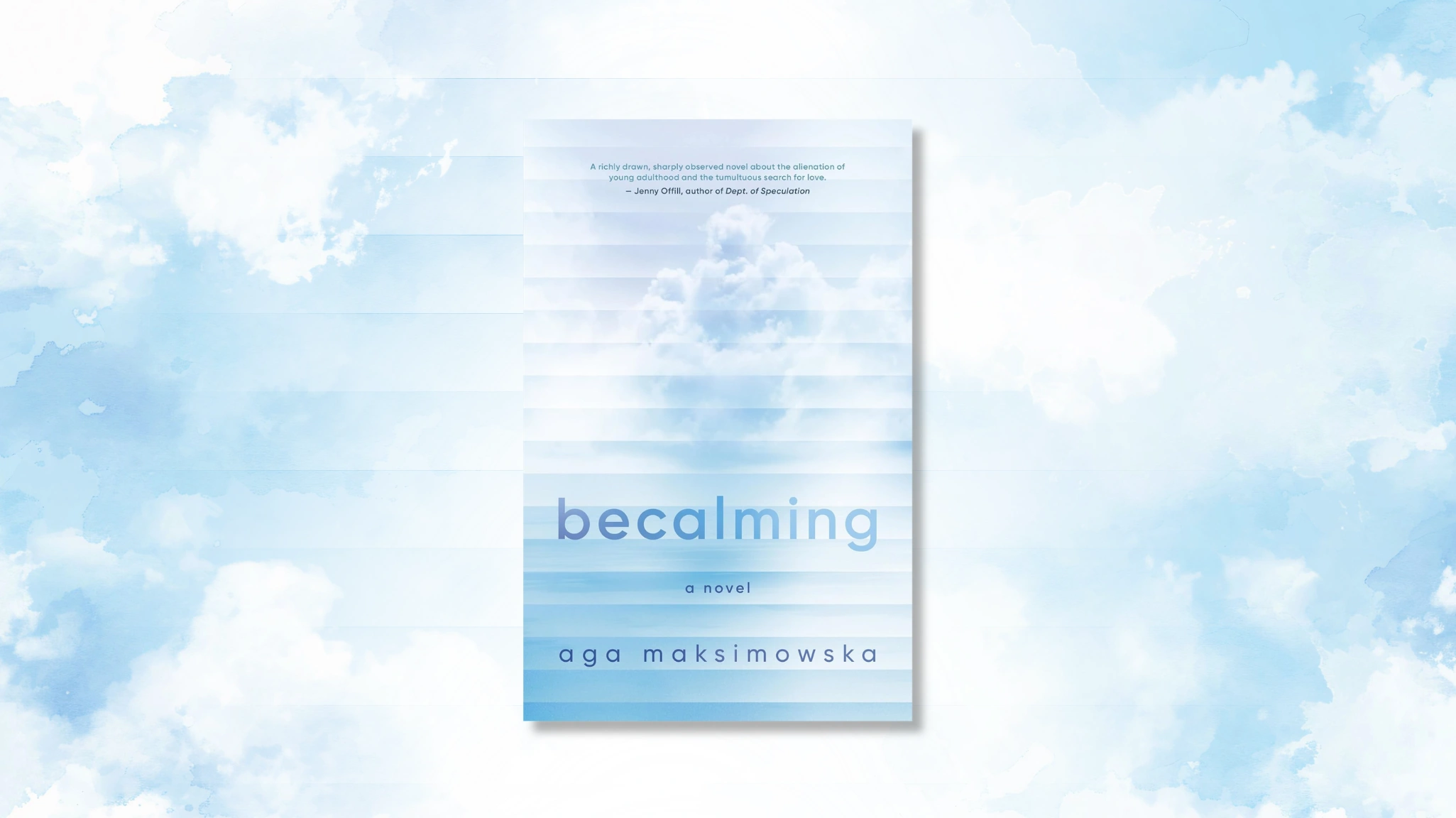
My new novel, Becalming, is an examination of masculinity through the lens of world travel, wanderlust, migration and the pull of home. Over thirty-five countries are referenced as characters try to understand themselves and their families through stories, delusions and memories.
My parents and grandparents were travelers: my father a merchant marine who spent more time on the South China Sea than he did in Poland, where I grew up; my mother a brave single parent and immigrant who came to Canada in search of a better life for her two daughters; my grandparents forcibly relocated from the northwest to the southeast of Poland by WWII; after the War, my grandmother, a traveling saleswoman.
I grew up without steady ground underfoot and became restless in my youth. I wrote a coming-of-age novel about it, which I called Giant. A novel, like a memory — but unlike our actual lives — can contain a journey to be repeated. Readers can revisit said journey again and again. Writers aim to solidify fleeting and flimsy experiences on the page, especially ones that felt so weighty and permanent when they were happening.
Although Becalming stays with the same core characters as Giant, it is a standalone book, not a sequel. In it, I wanted to explore empathy for my own father who became a villain both in my life and in Giant. I sought a journey of understanding through a character based on my own father, and contrasted him against a character based on my partner’s father. Two dads are juxtaposed against one another to explore how masculinity interacts with parenting. A character who abandoned his child in Giant and was referred to as a ‘deadbeat dad’ becomes a destination in Becalming, a place to return to as Gosia, my protagonist, seeks to come to terms with herself and her past.
Another South African novelist, the great J.M. Coetzee, nailed adult children’s convoluted relationships with their parents. In Life and Times of Michael K., the main character reflects on the absence of his mother after her death, and observes that “he did not miss her…except insofar as he had missed her all his life.” I didn’t know that’s how I felt about my own father until I read that line in the book. In Becalming, Gosia realizes only when she reconciles with her father that she missed him all her life, and that his absence left a hole in her as much as it did in him. That missing was mutual and reciprocal. The knowledge of that reciprocity produces a sort of closure, an opportunity for moving on.