
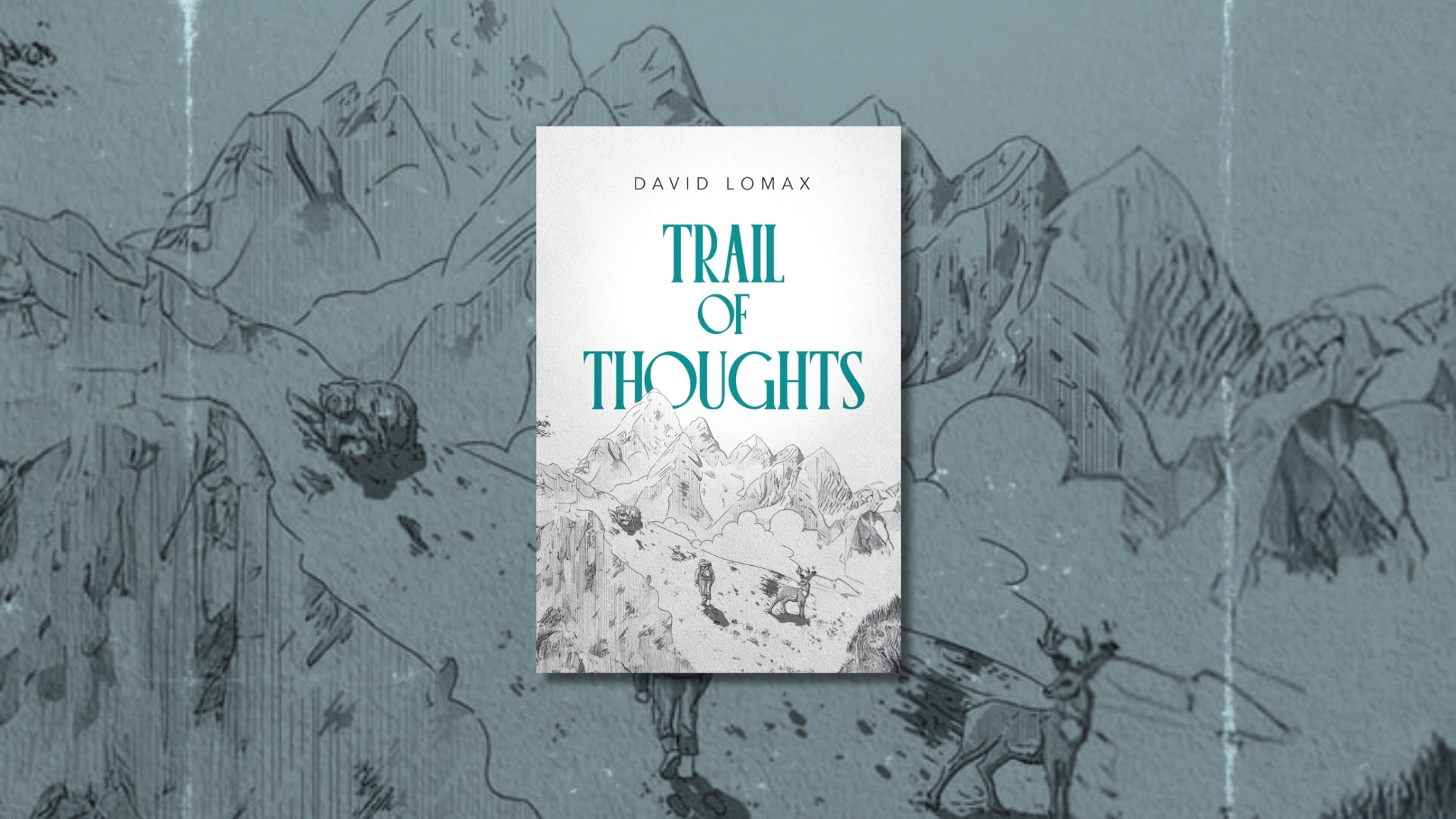
Trail of Thoughts by David Lomax
David Lomax‘s Trail of Thoughts is part frontier adventure, part meditation on survival and a profound tribute to love and loss.
Endurance in the Alaskan Wild
Lomax grew up between two worlds: the sun-warmed suburbs of the San Francisco Bay Area and the vast, unforgiving landscape of Alaska, where his family relocated in the mid-1970s to become housing contractors for Native villages north of the Arctic Circle. What follows is a life lived at extremes — extreme cold, extreme danger and, in the book’s final chapters, extreme joy undercut by unimaginable grief.
The early chapters drop the reader into the Alaskan bush with vividness. Lomax writes about constructing housing in remote Native villages with the authority of someone who has wired a generator with cold-numbed fingers in the dark. The work was punishing, the conditions often lawless and the cast of characters colorful to the point of surrealism: a biker plumber who shoots through rooftops to locate chimney flues and workers who flip coins to decide who will transport a gravely injured colleague to the hospital. Lomax recounts these episodes with a dry, darkly comic precision that is one of the book’s great pleasures.
The humor is earned, and never far from terror. Two near-fatal auto accidents anchor the narrative — one in the Alaskan bush and one in Canada — and Lomax’s descriptions of lying ejected on frozen tundra, willing his toes to move, are harrowing. He does not dramatize these moments; he simply remembers them with the calm of someone who has been forced to make peace with mortality many times over.
Lomax is equally honest about his inner life — his dyslexia, his self-doubt, his long struggle to understand why he seemed to survive catastrophes that should have killed him. The book is structured as a road trip: driving from Alaska southward through Canada toward Mexico in January 1998. Lomax reflects on his life, and the chapters unspool as memories triggered by the passing landscape. It is a structure that suits his contemplative voice perfectly, giving the book the feel of a long, candid conversation with a man who has nothing to hide.
Love and Unimaginable Loss
The second half of the book shifts register entirely, and the shift is breathtaking. Lomax meets his wife Marcela in Mexico, starts a family and the narrative fills with light. Their son Robert — bilingual, brave, curious, kind beyond his years — is diagnosed with childhood leukemia at age three and battles it without a single complaint. Watching this small boy receive spinal injections while gazing up at his parents with a reassuring smile is one of the most devastating things I have read.
Robert recovers, grows up, fills his life with fishing trips, robotics teams, tennis championships and a father-son adventure through New Zealand. And then he is taken suddenly, at twenty-one, in an automobile accident.
The final chapter is a eulogy and a love letter. Lomax does not ask for the reader’s pity. He asks us to witness the trail his son walked, and to understand that a life of twenty-one years, lived with that quality of compassion and courage, is a life fully and magnificently lived.
Trail of Thoughts is a testament to what love looks like when it is tested by everything the world can throw at it.
About David Lomax:
 David Lomax is a builder, educator and memoirist who has journeyed through some of the most remote and demanding environments in North America. From constructing HUD-funded homes in isolated Alaskan villages to specializing in weatherization and green building in Mexico’s deserts, his career has been shaped by resilience and innovation.Now semi-retired, he teaches at San Jose City College, where he developed a pioneering Virtual Design and Construction (VDC) program in partnership with Stanford University. In 2022, he was honored with induction into Marquis Who’s Who for his contributions to the trades and education. His memoir captures these experiences, and his wife, Marcela Lomax, made many contributions, including translating it into Spanish as Sendero de Pensamientos and many other languages. Learn more at Trail of Thoughts.com