I have always believed that the most cherished travel memories are the little ones that often come by accident. The simple meal of bread, cheese and ham, bought from three different stores, that you eat on a bench beside a canal in Venice because the fancy restaurant you had a reservation at is closed; the wrong turn you take that leads you to a temple well off the tourist track. When I was traveling around Northern Thailand a few years ago, I took an elephant ride through the jungle, not aware that it was a one-way trip and the only way back was to ride downriver on a raft. I had a raft of my own, just me and my guide and his bamboo pole, and a few minutes into the trip it started to rain, one of those warm tropical rains that feel more like a shower. My guide tried to give me his poncho but I said no thank you; the water felt good. As I floated along watching elephants and water buffalo drink from the river, surrounded by thick jungle, soaked to the bone and blissfully happy, I thought two things: first, that I would remember this moment for the rest of my life, and second, that I had to use it in a movie.
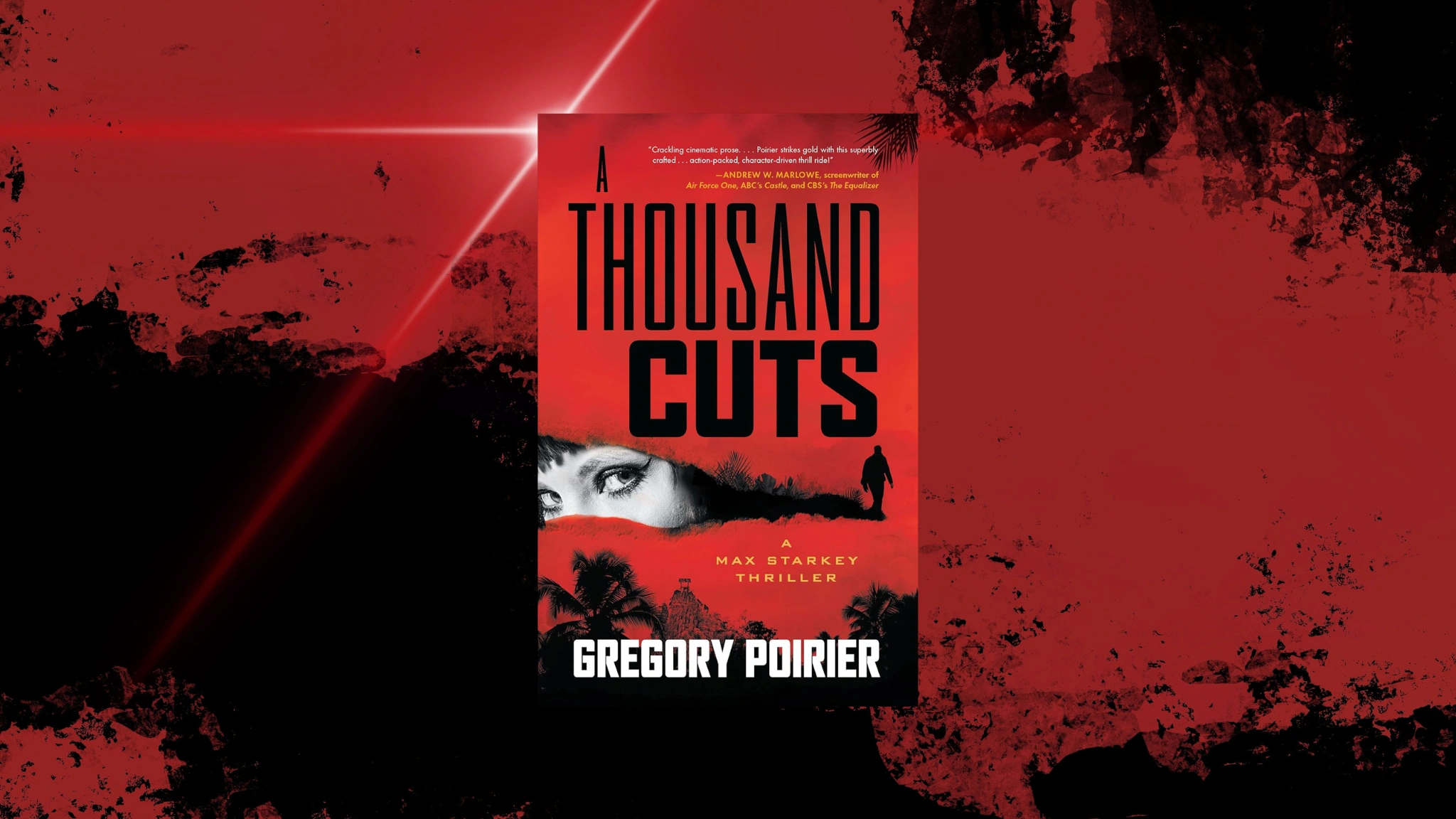
That journey downriver never did make it into a film script, but when I sat down to write my first novel, A Thousand Cuts, it came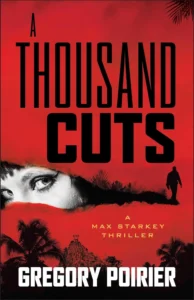 back to me, along with several other memories from the same trip. I decided to set the novel in Southeast Asia mainly because it lends itself so readily to description. The cloying wet air, the heavy smells, the heat, the colors, the terrain; I believed I could use my words to evoke the feeling of actually being there.
The river raft made it into the book, albeit in a slightly different form; two lovers, naked limbs entwined, watching from the veranda as two boys punt down the river on a raft laden with fruit, in the rain. Other stories from the trip made it in as well; the Muay Thai match I attended in Bangkok, where no one other than me spoke English, I had no idea who any of the fighters were, and I had a great time. The night the hotel manager warned me not to sleep outside on the balcony or the tigers would eat me, which I laughed off until he repeated it a little more sternly. I had been warned ahead of time about a scam the Tuk Tuk drivers ran where they told you that the attraction you came to see was closed but they would take you to another one, which culminated in being dropped off at a tailor’s shop. When I realized it was happening to me, I made a conscious decision to go along with it, just to see where it would lead (I came home with three new suits). All of these, as well as the huntsman spider roughly the size of my head, which I saw a foot away, made it into the book.
Early on in the writing process, I decided to set my novel in a fictional country even though I knew the actual region fairly well. I created a small nation called Suryaka, which is nestled between Thailand, Laos and Myanmar. There were a couple of things that led to this decision. First, the story involves a group of ex-CIA agents smuggling gold out of the country on behalf of a dictator who is about to be toppled. I knew there would be historical storylines that wouldn’t match any existing country’s past, and I didn’t want to be shackled by pesky facts.
Conversely, I also felt obligated to reality. Thailand has a monarchy that they respect and revere, and to pretend that it never existed and place a tinpot dictator at the head of the Thai government would be an insult to them. At the time that I started writing, the humanitarian crisis in Myanmar was ongoing, refugees were fleeing and Rohingyas were being massacred; setting it there felt like I would be trivializing their plight. And Laos… well, Laos. They have a firmly entrenched Marxist government that rules with an iron fist, and unraveling that would mean rewriting their entire modern history. The argument could be made that in a work of fiction these considerations don’t matter, but they did to me and so Suryaka was born (portions of the book take place in Thailand and Laos, but Suryaka is the political center of the novel).
The sequel to A Thousand Cuts, which is with my editors now and is titled The Thirsty Sand, takes place in Northern Africa, most of it in Cairo and the Egyptian Sahara. The decision to set this one in a real place was also well thought out. The book takes place in the criminal underworld, and the villain is a mobster turned arms dealer. There is literally no interaction with any government (other than our own, in flashbacks) anywhere in the book, so the history of the country and the current political structure are not a hindrance. I did do a lot of research on organized crime in Egypt, and tried to make the local underworld feel as real as possible, but politics don’t enter into it other than flashbacks of the CIA funneling money to, and propping up, a lowlife criminal so they can use him for their own purposes. I felt comfortable setting it in Cairo.
In fact, I was able to use the real-life recent history of Egypt to build my story. The villain’s backstory involves him using the confusion created by the Arab Spring to consolidate his control over the streets of Cairo. It is about a criminal exploiting the historical events for his own gain, not about the events themselves and politics (again, other than our own) do not enter into it. I don’t know where the third book will take place yet; I don’t even know if it will be a real city or a fictional one. All I know for sure is that I have traveled to a lot of wonderful places and had many unexpected, small, memorable experiences that will inevitably find their way into the book, wherever it takes place.
And that time in Florence when you were walking along, you glanced down an alley and saw people crowded around a plain, unmarked door, joined them on a whim and wound up having the best meal of your life? That just might make it into your next book.