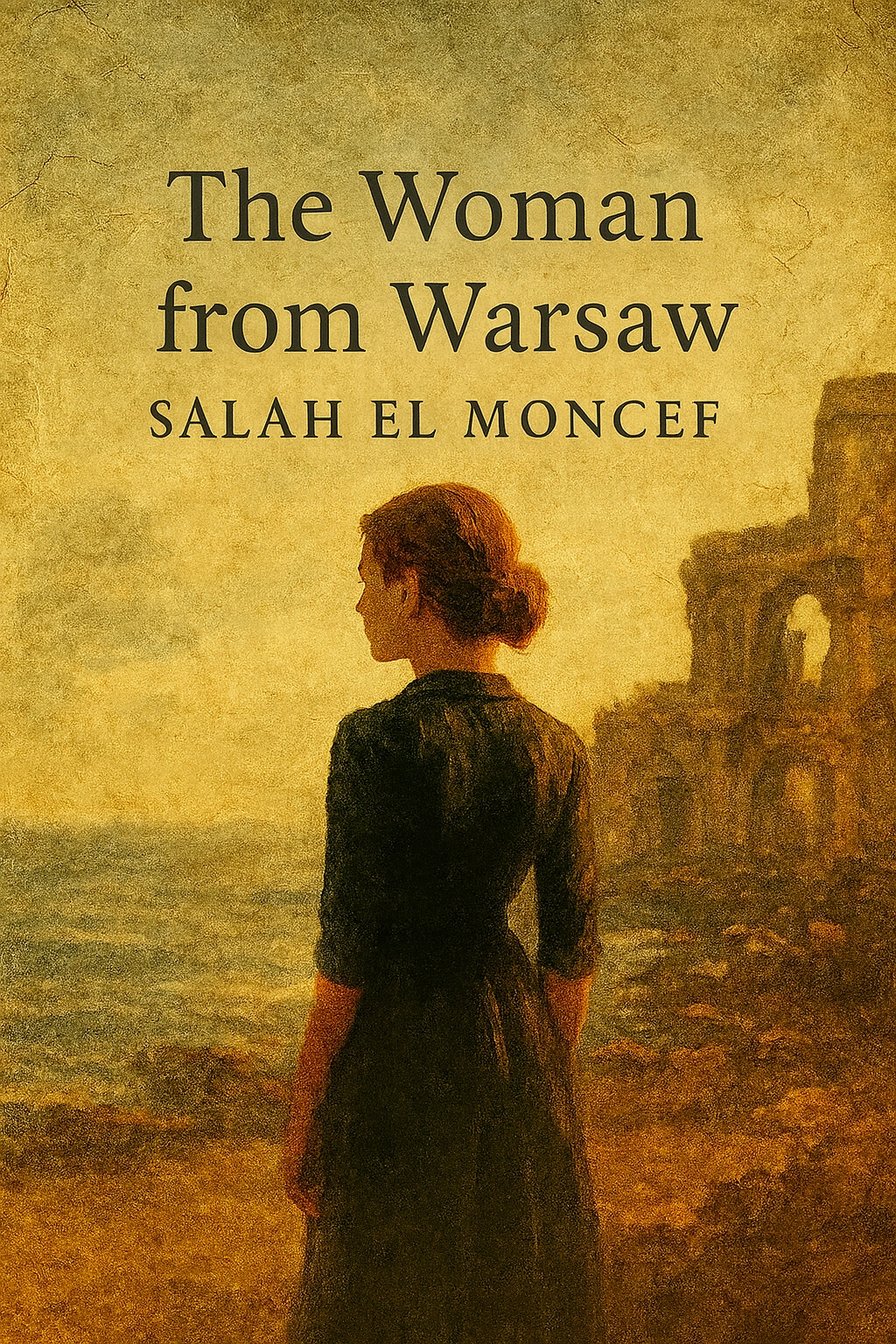
The Woman from Warsaw by Salah El Moncef
In The Woman from Warsaw, the ruins of Benghazi, Libya, serve as a backdrop for the intertwined stories of a young Libyan girl and a Jewish refugee during World War II.
In 1976, Mariam Khaldoon’s husband encourages her to write her memories of living in war-torn Benghazi during Fascist dictator Benito Mussolini’s takeover of Libya in the late 1930s. The searing experiences of those pivotal years (1938-1942), where imperialism morphs into world war and her beloved city becomes a pawn in the tug of war between Allies and Axis powers, make up the breadth of this sensory-rich coming-of-age novel.
Life Under Fascism and the Weight of Memory
The Khaldoons are “deeply secretive, blindly committed Sufis” who are anti-Fascist but must remain under the Fascisti radar during Mussolini’s thuggish reign. Mariam recounts with meticulous detail memories of school, where children learn Fascist propaganda and assemble for a parade to see the Duce — where Mariam presents a classroom gift to the bald, swaggering man himself. In soulful prose, Mariam reflects on these irredeemably etched memories that are tinged with dread of the Italian interlopers and hope for a time when real freedom will return.
Hope does arrive, but not in the way Mariam expects. A new couple moves in down the street, and the woman immediately captures Mariam’s spirit. Esther Sanz and her husband are Jewish refugees from Warsaw, with their own story of oppression to share. Esther is everything Mariam longs to be: roguish, aristocratic, confident, assertive and fearless. Her poise evokes myriad questions for the impressionable Mariam:
“What kind of life had she left behind … and what had drawn her across countries and continents, from Tunisia to this little corner of the world? How little of that journey, of those hidden stories, showed behind her composed, graceful exterior? What secrets had she carried with her to the streets of Benghazi?”
An expert chef and master dressmaker, Esther befriends the young Mariam, and together they spend afternoons learning more about each other as they make orange marmalade or work on clothing projects. The Khaldoon family come to love Esther as she becomes the “cherished seamstress” of Benghazi, and they take it upon themselves to protect their new Jewish friends from the searching eyes of the Fascist police.
War Closes In: Fear and Survival
Soon, however, bombs begin to fall as the British attempt to oust Mussolini’s forces from Libya. Mariam’s first visual reckoning with war shakes her, as she uses her brother’s binoculars to view the effects of the bombs from a rooftop laundry room. Bloodied sheet-wrapped bodies piled in tangled heaps upon a lorry, but the sheets slipped to reveal “slivers of faces frozen in expressions of terror, their final agony arrested in the instant before that great, final silence.”
“Something inside me twisted. A deep, sickening churn, not quite fear, not quite sorrow—something raw and untamed, tightening like a fist deep within me…”
Mariam is an observant narrator with a minute eye for detail, whether it is Esther’s recipe for marmalade, the vibrant style of Libyan fashion or the multilingual and multidialectal conversations that pepper her memories. The years of 1941 and 1942 are the majority of her account, telling, as it does, the momentous push and pull between Allied forces and Axis powers for Libya. While 1941 sees the British occupy Benghazi, by early 1942, the Germans under General Erwin Rommel retake it. Suddenly, the mortal peril for Esther Sanz and her husband is dangerously close, yet Esther’s resolve is stubborn as Mariam realizes who she reminds her of:
“Esther remained full mistress of all the demons of fear. A word came to me then … one I had heard my mother use to describe Auntie Zaynab: derveesha. A woman with a placid core, unshaken even amid the worst suffering. Esther was and is that to me, then and now … The derveesha from Poland.”
The story relies on Mariam’s kinetic voice as she relays the unforgettable experience of living under authoritarian rule and the mortal fear of violent death at any moment. Her bond with Esther is a powerful and touching one, but even more so is her portrait of the resilient Khaldoon family — these balance the darker episodes of psychological trauma.
Overall, The Woman from Warsaw is an evocative tale of history, hope and the healing effects of family and friends weathering the darkest of storms.
About Salah El Moncef:
 Salah el Moncef was born in Kuwait City, Kuwait. He is the author of The Offering, Now and Then, Benghazi, and Art as Pharmakon. His short fiction, largely focused on the Arab diaspora experience, has been published in numerous British and American magazines and anthologies. He is a five-time Fulbright scholar and a recipient of the Presidential Award for Excellence in the Humanities. Moncef is Reader in English and Creative Writing at Nantes University, France and Senior Editor at Routledge/Taylor & Francis.