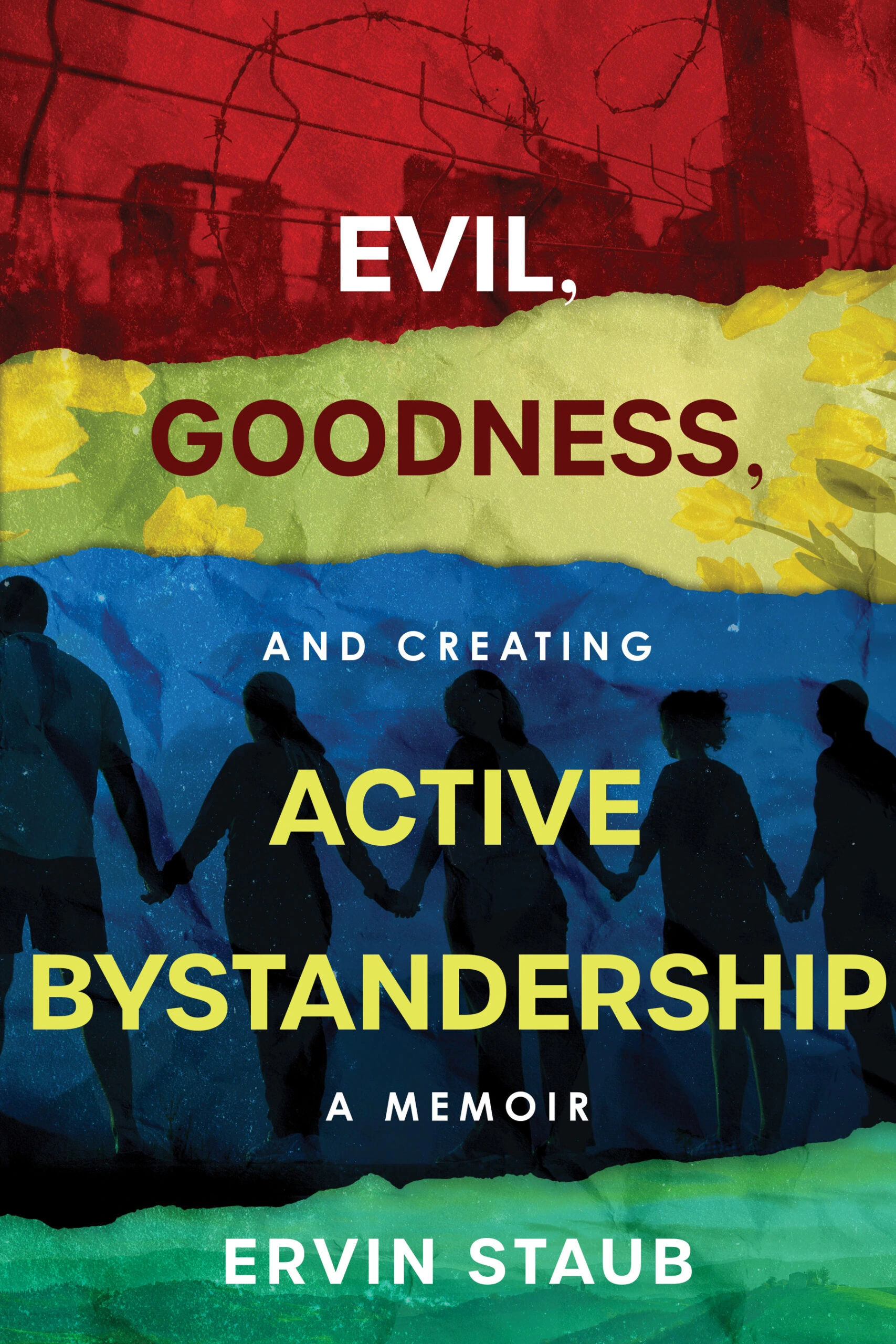
Evil, Goodness, and Creating Active Bystandership by Ervin Staub
Why do some people step in when something is wrong, while others stay quiet?
It’s a question without an easy answer, but it sits at the heart of Ervin Staub’s Evil, Goodness, and Creating Active Bystandership. And for Staub, it’s not just theoretical. It’s personal.
As a Jewish child in Hungary during World War II, Staub survived the Holocaust in part because others chose to help. Those moments — small, risky, human — stayed with him. They would go on to shape not only his life but also his entire body of work, which is devoted to understanding why people hurt one another and what moves someone to intervene instead.
The book opens as a memoir, tracing Staub’s early life through war, the tightening grip of communism and his eventual escape to the United States. It’s a harrowing, unpredictable journey marked by upheaval, peril, resilience and moments of extraordinary courage.
How Harm Grows, and How It’s Stopped
As Staub’s life shifts from survival to scholarship, the book expands into a deeply considered exploration of how violence takes root, and how it might be prevented. Throughout, Staub returns to his own experiences — both formative and as an adult — grounding his ideas in lived reality rather than abstract theory.
He examines the conditions that allow harm to escalate: social instability, economic hardship, unresolved group conflict, trauma, hierarchy, obedience to authority and the gradual devaluation of “the other.” Just as troubling, however, is the role of passivity. Staub shows how bystanders, both within and outside a group, can enable harm simply by doing nothing — creating space for destructive leaders and ideologies to take hold.
At the same time, he challenges the idea that suffering only leads to more suffering. One of the book’s most compelling insights is “altruism born of suffering” — the idea that people who have experienced pain can become more attuned to others and more likely to help.
These concepts are not left in theory. Staub brings them into the real world through his work in post-genocide Rwanda, in divided communities across Europe, and in programs that train police officers to intervene when colleagues cross ethical lines in the use of excessive force. Becoming an “active bystander,” he argues, is not just a moral instinct — it’s something that can be taught, practiced and strengthened.
Are We Too Late — Or Just Not Acting Yet?
For all its depth, this is a remarkably accessible book. Staub writes with clarity, and the interplay between personal story and professional insight keeps the material grounded and engaging.
But what lingers most is how directly his ideas apply to the present moment.
Staub’s analysis of group psychology — how fear, instability and division can push societies toward harm — reads less like history and more like a mirror. It raises an uncomfortable question: Are we already too far along that path to change course?
Staub’s answer, implicit but clear, is no — but only if people act early enough. Prevention, he shows, depends on recognizing warning signs, building connections across divides, and creating systems that encourage responsibility rather than silence. Just as importantly, it depends on ordinary individuals choosing not to look away.
So, what can we do? According to Staub, the answer isn’t grand or abstract. It’s in the small moments — speaking up, supporting others, interrupting harm before it grows. The line between bystander and upstander isn’t fixed. It’s crossed every day, often quietly or in subtle ways.
In this thoughtful, deeply human work that feels both timely and timeless, Staub reminds us that the choice to act — especially when it’s difficult — may be the most powerful force we have to shape a more humane world.
About Ervin Staub
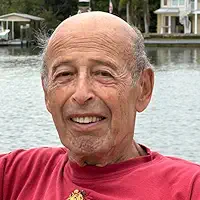 Ervin Staub, PhD, survived the Holocaust as a young child and at eighteen escaped from communist Hungary, then received a PhD at Stanford and taught at Harvard, the University of Massachusetts, and Stanford. He has published several other books, including The Roots of Evil: The Origins of Genocide and Other Group Violence and The Roots of Goodness and Resistance to Evil, and edited/coedited four more. He has also published many articles and book chapters, written blogs for Huffington Post, Psychology Today, and Oxford, appeared on TV and radio, and had his work widely reviewed in the media.