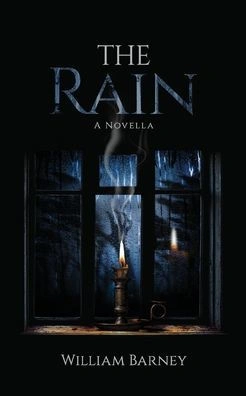
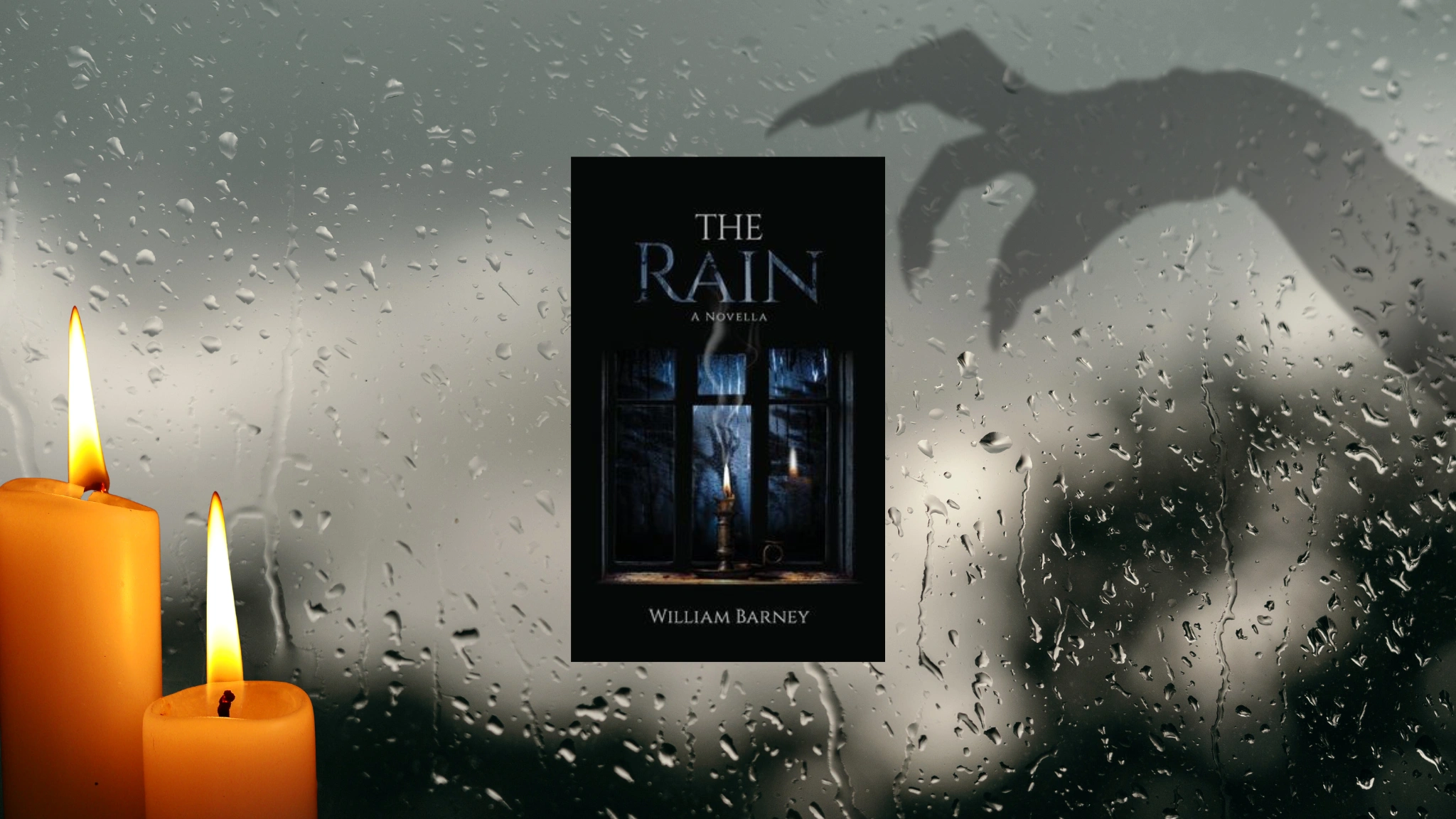
The Rain: A Novella by William Barney
Rain is usually background noise — something that blurs the windows, dampens the sidewalks and sends people running for umbrellas. In William Barney’s The Rain, it becomes something else entirely: a creeping, corrosive force that seeps into a small town and begins to change everything it touches. What begins as a familiar slice of small-town life slowly twists into something darker, stranger and more unsettling, transforming the ordinary into the grotesque.
At first, Barney grounds the novella firmly in the rhythms of everyday life. The unnamed narrator moves through a world that feels recognizable: birthday parties, coffee shop conversations, the routine of working in his father’s hardware store. Yet beneath these scenes runs a quieter current of tension. The narrator is still reeling from the death of his mother, and his relationship with his father has grown brittle in the aftermath. Their shared grief manifests not as comfort but as distance — the father withdrawing into rigid expectations, the son drifting into resentment and restlessness.
A Storm Beneath the Surface
This emotional undercurrent proves crucial to the story’s power. Barney does not rush toward the supernatural premise hinted at in the title. Instead, he patiently establishes a landscape of unresolved grief, fractured relationships and simmering dissatisfaction. When the strange rain begins to reveal its disturbing effects, the disruption feels less like a sudden twist and more like the physical manifestation of tensions that were already present.
The rain itself becomes one of the novella’s most intriguing devices. On the surface, it operates as the engine of the story’s horror: an inexplicable phenomenon that alters people and animals in grotesque ways. Yet Barney also uses it symbolically. As the rain spreads, it seems to amplify the darker impulses within the town — paranoia, cruelty, suspicion and violence. In that sense, the supernatural element becomes less about the weather and more about what happens when a community’s emotional and moral foundations begin to erode.
That thematic layering is what makes The Rain more complex than its premise might initially suggest. The novella moves fluidly across genres. At various points it reads like a coming-of-age story, a psychological drama about grief, a small-town mystery and an increasingly visceral work of horror. Barney carefully escalates the tension, allowing the narrative to pass through several stages: first unease, then rumor, then discovery and finally confrontation.
When the Town Begins to Change
Along the way, the story introduces unsettling figures and locations that deepen its eerie atmosphere. Encounters on the outskirts of town and the appearance of characters like the enigmatic “Pig Lady” lend the narrative a folkloric quality, as though the town itself has become a stage for something ancient and unknowable. These moments give the novella an almost mythic texture, suggesting that the disaster unfolding may be larger and stranger than the characters can fully comprehend.
Yet for all its grotesque imagery and mounting dread, the novella remains grounded in human relationships. The narrator’s conflict with his father, in particular, provides an emotional anchor for the story. Their inability to speak openly about their shared loss highlights one of the book’s quieter themes: the difficulty many men face when confronting grief. The father channels his pain into control and work, while the narrator withdraws into anger and uncertainty. Neither quite knows how to bridge the silence between them.
As the crisis intensifies, the narrator’s motivations begin to shift. What begins as confusion and fear gradually evolves into a desire for justice — and eventually vengeance. In these later chapters, Barney raises subtle questions about the line between survival and retribution. The violence that erupts near the novella’s climax is not presented as simple catharsis. Instead, it carries a lingering sense of moral ambiguity, leaving readers to consider whether revenge offers resolution or merely deepens the damage.
What ultimately lingers after the final pages is the way Barney juxtaposes the familiar with the monstrous. The Rain begins with scenes that feel almost mundane — friends talking over coffee, a young man struggling to find his place in the world. By the end, that same landscape has been transformed into something nightmarish. The shift is gradual but relentless, giving the novella a quiet sense of inevitability.
In that sense, The Rain works not only as a work of horror but also as a meditation on how quickly the structures we rely on — family, community, routine — can unravel when confronted with forces we cannot control. Barney’s story suggests that the true danger may not lie solely in the strange storm falling from the sky, but in the ways people respond when the world they recognize begins to dissolve around them.
About William Barney:
 William Barney is a storyteller drawn to the shadows between reality and the unknown. Inspired by travels through forgotten towns and far-off cities, he weaves tales that linger long after the final page–stories where the supernatural meets the deeply human. The Rain: A Novella reflects his fascination with unseen worlds, thought-provoking ideas, and the quiet moments that change everything.
Buy this Book!
Barnes & Noble