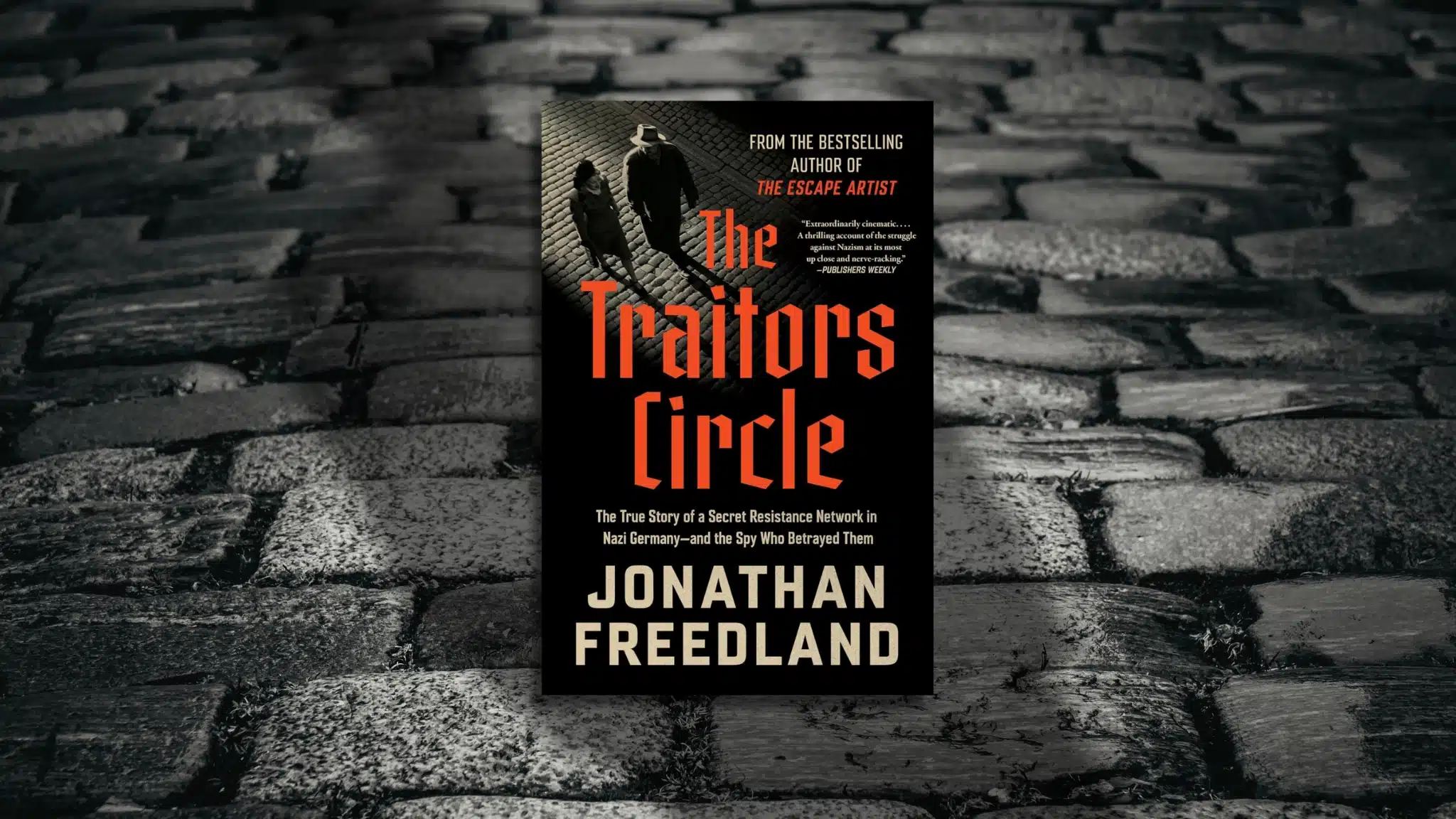
The Traitors Circle by Jonathan Freedland
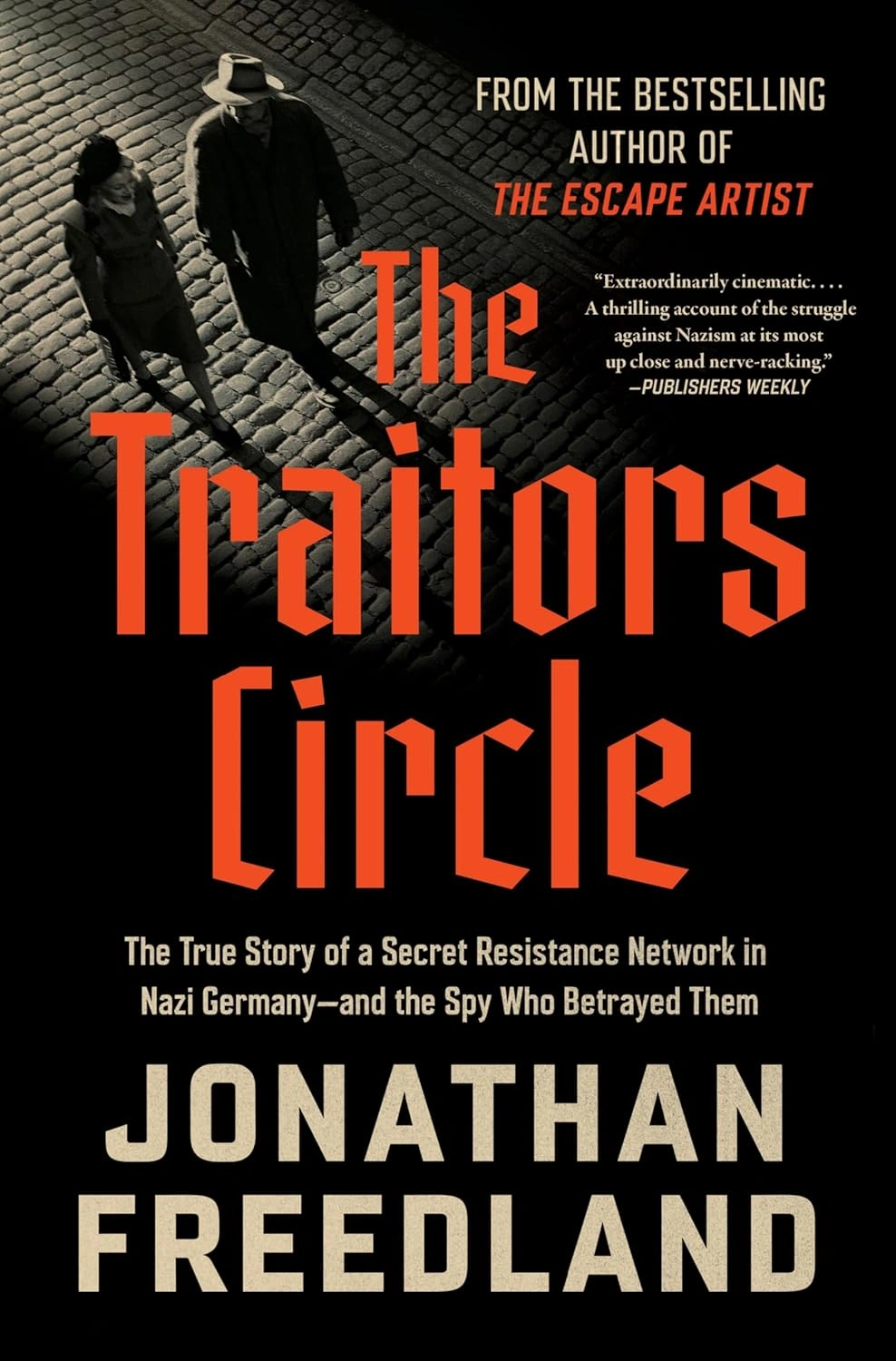
Jonathan Freedman has written a thought-provoking, heart-breaking work of non-fiction in The Traitor’s Circle subtitled The True Story of a Secret Resistance Network in Nazi Germany and the Spy Who Betrayed Them. Among his previous works is the award-winning true story The Escape Artist: The Man who Broke out of Auschwitz to Warn the World which was also reviewed here.
Initially and for most of WWII, Adolph Hitler enjoyed adulation and approval from 95% of the German population. With such high satisfaction, the country lacked a united, substantial resistance movement. The indoctrination into Fascist ideology began early and was reinforced at work, in schools and church. Hitler Youth was for boys ages 10-18 and The Bund Deutscher Mädel or League of German Girls for girls ages 10-21. Set up under the direction of Hitler Youth leader, Baldur von Schirach, girls were indoctrinated in the Nazi world view along with training in homemaking skills to prepare to be wives and mothers. The sexes were separated but both organizations had regular meetings, camping, excursions to view pro-Nazi propaganda films, singing, games, sports and other group activities with a strong emphasis on physical fitness and loyalty to the Nazi interpretation of German ideals. The cost of the outings and activities were paid for by the state. Other previously established children’s groups including scouting were abolished. By 1938, membership which had been voluntary became compulsory. It was a highly effective way to indoctrinate these “little Nazi’s” to willingly spy upon parents, teachers and other adults and to inform on anyone critical of the regime or any Jews in hiding.
During WWII, it is estimated that approximately 800,000 people were arrested, interrogated and imprisoned for suspected crimes of dissent. As many as 77,000 were executed for deeds or even utterances perceived as defiance. There were show trials and summary executions to serve as examples and many citizens deemed as political adversaries sent to concentration camps. Following the July 20, 1944 failed bomb plot conspiracy to assassinate Hitler at the Wolf’s Lair executed by Colonel Claus Schenk Graf von Stauffenberg, retaliations escalated in speed and severity. It was dangerous to speak ill of Hitler or the war effort as the punishments were swift and harsh for even the most minor infractions. Who could you trust when an overheard off-hand remark might easily summon the Gestapo to your door? A work colleague, neighbor, shopkeeper or even your own child whose willingness to serve as informants was further enticed with monetary rewards.
Seeds of Resistance in a Climate of Fear
The Traitor’s Circle reads like a heart-in-your-throat suspenseful thriller but is tragically true and lacks a happy ending. This story of deceit and betrayal is well researched and thoroughly documented with details taken from letters, diaries, testimonies and court documents as well as memoirs and interviews with relatives of the individuals remembered here. Hanna Dotti Solf, the daughter of an industrialist, banker and widow of the former governor of German Samoa and Ambassador to Japan founded a group of like-minded people which came to be known as the Solf Circle (“Solf-Kreis” in German) dedicated to help victims of Nazi persecution flee the country. These friends were influential, upper-class intellectuals and ardent anti-fascists who bravely opposed Hitler. Most of whom paid the ultimate price when a charming spy and member of the Gestapo deceptively infiltrated one of their afternoon tea parties.
The Tea Party That Sealed Their Fate
These nine elite members of German society met together for the last time on September 10, 1943 in Elisabeth von Thadden’s apartment in Charlottenburg, an affluent neighborhood in Berlin ostensibly to celebrate her sister Anza’s birthday. Their conversation addressed the likelihood that Hitler would lose the war and discussion about the fall of the Fascist regime in Italy led by Mussolini. The hostess Elisabeth von Thadden was descended from a proud, patriotic military family and had been the headmistress of a top girl’s school. This devout protestant had been moved to action after grasping that the Christianity permitted under Hitler diminished The Savior in favor of worship of der Führer. Other attendees included Countess Lagi von Ballestrem, Arthur Zarden, a German finance minister and his daughter Irmgard Zarden, diplomat Hilger van Scherpenberg and Otto Kiep, a former diplomat and consul general to the US who had been recalled to Germany after honoring Albert Einstein. Present also was American guest Fanny von Kurowsky, a nurse who had tended to wounded 18 year-old ambulance driver Ernest Hemingway during WWI. She is considered to have been his muse and inspiration for the character “Catherine Barkley” in his novel A Farewell to Arms. It is unknown whether Fanny participated in resistance activities and was not arrested.
These enormously brave people risked their lives and “dared to say no to a mighty and terrifying regime.” They had met infrequently to discretely direct operations to help save lives of Jews and dissidents. On January 12, 1944, in a carefully planned and efficiently orchestrated operation, Gestapo agents quietly swept through various parts of Germany to residences in Berlin and Bavaria. Arrest warrants were presented, premises searched and the members of this small group were bundled into prison vans or waiting cars, accused of the highest crime, treason. The warrants were signed by commander of the Nazi security state and head of the SS, Reichsführer Heinrich Himmler.
Enduring Questions
Author Jonathan Freedland has provided biographical information about each participant, details of their resistance work, and the unfolding of the betrayal in 74 gripping chapters along with what occurred during and after the war as the so-called 1000 Year Reich came to an end. He reveals who among the Solf-Circle survived and their subsequent lives post-war. Although one might hope for justice to be fully served, he relates how the heinously evil villains were actually dealt with. The book leaves one wishing this were simply a novel and not a shocking work of non-fiction.
The Traitor’s Circle is amply illustrated with photographs and Jonathan Freedland concludes this impressively revelatory work with end-notes for each chapter and an extensive bibliography. This potent and relatively unexamined segment of history is well worth exploring and elicits honor for the courage of convictions displayed. Armchair heroes believe they would be willing to imperil their lives to help others survive but when personally faced with the reality of a brutal regime controlling every aspect of society, imagined braveries are apt to vanish. The questions raised in The Traitor’s Circle reverberate ominously to this day and beg heeding.
About Jonathan Freedland:
 Jonathan Freedland is a Guardian columnist and former foreign correspondent. He is the presenter of BBC Radio 4’s contemporary history series, The Long View, as well as two popular podcasts, Politics Weekly America and Unholy, the latter alongside the journalist Yonit Levi. He is the author of twelve other books, including the award-winning The Escape Artist: The Man Who Broke Out of Auschwitz to Warn the World.