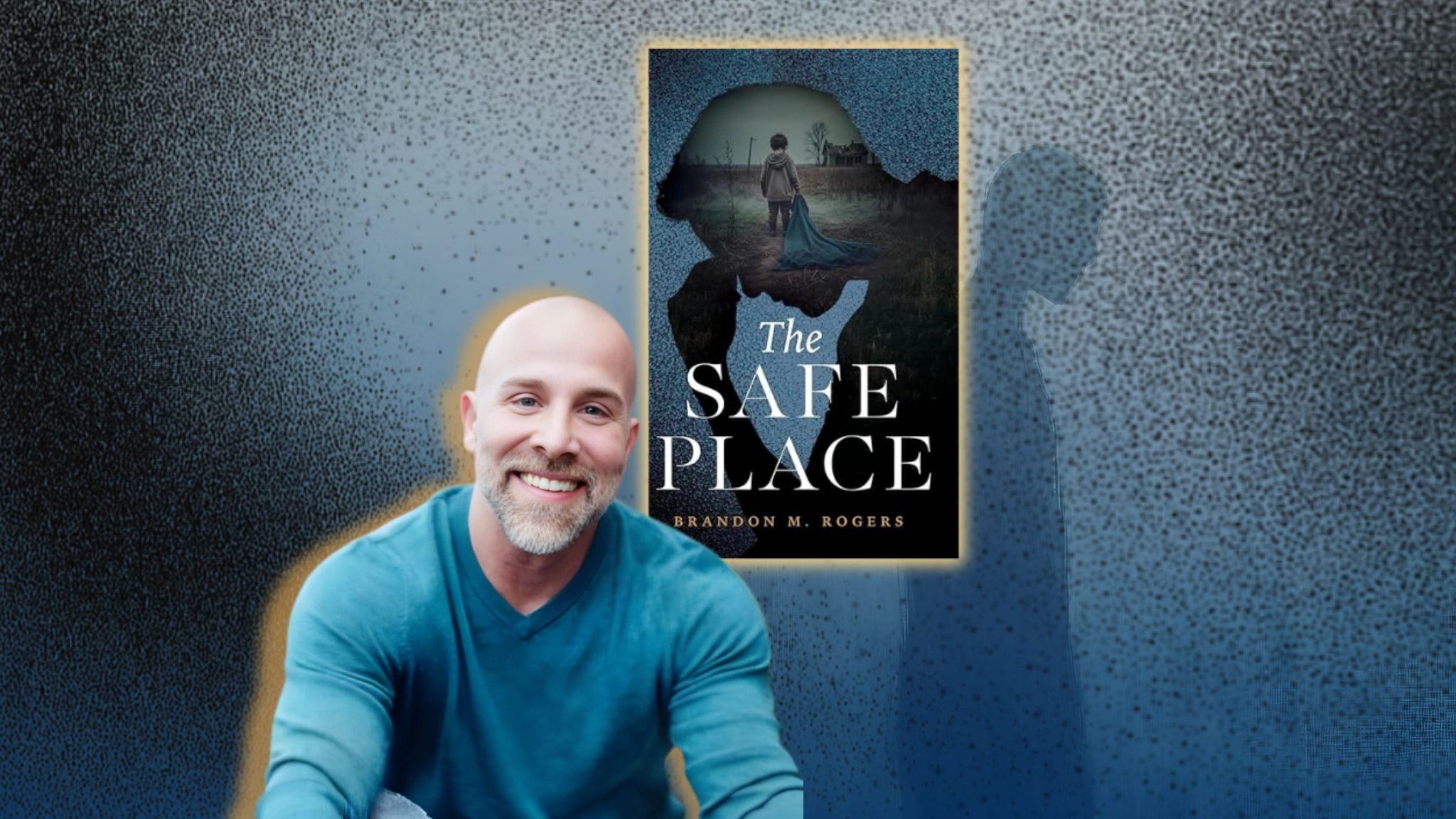
Brandon M. Rogers’ The Safe Place is a deeply introspective novel that traces the quiet, often uncomfortable terrain of addiction, identity and the long road toward self-understanding. Born not from an intention to publish but from a private therapeutic exercise, the book carries an unusual emotional honesty — one rooted in lived experience rather than literary performance. Through the intertwined journeys of Tristan, Jocelyn and Everett, Rogers explores how love, perception, family and forgiveness shape the stories we tell ourselves about who we are and what we deserve. In this conversation, Rogers reflects on transforming personal excavation into fiction, writing addiction as a human impulse rather than a moral failing, and using the chaotic energy of the city as a mirror for his characters’ inner lives.
- What inspired you to write The Safe Place, and how did your personal experiences shape its themes of addiction and self-discovery?
The Safe Place didn’t begin as a book. It began as counseling. More than a decade ago, I was asked to write honestly as part of a therapeutic deep dive — without polish, without intention, and certainly without an audience. The pages were never meant to be curated; they were meant to be truthful. Over time, a few trusted people read fragments of the story and encouraged me to keep going. What emerged wasn’t a memoir, but something more universal — a narrative shaped by lived experience, emotional excavation, and the long arc of self-discovery. Addiction, as portrayed in the book, isn’t limited to substances. It’s about the human impulse to numb, to escape, and to seek validation in places that ultimately hollow us out. Writing the story became a way to confront those patterns and, eventually, to offer them back as something others might recognize in themselves.
- Can you share more about the relationship between Tristan and Jocelyn? How did you approach writing their dynamic in the context of Tristan’s struggles?
Tristan and Jocelyn exist as two halves of a whole. She is his foil and his muse — not in a romanticized sense, but in a grounding one. Jocelyn represents clarity, steadiness, and truth, while Tristan is constantly wrestling with inadequacy and self-doubt. When writing their dynamic, I wanted their relationship to feel less transactional and more elemental — like balance rather than rescue. Tristan never believes he is fully enough for Jocelyn, and that belief drives much of his internal conflict. Yet it’s through their relationship that he begins to understand a harder, more honest truth: being “enough” doesn’t mean being perfect; it means being present and willing to give your best. Jocelyn doesn’t save Tristan. Instead, she reflects back what he struggles to see — that love doesn’t require erasure, only effort and honesty.
- The character of Everett seems to play a pivotal role in Tristan’s development. What was your intention with Everett, and how does he influence Tristan’s journey?
Everett enters Tristan’s life at exactly the moment he needs someone to tell him he isn’t broken. Before Everett — and before Ms. Scarlet — Tristan’s internal world feels chaotic and isolating, as though his heightened perception is something to manage or suppress. Everett reframes that entirely. He treats Tristan’s sensitivity not as a burden, but as a gift — something to explore, play with, and even enjoy. My intention with Everett was to introduce a figure who validates without controlling, who invites curiosity rather than fear. Everett engages Tristan’s senses and imagination, helping him understand that awareness can be creative rather than corrosive. He is the right person at the right time — not a savior, but a catalyst. Everett’s influence lingers long after he’s gone, shaping how Tristan understands himself and what’s possible when someone finally believes in you.
- In your narrative, you explore the complexities of familial relationships, particularly between Tristan and his mother. How do you think these dynamics affect Tristan’s sense of identity?
At the beginning of the story, Tristan understands himself almost entirely through his relationship with his mother, Elizabeth. Her love, trust, and expectations form the primary lens through which he views his own worth. That closeness is both stabilizing and confining. Over time, Tristan begins to recognize something deeper — that family relationships, no matter how loving, don’t grant us a finished identity. We’re all, in many ways, children stuck in a perpetual attempt to prove we are worthy of curiosity, beauty, and love. The tension between love and pain in Tristan’s relationship with Elizabeth stretches him emotionally, forcing him to separate who he is from who he believes he must be. That process is painful but necessary. By the end of the book, Tristan isn’t rejecting family; he’s learning that identity must be owned, not inherited.
- Addiction is depicted in various forms throughout the book. What message or insight do you hope readers will take away regarding the impact of addiction on individuals and their loved ones?
For me, addiction in The Safe Place is less about the object and more about the chase. Tristan isn’t defined by what he’s addicted to — whether money, substances, validation, or people — but by why he’s chasing them. Addiction becomes a substitute for security, love, and ease, all sought in the wrong places. The insight I hope readers take away is that the form doesn’t matter; the outcome is always the same. Anything pursued as a replacement for self-worth eventually demands more than it gives and leaves damage in its wake — not just for the individual, but for everyone who loves them. The story isn’t meant to moralize addiction, but to humanize it. It asks readers to consider what they’re chasing, why they’re chasing it, and whether it’s truly capable of giving what they’re hoping for.
- Your writing style includes a blend of introspection and vivid urban imagery. How do you believe the setting of the chaotic city influences the characters and their journeys?
The city represents momentum, ambition, and the illusion of control. For Tristan, its pace initially feels intoxicating — a place where staying busy can masquerade as being alive. But the city also exposes a deeper truth: no matter how loud or crowded the world becomes, isolation can still follow you home. I wanted the urban setting — the streets, the walls, the hospital — to feel both expansive and confining at the same time. The chaos mirrors Tristan’s internal noise, while the quiet moments reveal what he can’t outrun. The city becomes a kind of trap until forgiveness enters the story. Once Tristan begins to forgive himself, the same spaces that felt imprisoning start to feel transitional — less like walls and more like thresholds. The environment doesn’t change; his relationship to it does.
- As an author, what challenges did you face while addressing heavy themes such as mental health and addiction in a way that remains relatable and engaging to readers?
The greatest challenge was resisting the urge to explain instead of reveal. Writing The Safe Place felt like one extended counseling session — a place to explore faith, love, purpose, and what it truly means to feel seen. Heavy themes only become distant when they’re treated as abstract problems rather than shared human experiences. I didn’t want to write “about” mental health or addiction; I wanted to write from inside them. The truth is, these struggles aren’t niche — they’re universal. We all face the same core questions of worth, belonging, and meaning. The challenge was honoring that weight without overwhelming the reader, and allowing vulnerability to do the work that exposition never could. In the end, I trusted that honesty would create connection, and that readers would recognize themselves somewhere in the story.