The Architect of New York by Javier Moro
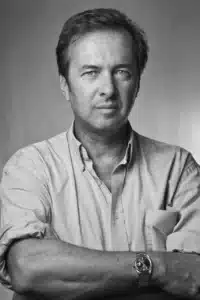
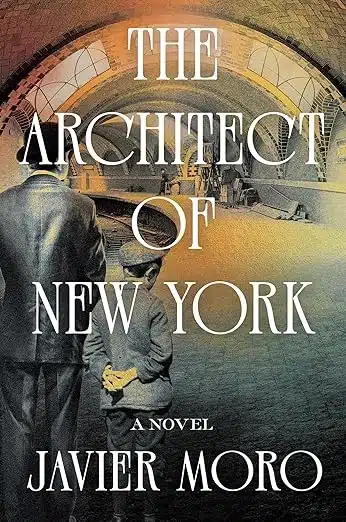
The Architect of New York is a historical biography of a Spanish immigrant, Rafael Guastavino Moreno Sr., a historical figure who introduced the Catalan tile vault system to the USA in the 1880s. The book is crafted by prize-winning author Javier Moro, who recounts the story from the perspective of Rafael Guastavino’s youngest son, Rafael (Rafaelito) Guastavino Jr.
A Child Uprooted, a Family Divided
It was 1881 when nine-year-old Rafaelito and his family moved to New York from Barcelona, Spain. After only a couple of weeks in New York, nine-year-old Rafaelito learned that his mother, Paulina, wanted the family to go back to Barcelona because she was unhappy in the US. His father refused to return to Barcelona and insisted that his mother leave Rafaelito behind and go with the two sisters instead. Their departure completely devastated both father and son. In the process, Rafaelito also learned some disturbing family secrets.
Life in a foreign country was not very kind to father and son. Since neither spoke any English, it was only right that Rafaelito receive a formal education and learn English. A chance encounter with a Mexican woman named Francisca helped both father and son ease the pain of losing Paulina. In his teenage years, Rafaelito became his father’s interpreter and accompanied him to work and certain business dealings. His interest in architecture also allowed him to help his father with construction designs.
Building a Life from Ruin and Resilience
Although his father was a successful architect in Spain, his success in New York was not as easy as he had anticipated; he had little money and zero business connections. But he was resilient and worked as a builder, associating himself with leading American architects to build business relationships. An association with a prominent architect eventually helped his father secure major building bids and establish a reputation as a professional architect in the US. These projects eventually allowed him to create the Guastavino Fireproof Construction Company, which he ran with Rafaelito.
The Architect of New York adheres closely to documented historical events (like the Brooklyn Bridge parade and the bankruptcy of the Grant & Ward Bank and the Marine National Bank of New York) while still portraying emotional interiors, dialogue and characters’ private moments. Moro was careful not to invent major historical outcomes or distort Guastavino’s professional achievements. Instead, he concentrated his fictionalisation on family dynamics, romantic tension and psychological responses to success and failure.
By filtering Rafael Sr.’s life through his son’s voice, Moro’s writing style is reminiscent of a stream of consciousness; the narrator recounts memories from his childhood and transforms a historical figure into a deeply human presence, shaped as much by love, pride and naivety as by architectural genius.
Stylistically, Moro’s long, flowing sentences mirror the rhythm of construction work itself, and technical details like cement types, plumb lines and mortar bring out the narrative’s authenticity. Moro’s writing style favours detail and atmosphere over fast pace, allowing the emotional and historical weight of the story to settle gradually. The book also explores themes of immigration and displacement, the cost of ambition, father–son dependency and the illusion of permanence.
The Fragility Beneath Monumental Success
Rafael Guastavino Sr. is portrayed as a charismatic yet tragically vulnerable leader whose greatest strengths also became his weaknesses. He is described as an “inveterate optimist,” who deeply believed in his dreams and transmitted that confidence to both his family and his workers. He was generous to the point of recklessness in his personal life, emotionally restrained yet deeply vulnerable in moments of crisis. He was also naive in financial matters and trust, and charismatic but deeply flawed in his relationships.
Rafael Guastavino Jr. is portrayed as an observant, emotionally sensitive and prematurely adult. His identity was shaped by devotion to his father and his immersion in the construction world from a young age. He’s a compelling character whose emotional development mirrored the instability and transformation of the world around him.
In conclusion, The Architect of New York is a biography that reads less like a record of achievements and more like a portrayal of ambition, fragility and bonds that endure beneath monumental success. Fans of Marie Benedict’s The Other Einstein and Nancy Horan’s Loving Frank would appreciate this novel.
About Javier Moro: