Everything we believe about ourselves is borrowed, whether it’s from society, history or the people we’ve loved.
The following memoirs refuse to accept those borrowed truths without question, plunging into the intersection of identity, memory and culture.
They trace how consciousness emerges when we confront the stories we inherit, challenge the narratives we construct and finally ask: What if everything I thought I knew was only Chapter One?
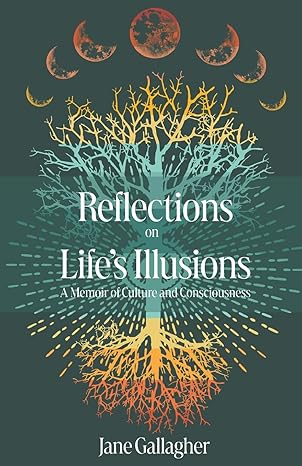
Reflections on Life's Illusions: A Memoir of Culture and Consciousness by Jane Gallagher
Reflections on Life’s Illusions: A Memoir of Culture and Consciousness dives into the pool of memory to explore what shaped the consciousness of the Baby Boom generation — and Jane Gallagher’s own perspective. Her lyrical prose interweaves a search for identity, love, and meaning with reflections on the larger forces that defined an era, piecing together a “patchwork quilt” of vivid memories and social commentary, featuring the voices of leading intellectuals alongside her own.
The explosive years between 1954 and 1975, when McCarthyism, the Vietnam War, Watergate and systemic racism collided with the rise of feminism, civil rights and environmental awareness inform Gallagher’s growing awareness, culminating in a life-changing hike through the mountains of Peru. Ultimately, this memoir offers a wise and graceful invitation to reexamine cultural stories, looking beyond nostalgia to rediscover wonder, curiosity and belonging for a deeper understanding of how culture molds belief — and how awareness can transform it.
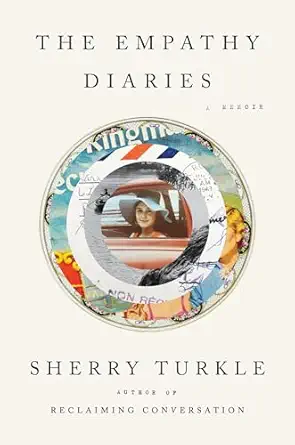
The Empathy Diaries by Sherry Turkle
Part memoir, part cultural study, Turkle examines growing up amid secrecy and shifting identities while tracking the evolution of technology and its emotional cost. Her reflections on human connection land with startling clarity, raising the question: Are we losing emotional fluency as we become fluent in screens? It’s intimate, sharply observed and unafraid to probe uncomfortable truths about modern connection.
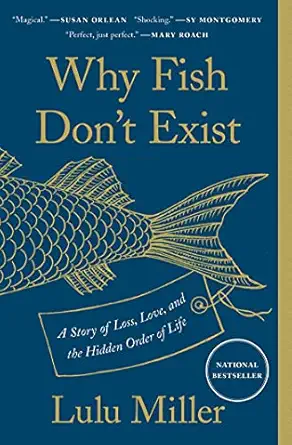
Why Fish Don’t Exist by Lulu Miller
What begins as a biography of a forgotten scientist becomes a full excavation of chaos, strength and how we build meaning from disorder. Miller questions the reliability of classification systems — scientific ones, yes, but also personal ones. Her journey reveals just how much we rely on illusions of order to hold ourselves together and what happens when that scaffolding falls apart.

The Geography of Memory by Jeanne L. Walker
Walker travels through the shifting landscape of her mother’s mind while grappling with the instability of her own memories. Instead of treating memoir as recollection, she treats it as a map of perception. It’s an emotional, cerebral exploration of how memory bends, edits and sometimes protects us, especially when identity is at stake.
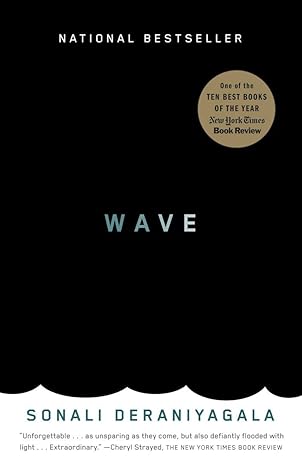
Wave by Sonali Deraniyagala
After surviving the 2004 tsunami that claimed her entire family, Deraniyagala confronts grief not as a single moment but as an altered state of consciousness. Lucid and unflinching, she examines loss, perception and presence, revealing what it means to rebuild a self from memory’s ruins. Every memory, every image of her family, becomes a lens for understanding the fragility of life and the ways love and trauma coexist.
Deraniyagala’s narrative moves beyond personal tragedy, exploring how catastrophe reshapes identity and awareness. She reflects on the tension between holding on and letting go, documenting the painstaking process of living in a world that has irreversibly changed. The result is a meditation on grief, resilience and the small, often imperceptible ways we reconstruct meaning when everything familiar has vanished.
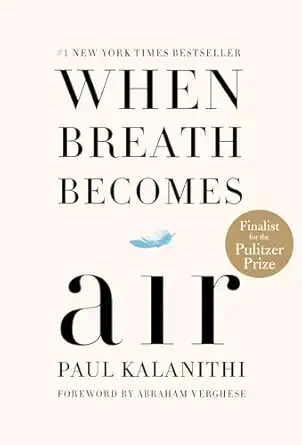
When Breath Becomes Air by Paul Kalanithi
A neurosurgeon facing terminal illness confronts the biggest questions: What makes a life meaningful? What do we owe one another? What defines identity when the future disappears? Kalanithi writes with clarity and urgency, bridging science, philosophy and the psychology of mortality. The result is less about dying and more about choosing how to think while living.
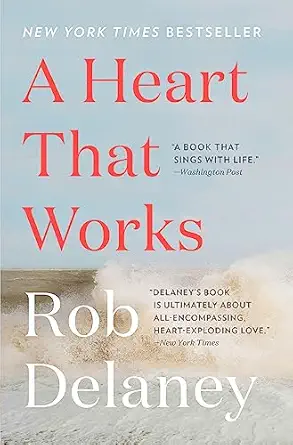
A Heart That Works by Rob Delaney
Delaney writes about losing his young son with startling openness, but what makes this memoir extraordinary is its awareness of systems: medical, cultural, emotional. It doesn’t ask for sympathy, but instead asks for conscious witness. Grief becomes both personal and political, pointing to the ways we hold space for one another and the ways society fails.