
When President Donald Trump announced the “Patriot Games,” an athletic competition bringing one young man and one young woman from every state and territory to Washington, D.C., a lot of people felt a strange kind of déjà vu. Not concern, exactly. More like recognition.
YA dystopian fiction has been exploring this territory for years. The books below aren’t predictions and they aren’t manuals. They are explorations of what competition can mean when it becomes symbolic and how athletic skill can suddenly carry consequences far beyond the game itself …
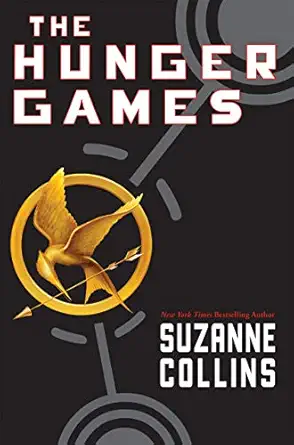
The Hunger Games by Suzanne Collins
Aim like Katniss Everdeen
Katniss Everdeen enters the arena carrying more than a bow; she carries years of experience hunting and surviving in the woods outside District 12. In the Hunger Games, athletic skill is scrutinized, evaluated and broadcast as entertainment. The audience doesn’t just watch her fight … it interprets her every move as a statement of character, loyalty and defiance.
Collins doesn’t make this a story about heroism alone, though. She examines how skill becomes spectacle, how survival can be co-opted into narrative and how a single act — like nailing an arrow to the bullseye — can ripple across a nation. The arena measures more than strength; it measures attention, perception and adaptability under pressure.
Athletic focus: Archery, endurance, performing under stress and observation.
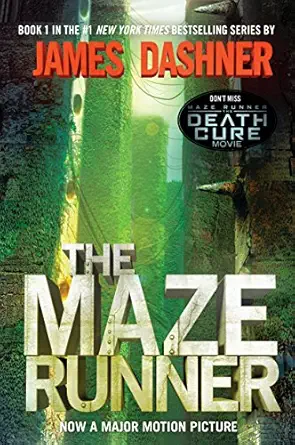
The Maze Runner by James Dashner
Run like Thomas
The Glade isn’t a playground. Runners push themselves across the ever-changing maze, running not for glory but for the chance to map the labyrinth, to uncover patterns and maybe, to survive another day. The Maze isn’t about winning — it’s about constant motion, testing stamina and spatial awareness under uncertainty.
Thomas and his fellow runners face terrain that changes overnight, obstacles they haven’t been trained for and rules they don’t fully understand. Dashner makes the Maze itself an opponent: unpredictable, unforgiving and impossibly physical. Every sprint, every slip, every turn is a lesson in endurance and improvisation.
Athletic focus: Sprinting, stamina, spatial adaptation, rapid decision-making under pressure.
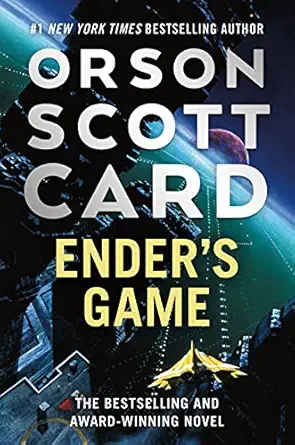
Ender’s Game by Orson Scott Card
Strategize like Ender Wiggin
Ender’s world is built around controlled chaos. At Battle School, zero-gravity combat transforms ordinary physical movement into a puzzle of coordination, timing and endurance. Students must master both the mechanics of movement and the psychology of their opponents. Physical skill is inseparable from strategy.
Ender’s brilliance isn’t just in reflexes or strength — it’s in how he maneuvers his body and those of his team, anticipating patterns and exploiting weaknesses. The games reward imagination and precision, not just brute force. It’s athleticism fused with calculation, making each physical action a chess move in three dimensions.
Athletic focus: Tactical movement, team coordination, zero-gravity agility, mental and physical synchronization.

Legend by Marie Lu
Train like June Iparis
June Iparis is the product of rigorous, state-mandated training. Her body is honed to excel in speed, strength and precision. In her world, athletic skill signals competence, trust, loyalty and readiness to serve. Physical ability is both personal and performative.
Lu layers this training with stakes that are both personal and political. Every sprint, every combat drill and every tactical movement carries consequence. June’s physical excellence becomes a form of currency, a way to navigate a system that constantly observes and judges her.
Athletic focus: Elite conditioning, combat training, precision movement, endurance under observation.
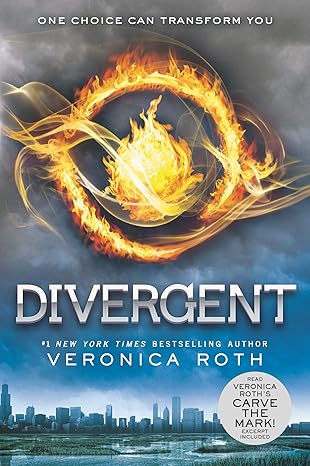
Divergent by Veronica Roth
Jump like a Dauntless initiate
Fearlessness is measured in motion. In Dauntless, trainees leap from moving trains, sprint across rooftops and engage in combat drills under watchful eyes. Physical risk is part of the grading system … and the body becomes a marker of courage and identity.
Roth emphasizes the emotional component of athleticism. The most skilled aren’t just strong — they’re willing to risk injury, failure, or public embarrassment to prove themselves. Athletic ability in Dauntless isn’t a choice; it’s a form of social and political literacy, a way to stake a claim in a rigid hierarchy.
Athletic focus: Parkour-style movement, rooftop agility, combat drills, fearless execution under scrutiny.

Battle Royale by Koushun Takami
Survive like a government-selected competitor
A class of students is sent to a remote island with one rule: only one may survive. Combat endurance, strategy and adaptability are tested continuously, and the event is broadcast for observers. Athletic skill is inseparable from survival, but it also becomes a measure of control, obedience, and spectacle.
Takami’s narrative is relentless, showing how every sprint, every dodge, and every tactical maneuver carries enormous weight. Physical performance intersects with morality, improvisation and psychological resilience.
Athletic focus: Combat endurance, tactical movement, improvisation under extreme pressure.
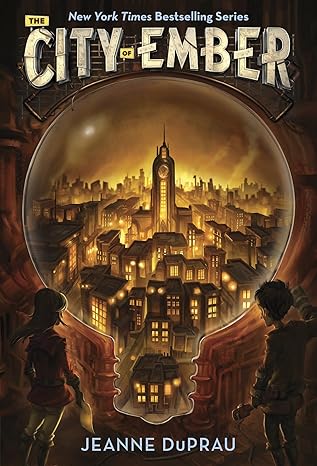
The City of Ember by Jeanne DuPrau
Navigate like a subterranean explorer
In a city buried underground, two teens race against time to solve puzzles that will save their population. Athleticism here is about practical, functional skill — running, climbing and improvising through narrow tunnels, unstable staircases and hidden passageways.
The challenges are physical and mental at once. The “arena” is the infrastructure itself, a maze of brick and shadow that demands ingenuity and stamina. Success requires careful movement, teamwork and the ability to adapt quickly to obstacles that might appear without warning.
Athletic focus: Climbing, endurance, spatial problem-solving, teamwork under duress.