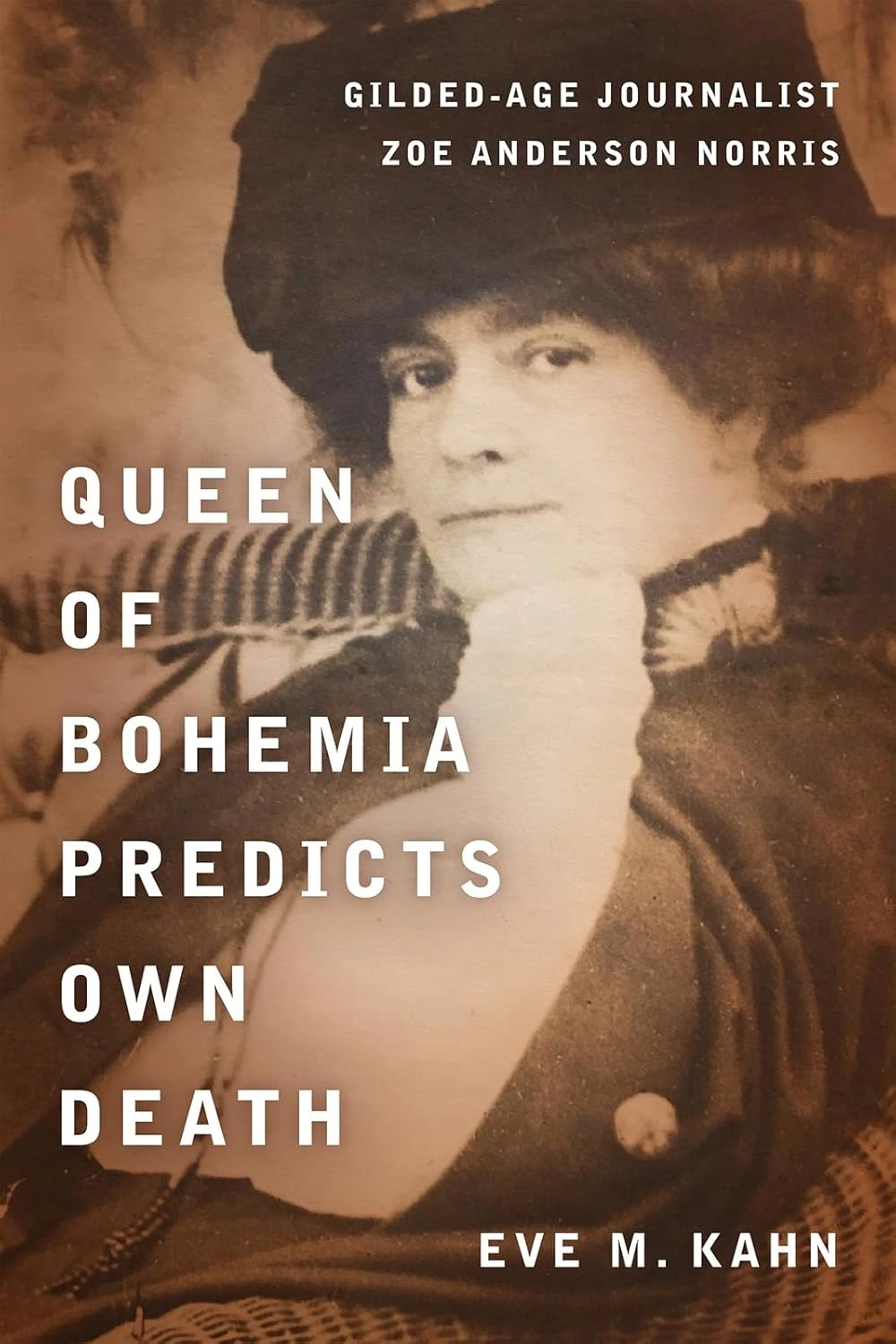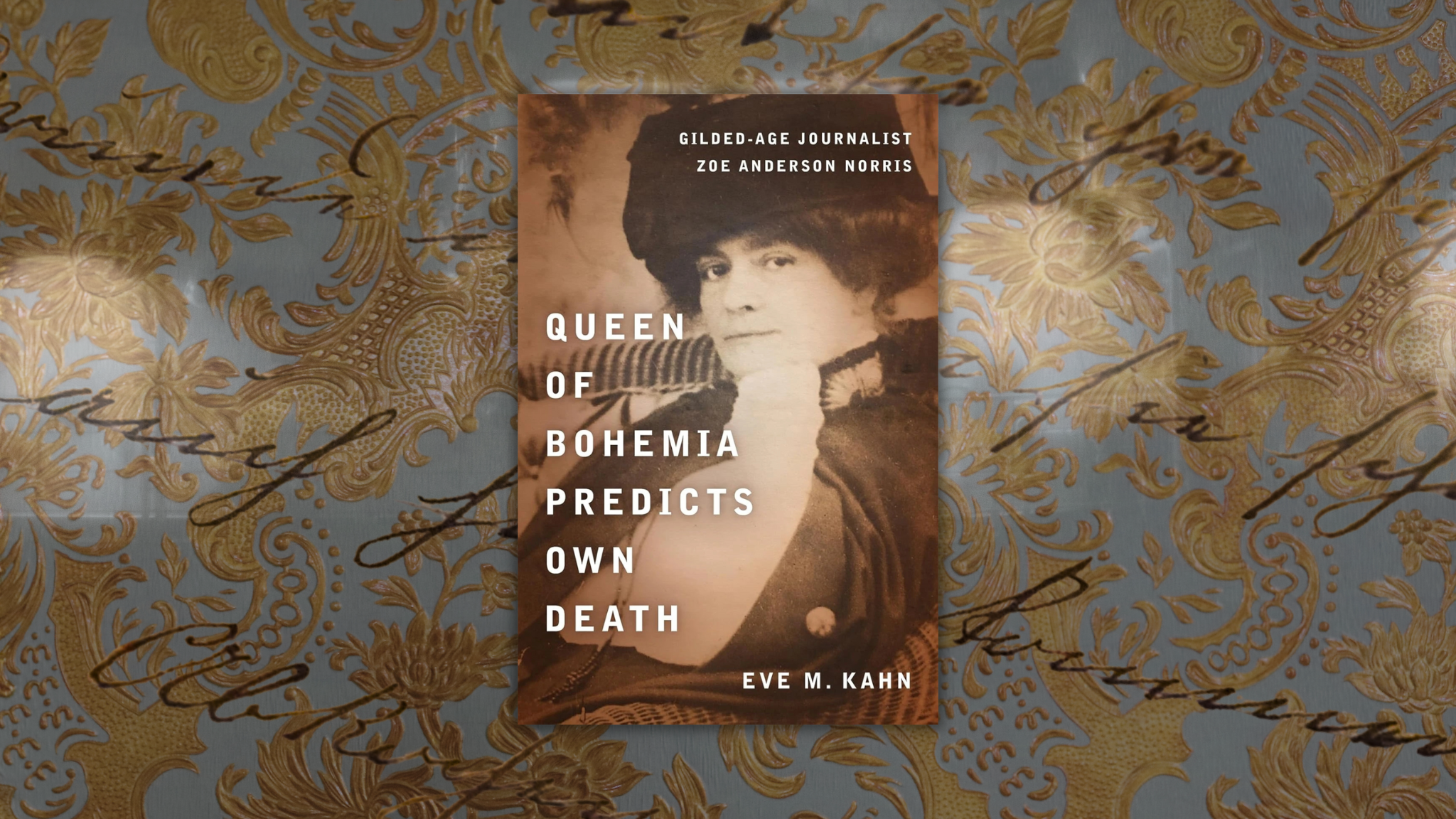
Queen of Bohemia Predicts Own Death by Eve M. Kahn
Zoe Anderson Norris hid in plain sight for well over a century but now she is back on the scene! A prolific writer and social activist, Zoe (rhymes with “no”) moved to New York City in 1898. Alternately chagrined and captivated by urban life, she remained haunted by her dark 19th-century past in faraway Kentucky and Kansas.
Free-spirited and dubbed “Queen of Bohemia,” Zoe often danced the night away as the founder of the Ragged Edge Klub, a motley gathering of artists and intellectuals. Yet she reported relentlessly on the city’s underbelly, particularly the impoverished immigrants of the Lower East Side. She died in 1914 at age 54, charismatic to the end—having predicted her own death.
Unearthing the East Side
Happily, Zoe is the subject of a new biography, Queen of Bohemia Predicts Own Death by writer Eve Kahn, whose previous work focused on art and antiques. In 2018, Kahn came upon a collection of illustrated bimonthly journals titled East Side, which Zoe published out of her East 15th Street apartment between 1909 and 1914.
Since she first flipped through those volumes, Kahn has been fascinated by Zoe. In Queen of Bohemia, she conjures the complicated personality of a woman ahead of her time. Stymied by dismissive men and social convention, Zoe experienced both exhilaration and despair in her relationships and professional life. Fortunately, she left a detailed record for her biographer.
Roots and Reinvention
Zoe entered the world in 1860 on a farm in Harrodsburg, KY, one of thirteen children born to a Protestant minister, Henry T. Anderson and his wife Henrietta. A New Testament scholar fluent in Greek, Latin, and Hebrew, Henry was an indifferent father who frequently ran out of money. Sometime after his death in 1872, Zoe went off to Daughters College, a local women’s college. Soon after graduating with honors she married a Harrodsburg boy, Spencer Norris, who would struggle to support Zoe, their son Rob and daughter Mary Clarence.
During the two largely unhappy decades between her 1878 marriage and escape to New York City, Zoe reinvented herself as an artist, a teacher, an author, and a newspaper columnist. When the family landed in Wichita, KS, where the adulterous Spencer ran a grocery store, Zoe found a rich source of fiction: a cast of characters that she would summon for stories and novels for the rest of her life.
The Observer and the Optimist
Early twentieth-century Wichita was an up-and-coming city but Zoe could not take it seriously. She reveled in grisly gossip and pompous, pious socialites. In the pages of the Wichita Eagle and the articles and poems which she sent out to magazines, Zoe skewered many a prominent Kansan, never giving a damn about what anyone thought about her and her work.
Of course, like all writers Zoe loathed rejection and would run headlong into it when she finally went east. But she was rarely discouraged and wrote almost continually. Zoe never ran out of material because she had a keen eye and a razor-sharp memory. Kahn is at her best describing how Zoe surveyed the city from her window and rooftop:
“Zoe filtered her sightlines with blue-and-white curtains and potted plants—pigeons nibbled at her geraniums, nasturtiums, ivy, and morning glories—she settled with her notebook into her windowfront cushions or a wicker ‘observation chair.’”
Readers may be reminded of Christopher Isherwood’s opening lines in the book that eventually became Cabaret. “I am a camera with its shutter open,” he wrote.
A member of the Women’s Press Club of New York, Zoe found more success with her magazine and newspaper articles than her novels. Her work appeared in the New York Times, New York Sun, McClure’s, Munsey’s Magazine, The Criterion, The Smart Set, her own East Side, and other “magazinelets,” as Kahn calls them, lost to history. Among Zoe’s notable topics were the prison on Blackwell’s Island and the textile mills in Patterson, NJ. She often went undercover; for example, dressing up as a blind street musician in the spring of 1910.
“She did not conceal that she was mining every waking moment for publication,” Kahn notes. In fact, one wonders whether Zoe ever slept. Between watching and reporting, she corresponded, wrote and rewrote books, endured a second, short-lived marriage, haphazardly cared for her daughter and grandson, and styled her own bohemian life. Plagued by memory, anxiety, and regret, Zoe nonetheless was an optimist.
Beautifully written and meticulously researched, Queen of Bohemia evokes life and culture in a city that does not seem so far off from the one we know today.
About Eve M. Kahn:
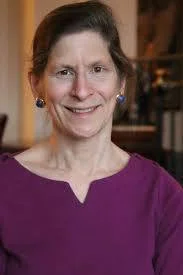
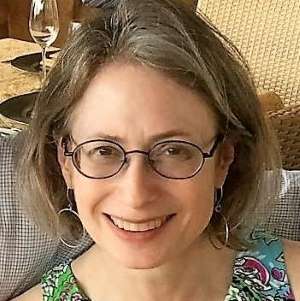
Independent scholar Eve M. Kahn, former Antiques Columnist at The New York Times, writes about art, architecture, and design for the Times among other publications. She is biographer of artist Mary Rogers Williams (1857-1907) and writer Zoe Anderson Norris (1860-1914).